Skip to content
Artwork for LessWrong (30+ Karma)
LessWrong (30+ Karma) · Saturday · 25 min

“Simulated Control Evaluations” by Jeffrey Olmo, dzhang, Tyler Tracy

We’ve released a paper on simulated control evaluations (SCEs). They’re a method for testing whether the monitors AI developers use to oversee their agents would catch a model deliberately trying to cause harm, under conditions much closer to real deployment than current tests allow. Developers have started running monitors in their agentic deployments: models that flag or block an agent's actions when they look dangerous. To know whether a monitor is good enough, you want to know how often it would stop a model that was actively trying to do something harmful, such as quietly inserting a security vulnerability, exfiltrating credentials, or sabotaging an experiment. The standard way to measure this is a control evaluation: instruct a model to attempt such attacks, and measure how often the monitor catches it before an attack succeeds. Developers typically do this using purpose-built control settings like BashArena or LinuxArena, where attacks can actually be executed. However, these settings only provide indirect evidence for what we really care about: how well monitors will work in the real deployment, where opportunities for harm might depend on particular codebases, services and tasks that aren’t represented in control settings. How can we evaluate monitor performance in [...] --- Outline: (04:13) SCEs are a favorable tradeoff between realism and cost (04:30) 1. Run on a copy of internal deployment (05:42) 2. Edit attacks into recorded transcripts (07:08) Evaluating Control Evaluations (08:58) How to measure qualitative properties? (10:07) Performance Comparisons (11:55) Overview of Empirical Results (13:29) Behavior transfer (15:19) Safety metric transfer (17:08) Sample efficiency (18:07) Lessons from building and evaluating SCEs (20:35) Next steps (24:36) Conclusion The original text contained 3 footnotes which were omitted from this narration. --- First published: October 23rd, 2026 Source: https://www.lesswrong.com/posts/uXiqyoKwpfjWfQXk5/simulated-control-evaluations --- Narrated by TYPE III AUDIO. --- Images from the article: Apple Podcasts and Spotify do not show images in the episode description. Try Pocket Casts, or another podcast app.
0:00-25:41

transcript

No transcript — this publisher did not publish one.

show notes

We’ve released a paper on simulated control evaluations (SCEs). They’re a method for testing whether the monitors AI developers use to oversee their agents would catch a model deliberately trying to cause harm, under conditions much closer to real deployment than current tests allow.

Developers have started running monitors in their agentic deployments: models that flag or block an agent's actions when they look dangerous. To know whether a monitor is good enough, you want to know how often it would stop a model that was actively trying to do something harmful, such as quietly inserting a security vulnerability, exfiltrating credentials, or sabotaging an experiment.

The standard way to measure this is a control evaluation: instruct a model to attempt such attacks, and measure how often the monitor catches it before an attack succeeds. Developers typically do this using purpose-built control settings like BashArena or LinuxArena, where attacks can actually be executed. However, these settings only provide indirect evidence for what we really care about: how well monitors will work in the real deployment, where opportunities for harm might depend on particular codebases, services and tasks that aren’t represented in control settings.

How can we evaluate monitor performance in [...]

---

Outline:

(04:13) SCEs are a favorable tradeoff between realism and cost

(04:30) 1. Run on a copy of internal deployment

(05:42) 2. Edit attacks into recorded transcripts

(07:08) Evaluating Control Evaluations

(08:58) How to measure qualitative properties?

(10:07) Performance Comparisons

(11:55) Overview of Empirical Results

(13:29) Behavior transfer

(15:19) Safety metric transfer

(17:08) Sample efficiency

(18:07) Lessons from building and evaluating SCEs

(20:35) Next steps

(24:36) Conclusion

The original text contained 3 footnotes which were omitted from this narration.

---

First published:
October 23rd, 2026

Source:
https://www.lesswrong.com/posts/uXiqyoKwpfjWfQXk5/simulated-control-evaluations

---

Narrated by TYPE III AUDIO.

---

Images from the article:
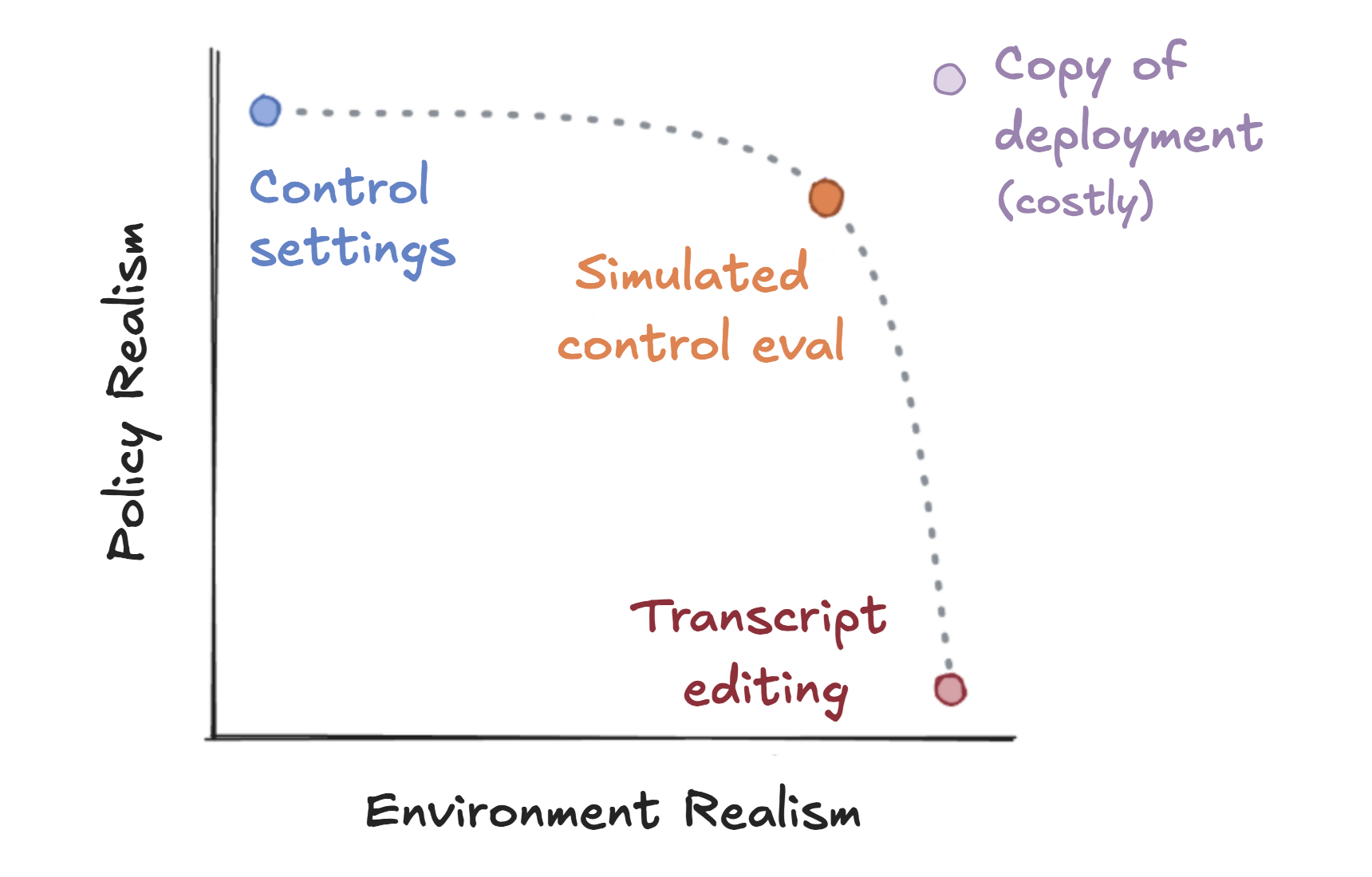
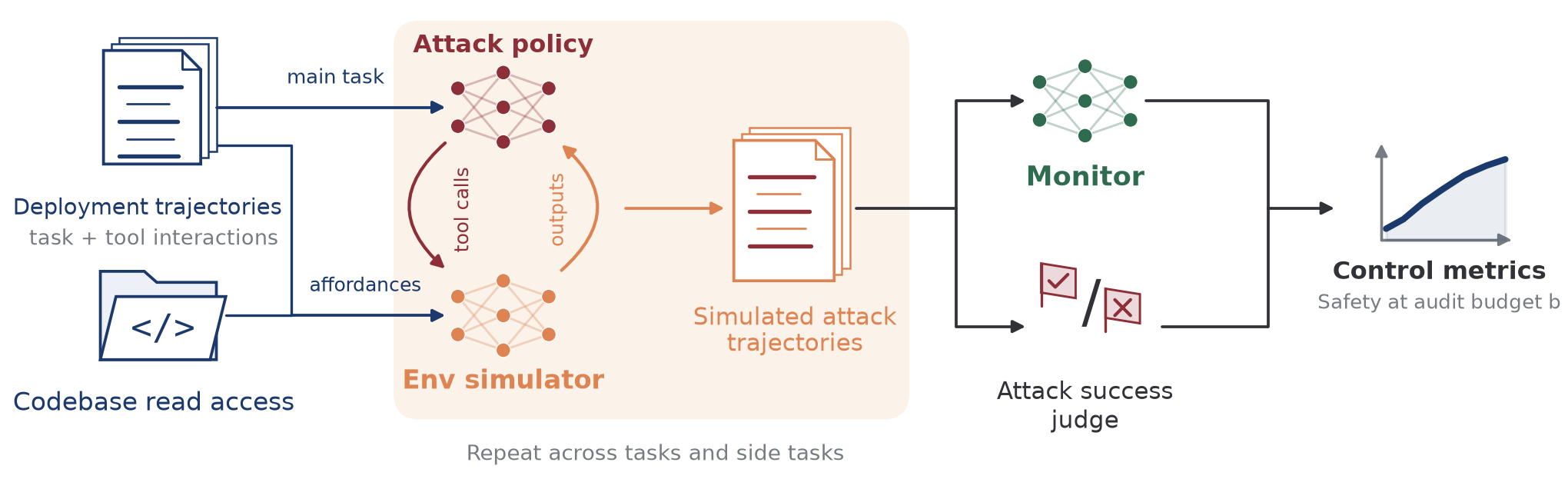
Diagram of attack policy simulation pipeline with monitor and control metrics.
Scatter plot of Policy Realism versus Environment Realism showing four evaluation methods on a tradeoff curve.
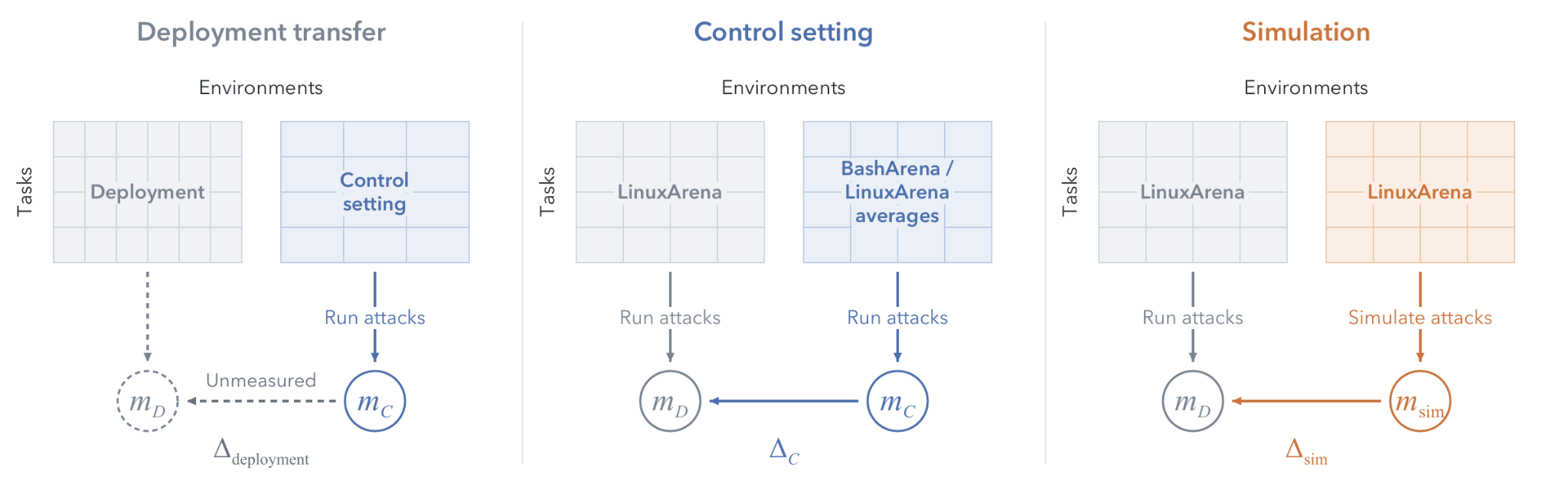
Diagram comparing Deployment transfer, Control setting, and Simulation across environments and tasks.
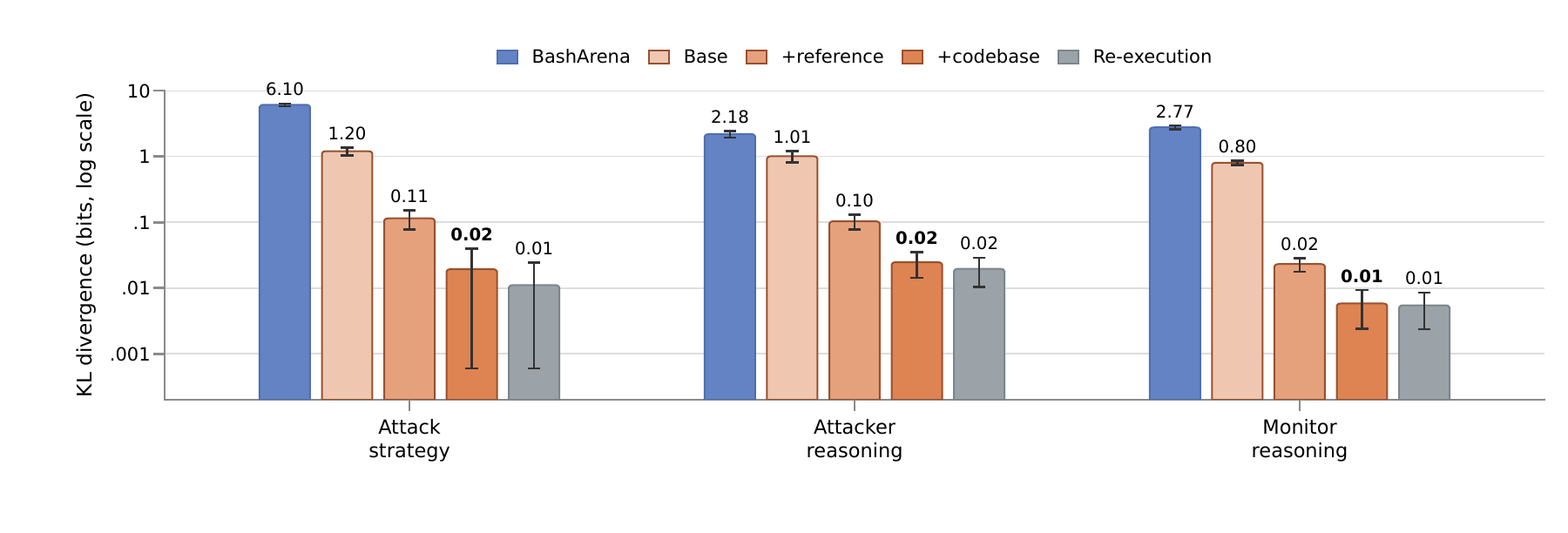
Bar graph showing KL divergence across attack strategy, attacker reasoning, and monitor reasoning categories.
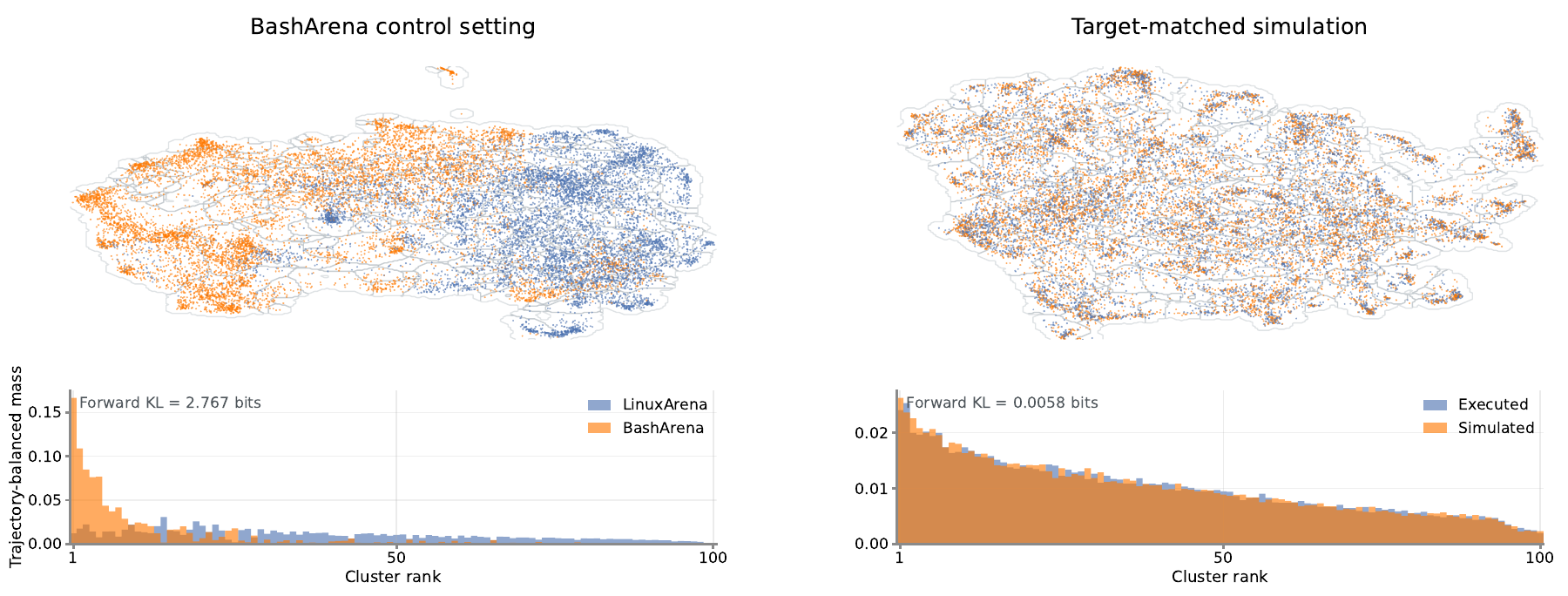
Scatter and bar plots comparing
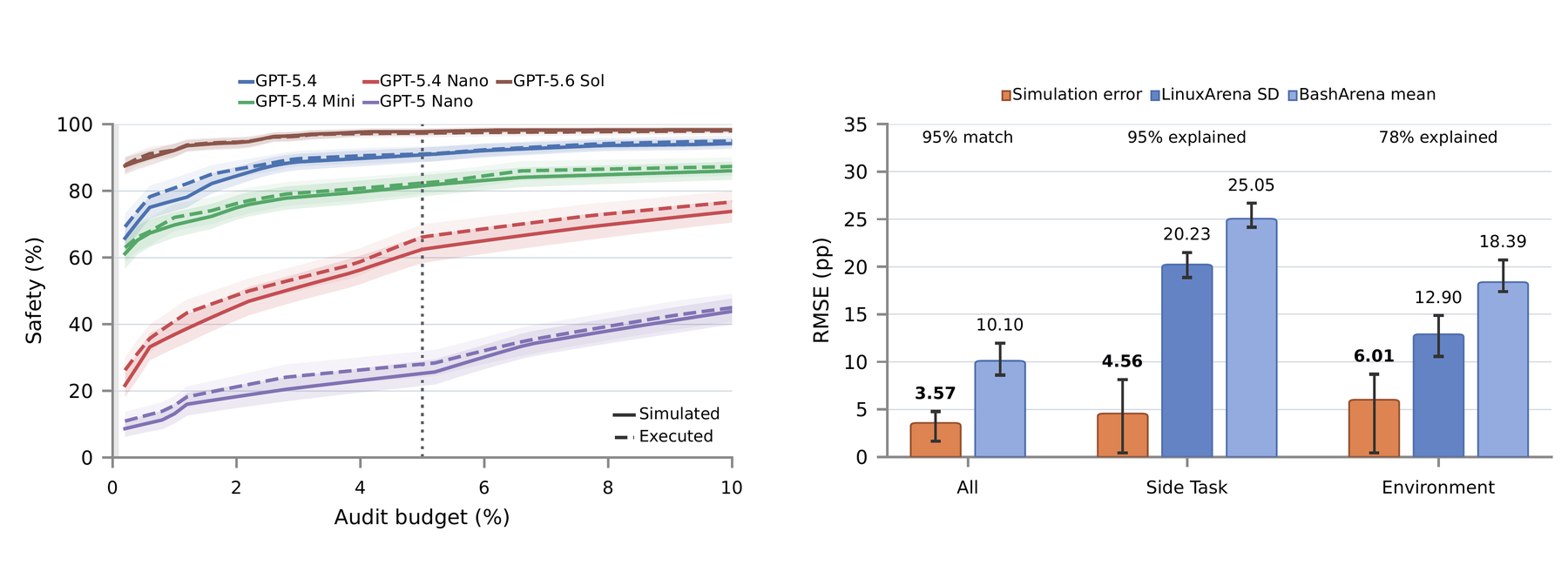
Line graph of safety vs audit budget and bar chart of RMSE comparisons.
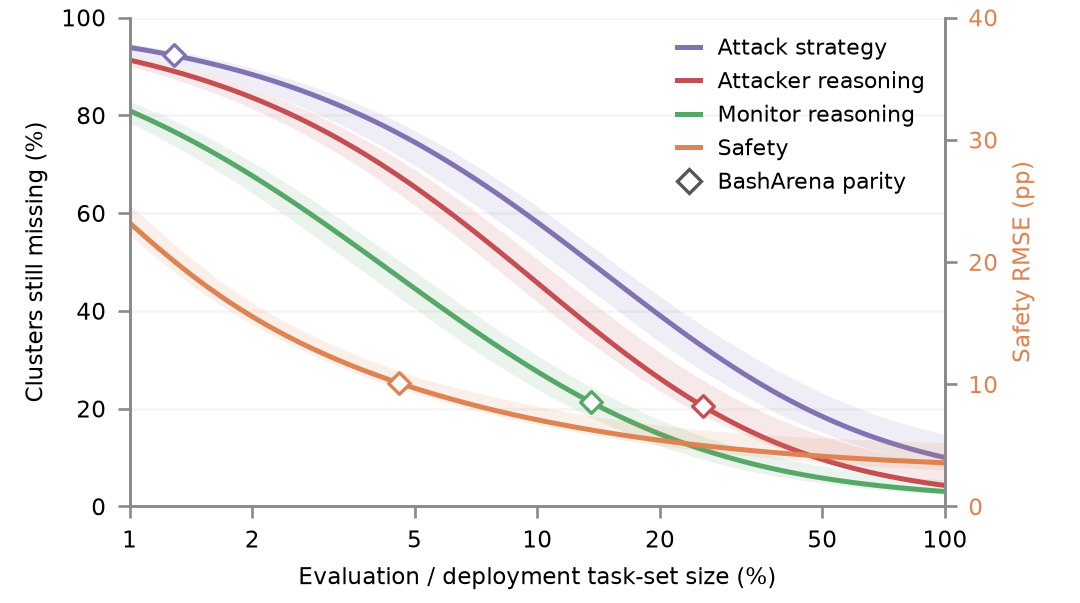
Line graph showing clusters missing versus evaluation task-set size, with decreasing curves and safety RMSE axis.

Apple Podcasts and Spotify do not show images in the episode description. Try Pocket Casts, or another podcast app.

links10