Skip to content
Artwork for LessWrong (30+ Karma)
LessWrong (30+ Karma) · August 25 · 6 min

“PSA: We can do better” by hersheys, Kaustubh Kislay

tl;dr: people should understand and think hard about the problems they work on. We’ve observed that those who work in AI safety (ourselves included) often rely on concerning heuristics when choosing what to work on. Running a conference is probably good, doing pragmatic alignment research might be good, and as long as such objectives don’t breach our internal models of what could contribute to reducing x-risk, these things are “what should be done”. But using such vibesy thought processes don’t always produce “actually impactful work” that would beat a prospective counterfactual. We wrote this post to share our observations and figure out what we should be doing instead. People don’t know what they’re working on AI safety is talent constrained. However, simply inflating the field doesn’t solve our bottleneck; rather, we need more people who understand the core arguments of AI safety. You can’t determine how to meaningfully contribute to AI safety without deeply knowing the problem you are trying to solve. Many newer people (us included!) rush into research, fellowships, and the like without building the context necessary for navigating the field. Agency-maxxing is not always good Moving fast is good. Moving too fast leads to poor ToC and [...] --- Outline: (00:50) People don't know what they're working on (01:22) Agency-maxxing is not always good (01:55) The problem with force multipliers (03:18) Deferring thinking to others (04:32) Streetlighting (05:17) How to avoid these: --- First published: August 24th, 2026 Source: https://www.lesswrong.com/posts/wiFv6LguphSxkzAnb/psa-we-can-do-better --- Narrated by TYPE III AUDIO. --- Images from the article: Apple Podcasts and Spotify do not show images in the episode description. Try Pocket Casts, or another podcast app.

0:00-6:46

transcript

No transcript — this publisher did not publish one.

show notes

tl;dr: people should understand and think hard about the problems they work on.

We’ve observed that those who work in AI safety (ourselves included) often rely on concerning heuristics when choosing what to work on. Running a conference is probably good, doing pragmatic alignment research might be good, and as long as such objectives don’t breach our internal models of what could contribute to reducing x-risk, these things are “what should be done”. But using such vibesy thought processes don’t always produce “actually impactful work” that would beat a prospective counterfactual. We wrote this post to share our observations and figure out what we should be doing instead.

People don’t know what they’re working on

AI safety is talent constrained. However, simply inflating the field doesn’t solve our bottleneck; rather, we need more people who understand the core arguments of AI safety. You can’t determine how to meaningfully contribute to AI safety without deeply knowing the problem you are trying to solve. Many newer people (us included!) rush into research, fellowships, and the like without building the context necessary for navigating the field.

Agency-maxxing is not always good

Moving fast is good. Moving too fast leads to poor ToC and [...]

---

Outline:

(00:50) People don't know what they're working on

(01:22) Agency-maxxing is not always good

(01:55) The problem with force multipliers

(03:18) Deferring thinking to others

(04:32) Streetlighting

(05:17) How to avoid these:

---

First published:
August 24th, 2026

Source:
https://www.lesswrong.com/posts/wiFv6LguphSxkzAnb/psa-we-can-do-better

---

Narrated by TYPE III AUDIO.

---

Images from the article:
Meme contrasting confused cartoon face with calm man on phone.
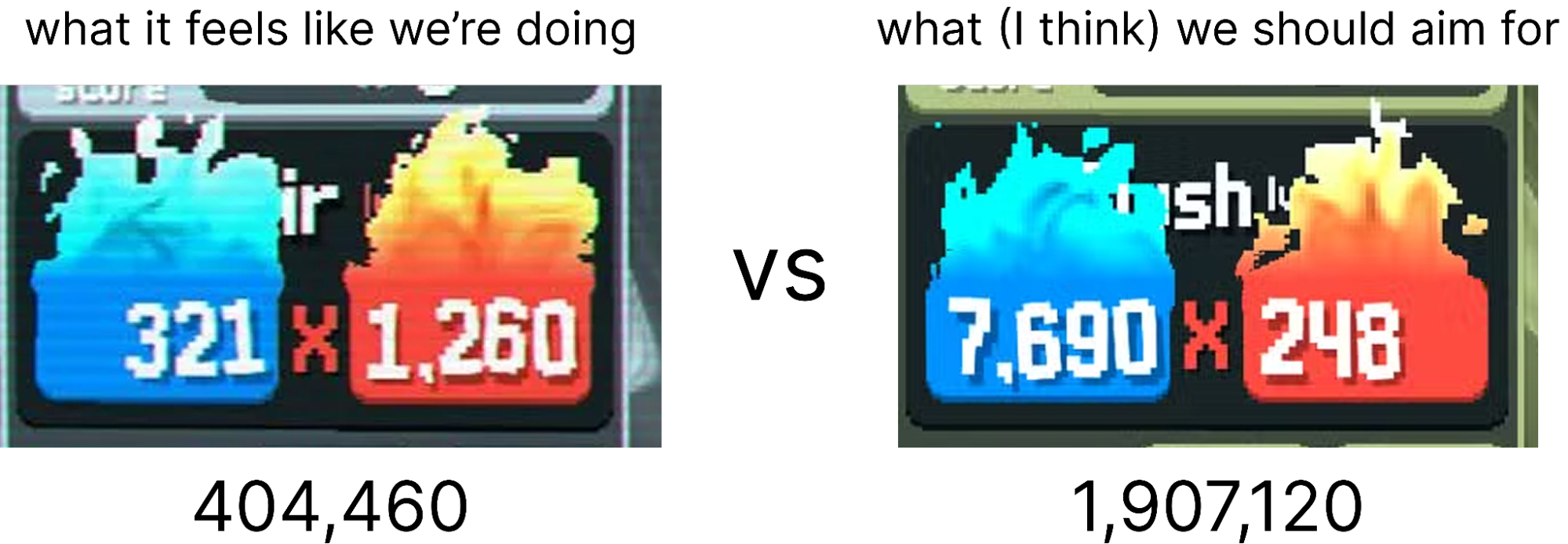
Game scoreboards showing blue and orange fire icons with numbers.

Apple Podcasts and Spotify do not show images in the episode description. Try Pocket Casts, or another podcast app.

links5