
“A basic case for differentially accelerating conceptual reasoning capabilities” by Emery Cooper, Caspar Oesterheld, Chi Nguyen
transcript
show notes
Introduction
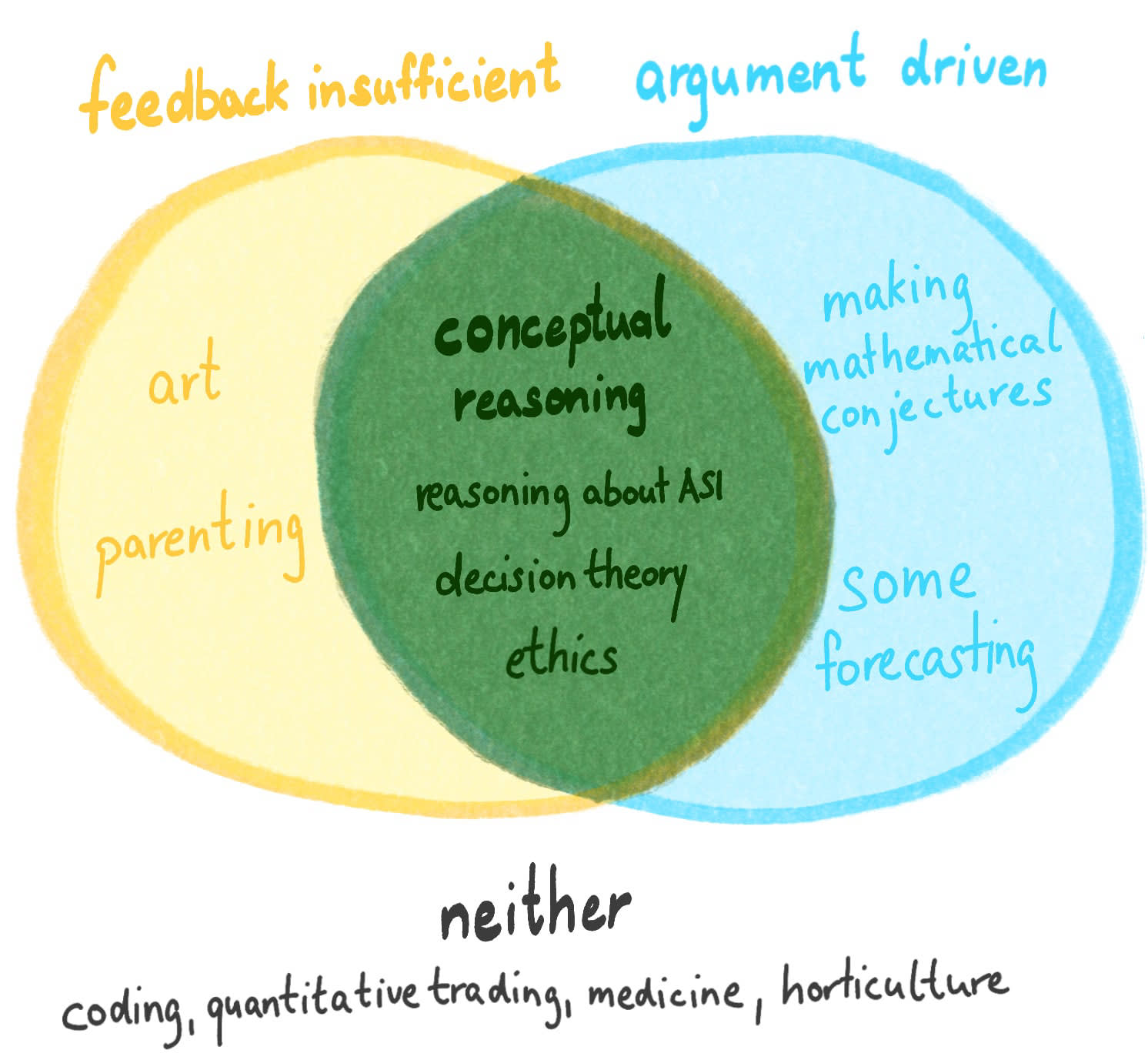
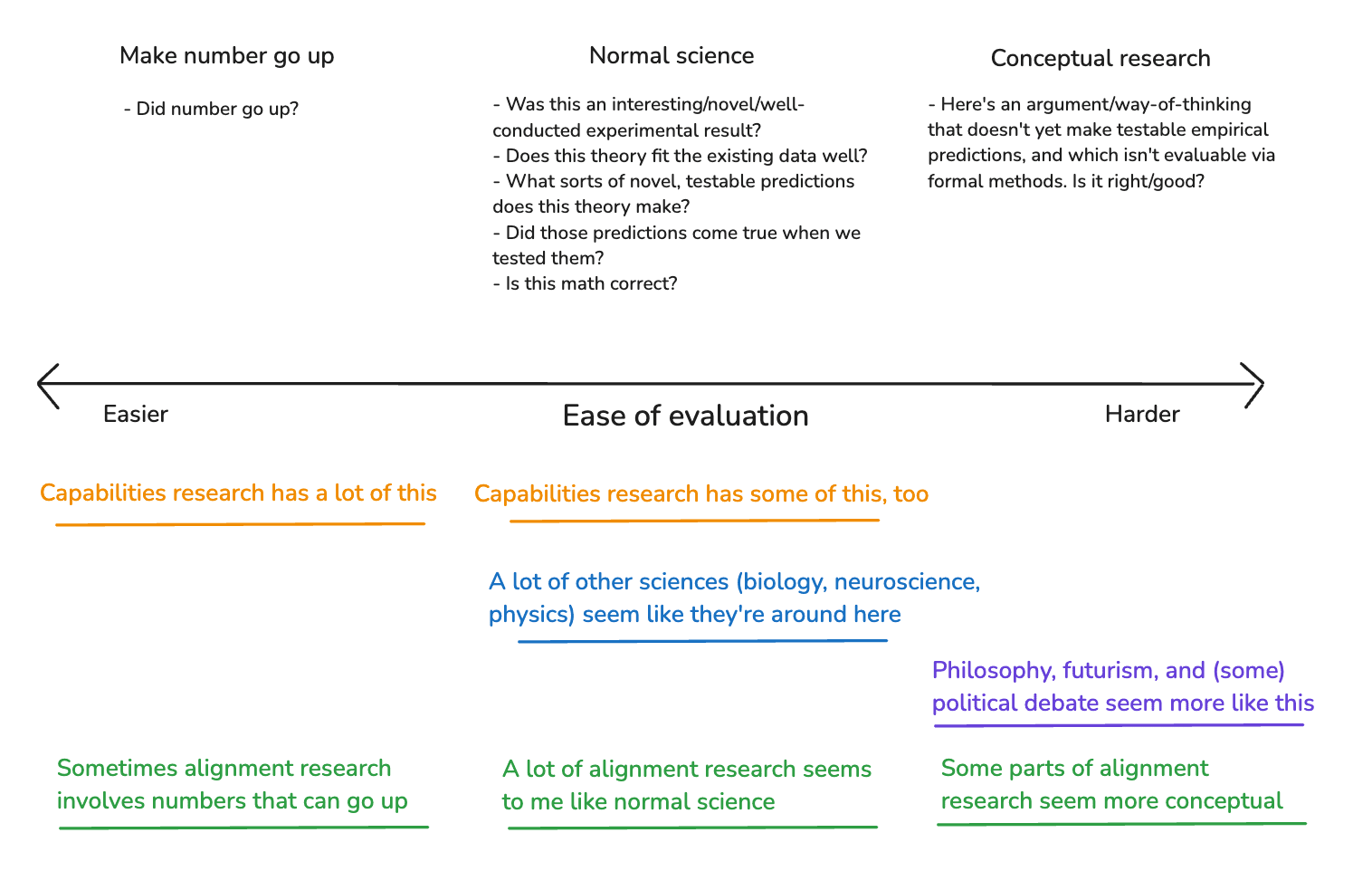
In this post, we make the case that alignment and other important work require especially strong conceptual reasoning capabilities. By this, we roughly mean tasks that are similar to philosophy in that they aren't straightforwardly verifiable, and progress relies on informal a priori reasoning and argumentation. We argue that differentially accelerating AI's conceptual reasoning capabilities is important.
We also think it's neglected, and that the AI safety community currently underinvests in this area. We have ourselves pivoted from doing conceptual research directly to working mainly on differentially accelerating AI's conceptual reasoning. We have a shovel-ready agenda which can absorb more people. In a follow-up post, we will lay out at a high level how to work on this problem. If you are interested in doing this work, get in touch!
For others discussing related worries, see Joe Carlsmith on using AI for AI safety and on building AIs that do human-like philosophy, Wei Dai on the potential difficulty of AI doing philosophy, Paul Christiano's first story of alignment failure, John Wentworth in his case against AI control and, for an overview, Caspar's readings on the nature of alignment research. See also Caspar's post on the basic argument for [...]
---
Outline:
(00:15) Introduction
(02:11) Overview
(07:08) It's important how soon AI is good at conceptual reasoning
(07:14) Important challenges need conceptual reasoning
(18:56) AI R&D and takeover rely much less on conceptual reasoning
(28:35) AI being better at conceptual reasoning earlier would be very valuable
(35:47) We can probably differentially accelerate conceptual reasoning
(35:53) Work on conceptual reasoning is likely counterfactual and tractable
(41:12) Effects on generic capabilities are likely small
(44:15) Counterpoint: Using our datasets to develop generic techniques
(46:00) Our work
(48:53) Acknowledgements
(49:31) Appendices
The original text contained 19 footnotes which were omitted from this narration.
---
First published:
October 26th, 2026
---
Narrated by TYPE III AUDIO.
---
Images from the article:
Apple Podcasts and Spotify do not show images in the episode description. Try Pocket Casts, or another podcast app.
- https://www.lesswrong.com/posts/eimAN67tiNsrrtnbK/a-basic-case-for-differentially-accelerating-conceptuallesswrong.com
- TYPE III AUDIOtype3.audio
- Note: Forecasting ASI seems conceptual, but e.g., pre-AGI political forecasting seems like it has relatively good feedback (given that one can learn a lot from and practise on past data).res.cloudinary.com
- This diagram is from Joe Carlsmith's Can we safely automate alignment research?, and illustrates a view we broadly agree with of how conceptual capabilities research is compared to the domains we want to accelerate, like alignment research and philosophy.res.cloudinary.com
