What Do Kernels, Length Scale & Amplitude Mean in Gaussian Processes?
transcript
show notes
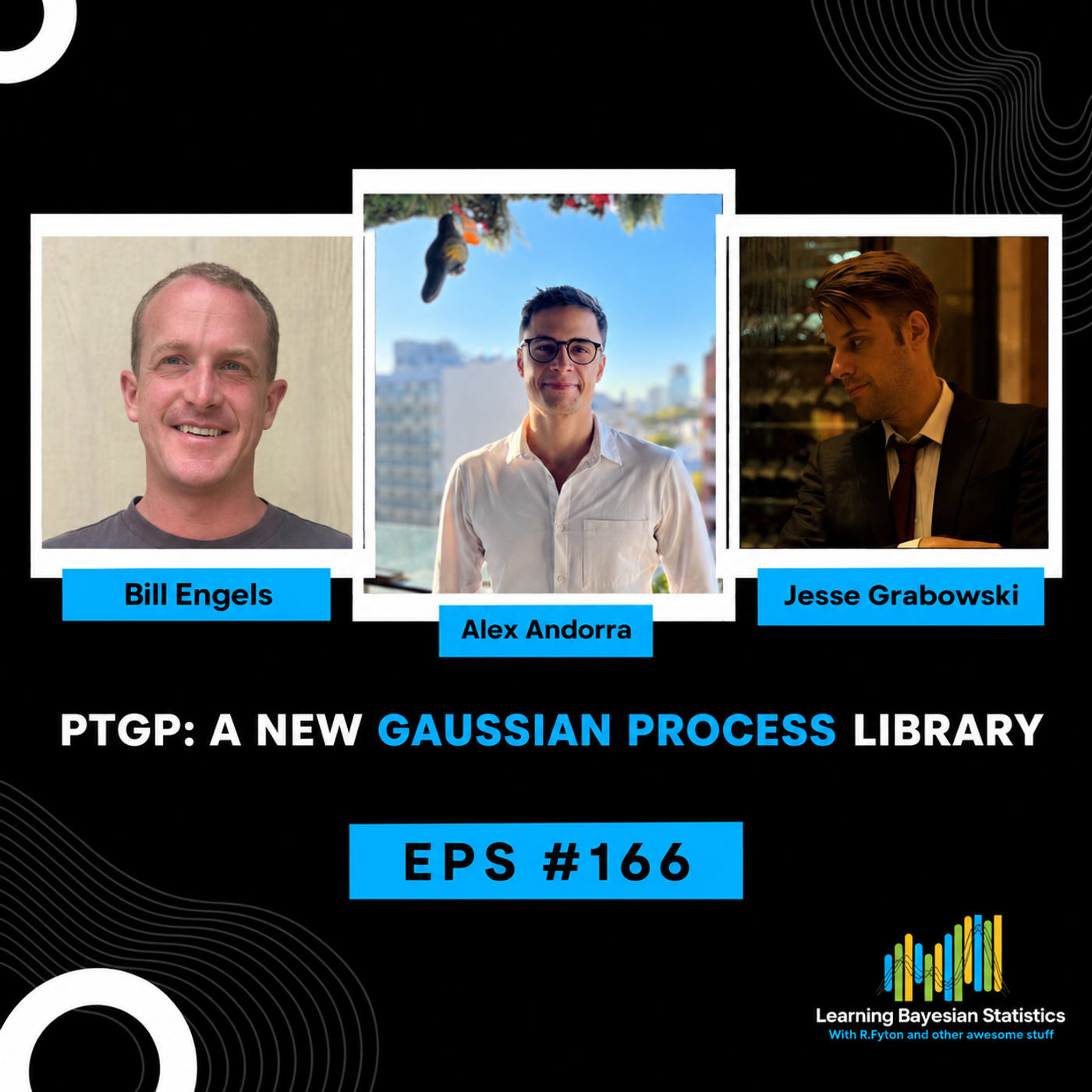
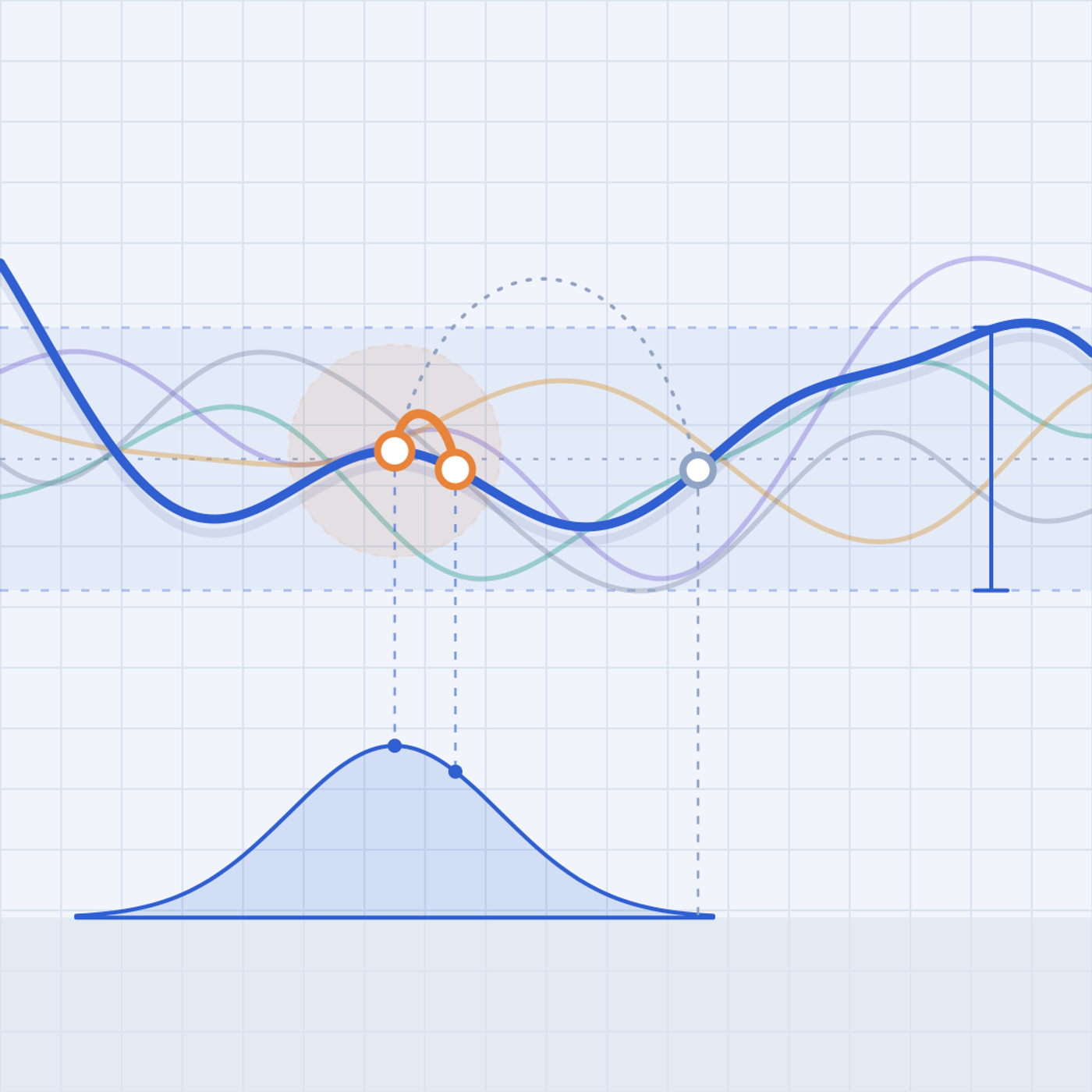
Today's clip is from Episode 166, featuring Bill Engels & Jesse Grabowski. In this conversation, Bill explains what a kernel means in a Gaussian process and how it defines the idea of similarity between data points. He then breaks down the role of the length scale, showing how it controls how quickly the relationship between two points changes, and how amplitude controls the overall scale of the functions a GP can represent.
The discussion also connects these ideas to the practical use of Gaussian processes for modeling unknown nonlinear relationships, and why kernels provide an interpretable way to describe how inputs are related.
Full discussion here
Support & Resources
→ Support the show on Patreon
→ Bayesian Modeling Course (first 2 lessons free):
Our theme music is « Good Bayesian », by Baba Brinkman (feat MC Lars and Mega Ran). Check out his awesome work!