(Improved Version) Podcast: Trajan's Column
transcript
show notes
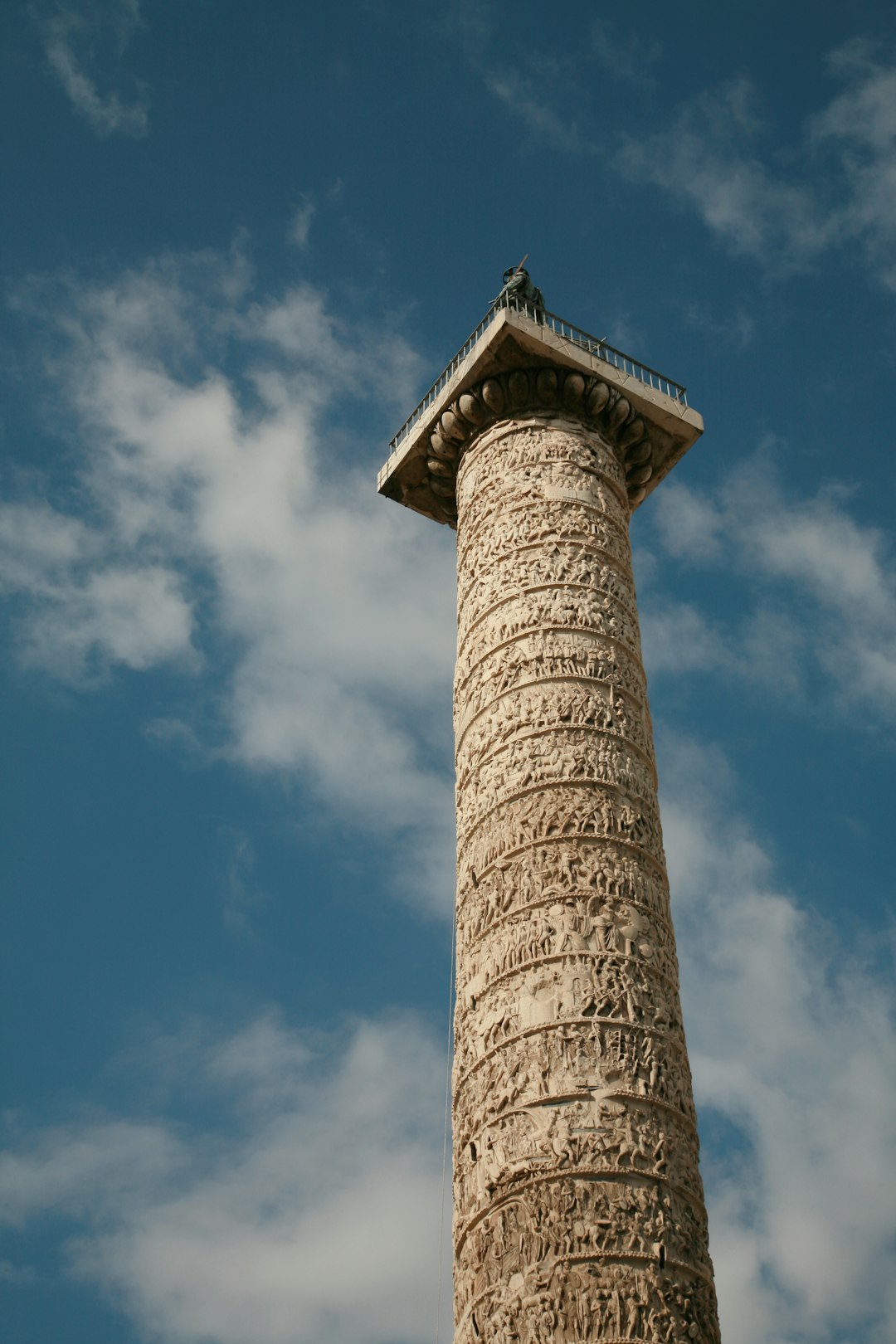
Inscription
SENATVS·POPVLVSQVE·ROMANVS
IMP·CAESARI·DIVI·NERVAE·F·NERVAE
TRAIANO·AVG·GERM·DACICO·PONTIF
MAXIMO·TRIB·POT·XVII·IMP·VI·COS·VI·P·P
AD·DECLARANDVM·QVANTAE·ALTITVDINIS
MONS·ET·LOCVS·TAN[TIS·OPER]IBVS·SIT·EGESTVS
Physical rows follow the surviving inscription; brackets mark restored lost text in the final row.
Reading line one
Senatus populusque Romanus
The Senate and People of Rome
Senatus. means “Senate”. It is a masculine noun in the nominative singular, serving as the subject of the sentence. This term refers to the governing body of Rome, emphasizing its authority and prominence.
populusque. means “and the people”. It combines the masculine nominative singular noun populus with the enclitic -que, and functions with Senatus as the subject.
Romanus. means “Roman”. It is a masculine adjective in the nominative singular, modifying populus and identifying the people as Roman.
Reading line two
Imperatori Caesari divi Nervae filio Nervae Traiano Augusto Germanico Dacico Pontifici Maximo
To the emperor Caesar Nerva Trajan Augustus, son of the deified Nerva, conqueror of Germany and Dacia, chief priest
Imperatori Caesari
to Emperor Caesar
IMP. is an abbreviation of Imperatori. Imperatori means “emperor”. It is a masculine noun in the dative singular, indicating the recipient of the dedication. This term highlights the supreme authority of the individual being addressed.
Caesari. means “Caesar”. It is a masculine noun in the dative singular, functioning as an appositional title to Imperatori. Caesar was a title of high rank, originally derived from Julius Caesar, and later used by Roman emperors.
divi Nervae filio
son of the divine Nerva
divi. means “divine”. It is a masculine adjective in the genitive singular, modifying Nervae. This term signifies the deification of Nerva, a posthumous honor granted to emperors.
Nervae. means “Nerva”. It is a masculine noun in the genitive singular, indicating possession or lineage. Here, it specifies the divine status of Nerva and his relationship to the Emperor.
F. is an abbreviation of filio. filio means “son”. It is a masculine noun in the dative singular, functioning as an appositional clarification to Imperatori Caesari. This term reinforces the familial connection to Nerva.
Nervae Traiano Augusto
Nerva Trajan Augustus
Nervae. means “Nerva”. It is repeated as a masculine noun in the genitive singular, again indicating possession or lineage. This repetition emphasizes the Emperor’s heritage.
Traiano. means “Trajan”. It is a masculine adjective in the dative singular, modifying Imperatori. Trajan is the Emperor’s personal name, further specifying his identity.
AVG. is an abbreviation of Augusto. Augusto means “Augustus”. It is a masculine adjective in the dative singular, modifying Imperatori. Augustus was an honorific title denoting supreme authority and reverence.
Germanico Dacico
conqueror of the Germans and Dacians
GERM. is an abbreviation of Germanico. Germanico means “Germanicus”. It is a masculine adjective in the dative singular, modifying Imperatori. This title commemorates military victories in Germania, underscoring the Emperor’s achievements.
Dacico. means “Dacicus”. It is a masculine adjective in the dative singular, modifying Imperatori. This title celebrates military successes in Dacia, further glorifying the Emperor’s conquests.
Pontifici Maximo
Chief Priest
PONTIF. is an abbreviation of Pontifici. Pontifici means “pontiff”. It is a masculine noun in the dative singular, functioning as an appositional title to Imperatori. Pontifex Maximus was the highest religious office in Rome, combining spiritual and political power. The title continues with Maximo at the beginning of physical row four.
Maximo. means “greatest”. It is a masculine adjective in the dative singular, modifying Pontifici. This superlative emphasizes the unparalleled status of the Pontifex Maximus.
Reading line three
tribunicia potestate septimum decimum imperatori sextum consuli sextum patri patriae
Holding tribunician power for the seventeenth time, acclaimed imperator six times, consul six times, father of the fatherland
tribunicia potestate septimum decimum
holding tribunician power for the seventeenth time
TRIB. is an abbreviation of tribunicia. tribunicia means “tribunician”. It is an adjective in the ablative singular feminine, modifying “potestate.” Here, it describes the type of power being exercised, specifically the tribunician authority, which was a key aspect of Roman governance.
POT. is an abbreviation of potestate. potestate means “power”. It is a noun in the ablative singular feminine, functioning as the object of the implied preposition “with” or “by.” The ablative indicates the means or capacity in which the subject acts, emphasizing the authority held.
XVII. is the Roman numeral for 17. Here it has ordinal-adverbial force and is read septimum decimum.
imperatori sextum
hailed as emperor for the sixth time
IMP. is an abbreviation of imperatori. imperatori means “commander”. It is a noun in the dative singular masculine, functioning as an indirect object. The dative case expresses the role or title held, indicating that the subject is acting in the capacity of imperator.
VI. is the Roman numeral for 6. Here it has ordinal-adverbial force in the context of imperatorial acclamation and is read sextum.
consuli sextum
consul for the sixth time
COS. is an abbreviation of consuli. consuli means “consul”. It is a noun in the dative singular masculine, functioning as an indirect object. Like “imperatori,” the dative case indicates the role or title held, showing the subject acting in the capacity of consul.
VI. is the Roman numeral for 6. Here it has ordinal-adverbial force in the context of consulship and is read sextum.
patri patriae
Father of the Fatherland
P·P. is an abbreviation of patri patriae, “father of the fatherland.” The expanded words complete the emperor’s honorific titles.
Reading line four
ad declarandum quantae altitudinis mons et locus tantis operibus sit egestus
To demonstrate how lofty a hill and how much ground were carried away for such great works
ad declarandum
to declare
ad. means “to”. It is a preposition governing the accusative case, indicating purpose or direction in this line, specifically the aim of declaring something.
declarandum. means “declaring”. It is a gerund in the accusative case, functioning as the object of the preposition “ad” to express purpose.
quantae altitudinis mons et locus
the height of the mountain and the place
quantae. means “how great”. It is an adjective in the genitive case, singular, feminine, modifying “altitudinis” and introducing an indirect question about the magnitude of the height.
altitudinis. means “height”. It is a noun in the genitive case, singular, feminine, used to express a quality or measurement, specifically the height of the mountain and place.
mons. means “mountain”. It is a noun in the nominative case, singular, masculine, serving as one of the subjects of the clause.
et. means “and”. It is a conjunction functioning as a coordinator, linking “mons” and “locus” as joint subjects.
locus. means “place”. It is a noun in the nominative case, singular, masculine, serving as the second subject of the clause, joined to “mons” by “et.”
tantis operibus sit egestus
that has been removed by such great works
tantis. means “so great”. It is an adjective in the ablative case, plural, masculine, modifying “operibus” to emphasize the magnitude of the works.
operibus. means “work”. It is a noun in the ablative case, plural, neuter, functioning as the object of the ablative of means, indicating the instrument by which the excavation was accomplished.
sit. means “be”. It is a verb in the present subjunctive, active voice, third person singular, functioning as the predicate of the indirect question introduced by “quantae.”
egestus. means “excavated”. It is a perfect passive participle in the nominative case, singular, masculine, agreeing with “mons et locus” and describing their state as the result of the works.
Thanks for reading! Subscribe for free to receive new posts and support my work.
This is a public episode. If you would like to discuss this with other subscribers or get access to bonus episodes, visit digitalmonastery.substack.com