Skip to content
Artwork for Inside Biodiversity
Inside Biodiversity · September 1 · 31 min

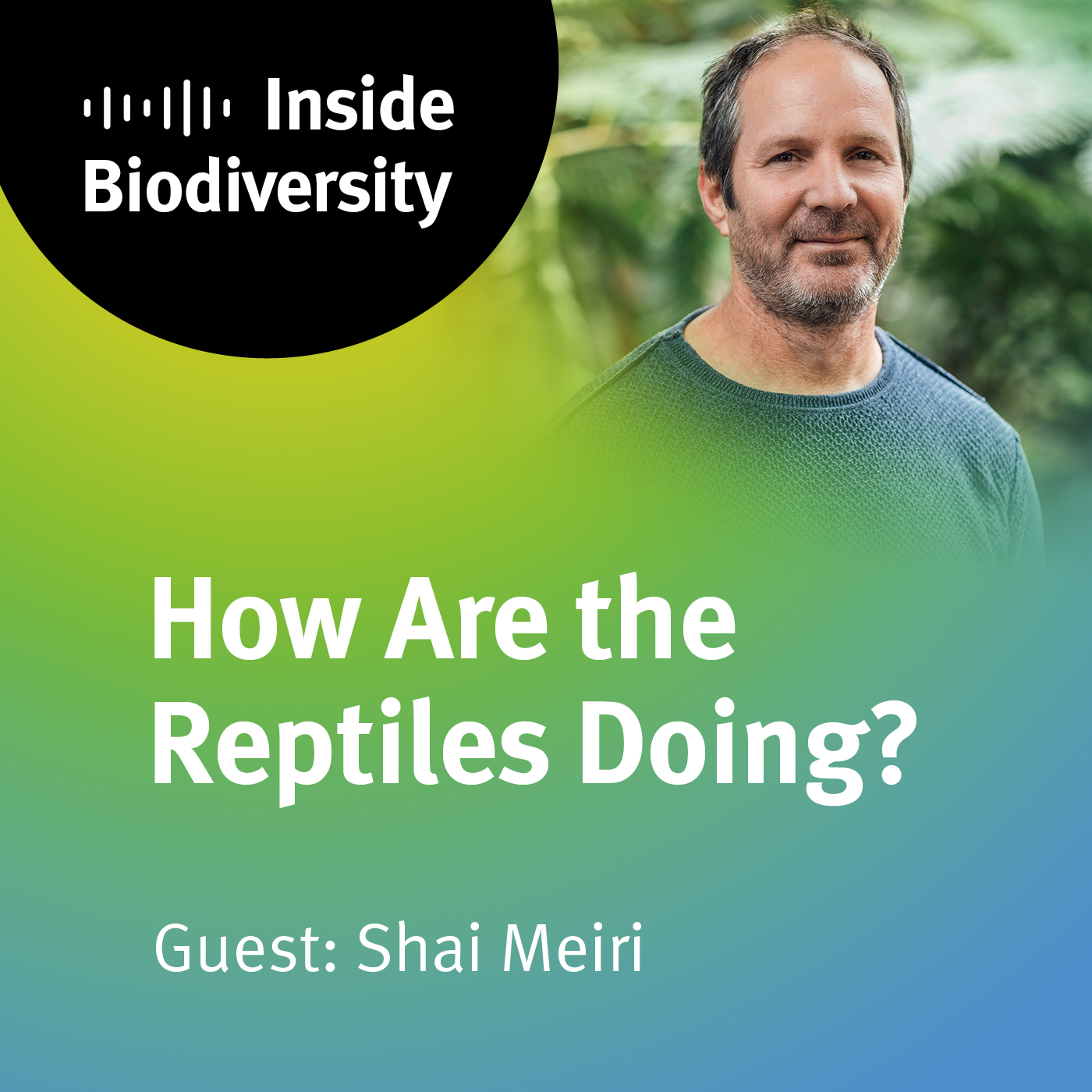
How Are the Reptiles Doing?

Guest: Shai Meiri In this episode, host Volker Hahn speaks with macroecologist Shai Meiri about the state of reptiles worldwide. Which reptile groups are most threatened? Why do we know so little about lizards and snakes? And how do public perceptions influence research and conservation? The episode explores global reptile trends, the major threats they face, and why these often-overlooked animals deserve far more attention. Shai Meiri at the University of Melbourne: https://biosciences.unimelb.edu.au/research/shai-meiri-lab Shai Meiri at Tel Aviv University: https://en-lifesci.tau.ac.il/profile/uncshai Reptiles mentioned in this episode: Thorny devil (Moloch horridus) – Australian desert lizard known for its spiny appearance and specialized ant diet: https://en.wikipedia.org/wiki/Thorny_devil Leaf-tailed geckos – Masters of camouflage from Madagascar and Australia: https://en.wikipedia.org/wiki/Uroplatus https://australian.museum/learn/animals/reptiles/southern-leaf-tailed-gecko/ Tropiocolotes yomtovi – Tiny gecko inhabiting the Sahara–Arabian Desert: https://reptile-database.reptarium.cz/species?genus=Tropiocolotes&species=yomtovi Skinks: https://en.wikipedia.org/wiki/Skink Caribbean iguanas: The Grand Cayman Blue Iguana is a rare conservation success story: https://www.iguanafoundation.org/what-we-support/rock-iguanas/grand-cayman-blue-iguana/?utm_source=chatgpt.com However, not all Caribbean iguanas are increasing: https://www.iucn-isg.org/ Marine turtles – Among the world's best-known and most intensively conserved reptiles: https://www.worldwildlife.org/species/sea-turtle IUCN Red List explained: https://www.iucnredlist.org/resources/summary-statistics

0:00-31:17

transcript

No transcript — this publisher did not publish one.

show notes

Guest: Shai Meiri

In this episode, host Volker Hahn speaks with macroecologist Shai Meiri about the state of reptiles worldwide. Which reptile groups are most threatened? Why do we know so little about lizards and snakes? And how do public perceptions influence research and conservation? The episode explores global reptile trends, the major threats they face, and why these often-overlooked animals deserve far more attention.


Shai Meiri at the University of Melbourne: https://biosciences.unimelb.edu.au/research/shai-meiri-lab
Shai Meiri at Tel Aviv University: https://en-lifesci.tau.ac.il/profile/uncshai


Reptiles mentioned in this episode:

Thorny devil (Moloch horridus) – Australian desert lizard known for its spiny appearance and specialized ant diet: https://en.wikipedia.org/wiki/Thorny_devil

Leaf-tailed geckos – Masters of camouflage from Madagascar and Australia: https://en.wikipedia.org/wiki/Uroplatus
https://australian.museum/learn/animals/reptiles/southern-leaf-tailed-gecko/

Tropiocolotes yomtovi – Tiny gecko inhabiting the Sahara–Arabian Desert: https://reptile-database.reptarium.cz/species?genus=Tropiocolotes&species=yomtovi

Skinks: https://en.wikipedia.org/wiki/Skink

Caribbean iguanas: The Grand Cayman Blue Iguana is a rare conservation success story: https://www.iguanafoundation.org/what-we-support/rock-iguanas/grand-cayman-blue-iguana/?utm_source=chatgpt.com However, not all Caribbean iguanas are increasing: https://www.iucn-isg.org/

Marine turtles – Among the world's best-known and most intensively conserved reptiles: https://www.worldwildlife.org/species/sea-turtle


IUCN Red List explained: https://www.iucnredlist.org/resources/summary-statistics
links11