Skip to content
Artwork for Inside Biodiversity
Inside Biodiversity · Tuesday · 35 min

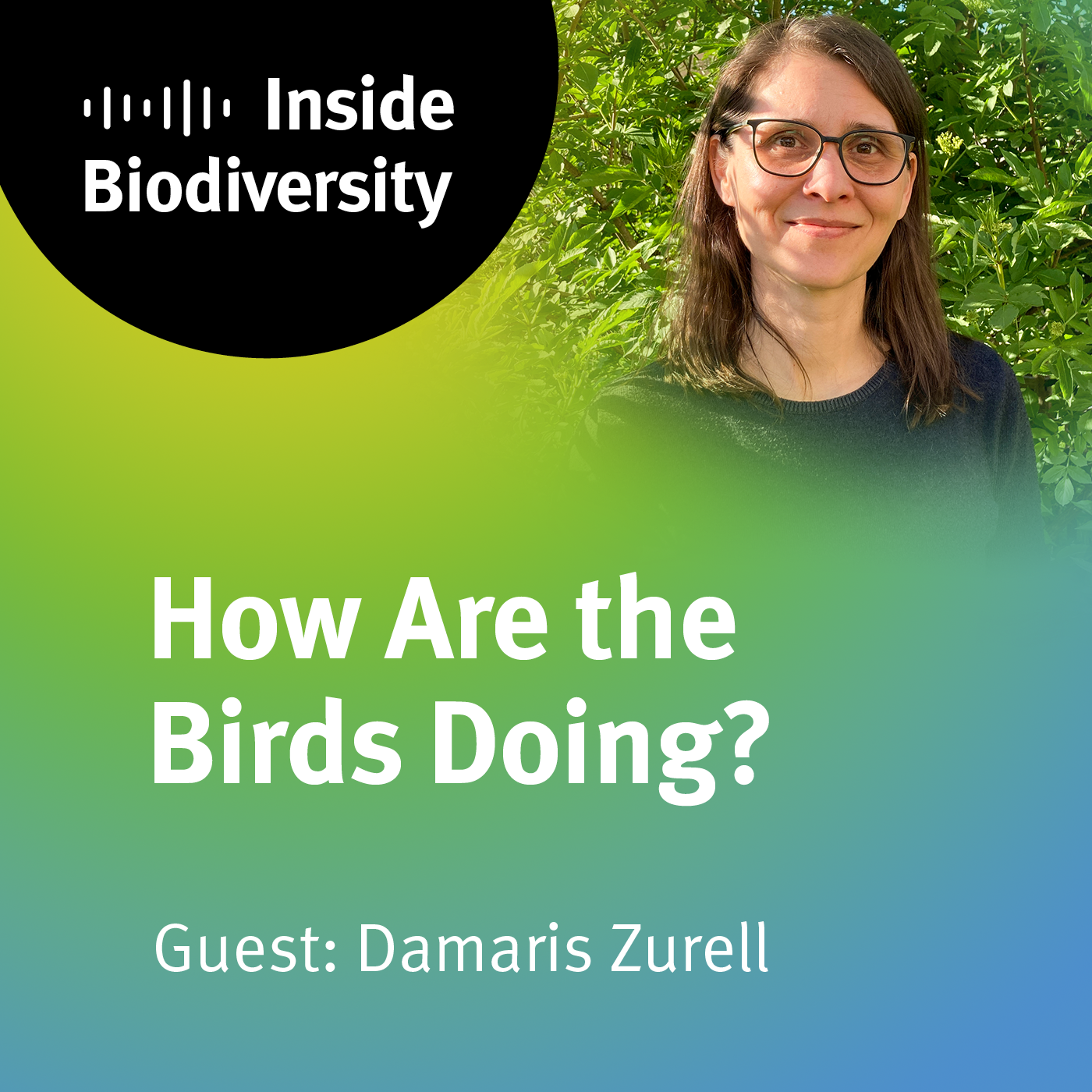
How Are the Birds Doing?

Guest: Damaris Zurell In this episode, macroecologist Damaris Zurell and host Volker Hahn look at what the data tell us about bird change worldwide. While bird numbers (abundance) have declined dramatically in Europe and North America, some species are increasing—and local species richness can remain stable even as bird communities undergo major changes. They discuss the roles of habitat loss, land-use change, climate change and direct exploitation, and explore what can be done to protect birds—from international conservation efforts to creating better habitats in our own gardens. Damaris Zurell’s website: https://damariszurell.github.io/ Papers mentioned in this episode: Loss of 3 billion individual birds since 1970 in North America: https://www.science.org/doi/10.1126/science.aaw1313 Loss of of 560–620 million individual birds since 1980 in the EU: https://onlinelibrary.wiley.com/doi/10.1002/ece3.8282 61% of bird species worldwide have declining populations: https://www.birdlife.org/news/2025/10/10/restoring-habitats-key-to-fighting-extinctions/ European birds shifted their ranges north and north-eastwards, US birds westwards: https://pmc.ncbi.nlm.nih.gov/articles/PMC10999265/ Declines of understory birds in a protected forest in Panama: https://pubmed.ncbi.nlm.nih.gov/35377736/ Bird monitoring opportunities mentioned in this episode: eBird https://ebird.org/home?continue Merlin https://merlin.allaboutbirds.org/ Ornitho.de https://www.ornitho.de/ Annual bird-counting in Germany (“Stunde der Gartenvögel”) https://www.nabu.de/tiere-und-pflanzen/aktionen-und-projekte/stunde-der-gartenvoegel/index.html

0:00-35:17

transcript

No transcript — this publisher did not publish one.

show notes

Guest: Damaris Zurell

In this episode, macroecologist Damaris Zurell and host Volker Hahn look at what the data tell us about bird change worldwide. While bird numbers (abundance) have declined dramatically in Europe and North America, some species are increasing—and local species richness can remain stable even as bird communities undergo major changes. They discuss the roles of habitat loss, land-use change, climate change and direct exploitation, and explore what can be done to protect birds—from international conservation efforts to creating better habitats in our own gardens.

Damaris Zurell’s website: https://damariszurell.github.io/

Papers mentioned in this episode:
Loss of 3 billion individual birds since 1970 in North America: https://www.science.org/doi/10.1126/science.aaw1313
Loss of of 560–620 million individual birds since 1980 in the EU: https://onlinelibrary.wiley.com/doi/10.1002/ece3.8282
61% of bird species worldwide have declining populations: https://www.birdlife.org/news/2025/10/10/restoring-habitats-key-to-fighting-extinctions/
European birds shifted their ranges north and north-eastwards, US birds westwards: https://pmc.ncbi.nlm.nih.gov/articles/PMC10999265/
Declines of understory birds in a protected forest in Panama: https://pubmed.ncbi.nlm.nih.gov/35377736/

Bird monitoring opportunities mentioned in this episode:
eBird https://ebird.org/home?continue
Merlin https://merlin.allaboutbirds.org/
Ornitho.de https://www.ornitho.de/
Annual bird-counting in Germany (“Stunde der Gartenvögel”) https://www.nabu.de/tiere-und-pflanzen/aktionen-und-projekte/stunde-der-gartenvoegel/index.html
links10