Hotel Moment · April 29 · 37 min
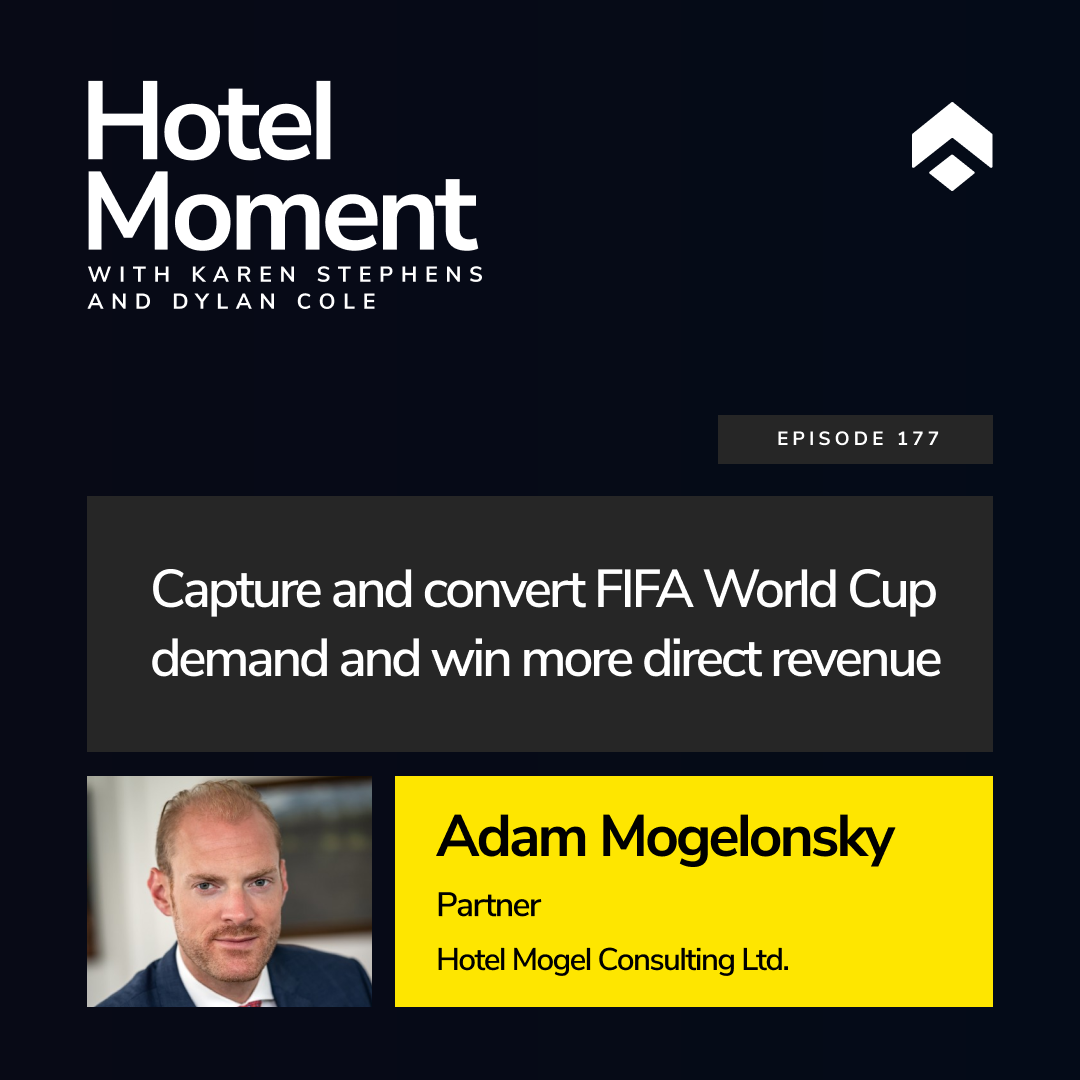
Capture and convert FIFA World Cup demand and win more direct revenue | with Adam Mogelonsky
0:00-37:21
transcript
show notes
In this episode of Hotel Moment, host Karen Stephens, CMO of Revinate, welcomes back Adam Mogelonsky, Partner at Hotel Mogel Consulting Ltd with over 15 years of experience focusing on revenue modeling, margin optimization, and integrating emergent technologies for upscale and luxury hotels, to discuss preparing for FIFA World Cup 2026. With less than eight weeks until the tournament brings 72% ADR premiums and 13% RevPAR lifts to 16 host cities across 11 US markets, three in Mexico, and two in Canada, Adam emphasizes viewing FIFA not as a one-off event but as an opportunity to build systems and processes applicable to any future landmark compression event.
What you'll learn:
Throughout the conversation, Adam and Karen emphasize treating FIFA preparation as systems-building for any future compression event, from rate strategies to voice channel optimization to targeted direct offers.
If you enjoyed this episode, don’t forget to subscribe, rate, and review it on Apple Podcasts and Spotify. Instructions on how to do this are here.
Connect with Adam Mogelonsky here:
Connect with Karen Stephens here:
Follow the podcast here:
Episode Highlights
[00:00] FIFA as a systems-building opportunity - Adam frames the approach: "It's easy to look at FIFA as a one-off event, but there're tons of things that we can do to capture as much demand as possible for this one-off event, and then apply those systems and processes to any future event that goes forward."
[04:26] Lead time volatility operational challenges - Adam explains pandemic impact: "When we look at the confluence of Internet-borne bookings, digital bookings combined with relatively easy refundable policies that all came about during the pandemic, we've essentially trained a lot of our guests to expect that as the norm. People have been trained to book relatively close to the intended date. When you see such a large ADR premium from landmark events like FIFA, there is an increased expectation for service quality. Everyone knows the city will be more expensive, but they're going to be looking at it and going, well, you know, I'm staying in this branded hotel, I'm paying $700 a night when regular rates after that week are $300. What else am I getting?"
[08:01] Non-refundable versus refundable rate balance - Adam describes the science: "The whole idea of non-refundable versus refundable rate is scientific. It's also a bit of an art form. You want to incentivize the non-refundable rate by making it more attractive in terms of a price discount. But you don't want it to be so far that it pushes your cancelable rate out of competition with your comp set. Harmonization of data and the cleansing of records to properly associate how somebody felt about their stay, what else they spent on stay, with the rate plan that they were under, is rife territory for innovation."
[10:20] Packaging operational delivery versus friction - Adam outlines the challenge: "If you ask any hotel, they'll say, 'Yes, I want to maximize total revenue and revenue per guest,' because every hotel fundamentally knows that the more a guest spends on site, and the longer a guest stays with you, the more satisfied they are. The issues are: number one, can you deliver on any packages that you promise? That's going back to the operational issue. And then number two is the sticker price, where if you're pushing packages up front, it can potentially introduce another point of friction in terms of securing that booking."
[11:28] Direct bookings fenced offer strategy - Adam emphasizes the path forward: "Direct bookings are the best way forward for every hotel in terms of reducing commissions and then either having that net revenue gain flow through to GOP, or to enhancing service to thereby enhance guest satisfaction and potentially build out your return guest profile and loyalty."
[15:02] Voice channel data richness transformation - Adam reveals the opportunity: "I'm a huge fan of the voice channel because it is the most data-rich channel, but the least harmonized or structured in that data. Humans are way better talkers than we are typers. So therefore, this whole movement with AI-driven automation is moving us back towards what's called conversational commerce. You want to know in some sort of structured way what questions they ask. And from there, you can take those questions and say, well, how do we make this information more readily available on the website in a FAQ, in a storytelling manner, so that way the calls that are arriving are more high-intent or confident bookers."
[20:42] Story-driven guest concept introduction - Adam introduces the framework: "I want to introduce a term here, called story-driven guest. It's a little bit more ambiguous than just luxury, because luxury in essence is more of a rate term. Story is emotion. When you think about a story-driven hotelier and story-seeking guests, they don't want the standard experience. They want to truly live or embody something that's unique to them."
Chapters:
00:00 - Intro
04:26 - Lead time volatility and operational forecasting challenges
08:01 - Non-refundable versus refundable rate science
10:20 - Packaging strategy balancing delivery and friction
11:55 - Direct booking fenced offers for international travelers
15:02 - Voice channel data capture and AI search optimization
20:42 - Story-driven guest concept beyond luxury definitions
27:42 - Counter-programming for hotels outside FIFA markets
33:39 - Navigating fuel crisis uncertainty with peace of mind
If you enjoyed this episode, don’t forget to subscribe, rate and review it on Spotify and Apple Podcasts. Instructions on how to do this are here and follow us on LinkedIn so you never miss a moment!
Hotel Moment Podcast is handcrafted by our friends over at: fame.so
Previous guests include: Shannon Knapp, CEO of Leading Hotels of the World (LHW), Patrick Norton of Brittain Resorts & Hotels, Shawn Jereb of Montage International, Carlo Del Mistro, Chief Digital Officer of Ennismore, Jason Pirock of Springboard Hospitality, and many more.
Are you a hospitality industry leader with insights to share? We're always looking for innovative voices to join our conversation about the future of hospitality technology.
If you'd like to be a guest on an upcoming episode of Hotel Moment, we'd love to hear from you! Our podcast reaches thousands of hospitality professionals worldwide, and we're particularly interested in perspectives on:
Express your interest in being a guest →
Check out the three most downloaded episodes:
What you'll learn:
- Operational challenges from lead time volatility: Pandemic refundable policies trained guests to book days before arrival instead of months ahead, making it nearly impossible to forecast labor needs when premium rates create higher service expectations. Adam explains how to manage operational delivery when you can't predict demand until the last minute.
- Non-refundable versus refundable rate science: Discounting non-refundable rates too much pushes your flexible rates out of competition, but not enough won't drive commitment. Adam shares how to find the sweet spot using data that connects guest sentiment with the rate plan they chose.
- Packaging and direct booking fenced offers: Hotels can identify past guests from FIFA countries and offer them packages that bypass OTA rate parity rules. This strategy converts the 10-20% you'd pay in commissions into breakfast, lower rates, and direct bookings.
- Voice channel data goldmine transformation: Recording calls and converting them to text reveals the questions guests ask most, which become FAQ content that boosts your AI search ranking. Adam explains how this works whether callers book or not, and why non-bookers are your best callback list.
- Story-driven guest concept beyond luxury: Rate alone doesn't define luxury anymore. Adam introduces the story-driven framework, where boutique hotels win guests through unique design, wellness focus, or intimate key counts that create emotional connection rather than star ratings.
Throughout the conversation, Adam and Karen emphasize treating FIFA preparation as systems-building for any future compression event, from rate strategies to voice channel optimization to targeted direct offers.
If you enjoyed this episode, don’t forget to subscribe, rate, and review it on Apple Podcasts and Spotify. Instructions on how to do this are here.
Connect with Adam Mogelonsky here:
Connect with Karen Stephens here:
Follow the podcast here:
Episode Highlights
[00:00] FIFA as a systems-building opportunity - Adam frames the approach: "It's easy to look at FIFA as a one-off event, but there're tons of things that we can do to capture as much demand as possible for this one-off event, and then apply those systems and processes to any future event that goes forward."
[04:26] Lead time volatility operational challenges - Adam explains pandemic impact: "When we look at the confluence of Internet-borne bookings, digital bookings combined with relatively easy refundable policies that all came about during the pandemic, we've essentially trained a lot of our guests to expect that as the norm. People have been trained to book relatively close to the intended date. When you see such a large ADR premium from landmark events like FIFA, there is an increased expectation for service quality. Everyone knows the city will be more expensive, but they're going to be looking at it and going, well, you know, I'm staying in this branded hotel, I'm paying $700 a night when regular rates after that week are $300. What else am I getting?"
[08:01] Non-refundable versus refundable rate balance - Adam describes the science: "The whole idea of non-refundable versus refundable rate is scientific. It's also a bit of an art form. You want to incentivize the non-refundable rate by making it more attractive in terms of a price discount. But you don't want it to be so far that it pushes your cancelable rate out of competition with your comp set. Harmonization of data and the cleansing of records to properly associate how somebody felt about their stay, what else they spent on stay, with the rate plan that they were under, is rife territory for innovation."
[10:20] Packaging operational delivery versus friction - Adam outlines the challenge: "If you ask any hotel, they'll say, 'Yes, I want to maximize total revenue and revenue per guest,' because every hotel fundamentally knows that the more a guest spends on site, and the longer a guest stays with you, the more satisfied they are. The issues are: number one, can you deliver on any packages that you promise? That's going back to the operational issue. And then number two is the sticker price, where if you're pushing packages up front, it can potentially introduce another point of friction in terms of securing that booking."
[11:28] Direct bookings fenced offer strategy - Adam emphasizes the path forward: "Direct bookings are the best way forward for every hotel in terms of reducing commissions and then either having that net revenue gain flow through to GOP, or to enhancing service to thereby enhance guest satisfaction and potentially build out your return guest profile and loyalty."
[15:02] Voice channel data richness transformation - Adam reveals the opportunity: "I'm a huge fan of the voice channel because it is the most data-rich channel, but the least harmonized or structured in that data. Humans are way better talkers than we are typers. So therefore, this whole movement with AI-driven automation is moving us back towards what's called conversational commerce. You want to know in some sort of structured way what questions they ask. And from there, you can take those questions and say, well, how do we make this information more readily available on the website in a FAQ, in a storytelling manner, so that way the calls that are arriving are more high-intent or confident bookers."
[20:42] Story-driven guest concept introduction - Adam introduces the framework: "I want to introduce a term here, called story-driven guest. It's a little bit more ambiguous than just luxury, because luxury in essence is more of a rate term. Story is emotion. When you think about a story-driven hotelier and story-seeking guests, they don't want the standard experience. They want to truly live or embody something that's unique to them."
Chapters:
00:00 - Intro
04:26 - Lead time volatility and operational forecasting challenges
08:01 - Non-refundable versus refundable rate science
10:20 - Packaging strategy balancing delivery and friction
11:55 - Direct booking fenced offers for international travelers
15:02 - Voice channel data capture and AI search optimization
20:42 - Story-driven guest concept beyond luxury definitions
27:42 - Counter-programming for hotels outside FIFA markets
33:39 - Navigating fuel crisis uncertainty with peace of mind
If you enjoyed this episode, don’t forget to subscribe, rate and review it on Spotify and Apple Podcasts. Instructions on how to do this are here and follow us on LinkedIn so you never miss a moment!
Hotel Moment Podcast is handcrafted by our friends over at: fame.so
Previous guests include: Shannon Knapp, CEO of Leading Hotels of the World (LHW), Patrick Norton of Brittain Resorts & Hotels, Shawn Jereb of Montage International, Carlo Del Mistro, Chief Digital Officer of Ennismore, Jason Pirock of Springboard Hospitality, and many more.
Are you a hospitality industry leader with insights to share? We're always looking for innovative voices to join our conversation about the future of hospitality technology.
If you'd like to be a guest on an upcoming episode of Hotel Moment, we'd love to hear from you! Our podcast reaches thousands of hospitality professionals worldwide, and we're particularly interested in perspectives on:
- Innovation in hospitality technology
- Guest experience transformation
- Revenue optimization strategies
- Emerging industry trends
Express your interest in being a guest →
Check out the three most downloaded episodes:
links13