Artwork for Good Nature with Megan Leslie
Science

Good Nature with Megan Leslie

Antica Productions, WWF-Canada

Nature is in need right now. More than ever. But who is answering the call?
Good people, that’s who. And there are more of them than you might think. That’s why Megan Leslie, WWF‑Canada’s president and CEO, is chatting with folks who are proving that hope for nature isn’t just alive — it’s thriving. On this podcast, Megan celebrates both the good we find in nature and the good‑natured people working to protect it, proving that real change is not only possible, it’s already happening.

  • 11 episodes
  • Updated Thursday

Episodes11

  • Thursday · 32 min

    How forests fight floods with Donnie McPhee

    When most of us think about flood protection, we imagine storm drains or levees and dams. But what if the real answer is in the trees we plant, and where we choose to plant them? On this episode of Good Nature, host Megan Leslie is joined by Donnie MacPhee, formerly of Canada's National Tree Seed Centre. He makes the case for the bur oak, a deep-rooted "super tree" built to withstand both floods and drought. Donnie and Megan talk seed shortages, Indigenous-led restoration partnerships and why protecting genetic diversity matters as much for trees as it does for endangered wildlife. Plus, soil specialist Cathal Doherty gets on the orca phone with Megan to bust a myth about the dreary reputation of wetlands — with a little help from our friend Shrek. WWF-Canada is helping to restore our forests by funding seed orchards across Canada. Learn more here: https://wwf.ca/seed-orchards/ Learn more about the National Tree Seed Centre: https://natural-resources.canada.ca/science-data/science-research/research-centres/national-tree-seed-centre To stay up to date on what’s going on at WWF-Canada, sign up for Living Planet News: https://wwf.ca/signup-for-living-planet-news/ Tell us something good, suggest a guest or ask a question by emailing us at goodnature@wwfcanada.org Or leave Megan a voice message: https://www.speakpipe.com/wwfgoodnature
  • July 16 · 34 min

    Bringing nature back to life with Elizabeth Hendriks

    Conservation isn’t just about protecting habitat. It’s also about bringing damaged ecosystems back to life. In this episode of Good Nature, host Megan Leslie sits down with WWF-Canada's Vice President of Restoration and Regeneration, Elizabeth (Liz) Hendriks, to explore what restoration really means. Spoiler: it's much more than planting trees. From restoring rivers so salmon can return home to rebuilding coastal eelgrass meadows that protect communities from storms, Liz explains how healthy ecosystems benefit both wildlife and people. She also shares why restoration is ultimately about relationships, and why everyone has a role to play, whether you're planting native flowers on your balcony or leading a large-scale conservation project. Finally, WWF-Canada botanist Ryan Godfrey stops by to share the remarkable story of the zebra swallowtail butterfly, which was spotted in Toronto last year for the first time in more than a century! Check out our other podcast, This Is Wild, to learn more about habitat restoration and native plants: https://wwf.ca/this-is-wild/ Learn more about Mission Restoration: https://wwf.ca/mission-restoration/ To stay up to date on what’s going on at WWF-Canada, sign up for Living Planet News: https://wwf.ca/signup-for-living-planet-news/ Tell us something good, suggest a guest or ask a question by emailing us at goodnature@wwfcanada.org Or leave Megan a voice message: https://www.speakpipe.com/wwfgoodnature
  • July 2 · 33 min

    Aliya Jasmine on birds and belonging

    Most of us never think twice about the names of birds. But across North America, more than 150 bird species are named after historical figures, including colonizers, enslavers, and people who promoted racist pseudoscience. On this episode, Megan Leslie sits down with filmmaker and environmental journalist Aliya Jasmine to talk about her new short film, Bird Names, which explores the movement to change the names of these birds and the reasons why a simple change in language might have a much bigger impact than people realize. Aliya and Megan talk about the merits of renaming (or “unnaming”) these beautiful birds, as well as the importance of making conservation spaces more welcoming and inclusive for all different kinds of people. Plus, if there was an Aliya Jasmine bird, what would it sound like? Finally, WWF-Canada community engagement specialist Kathy Nguyen pops in to share a nature hot take about how small a habitat can really be. Watch Aliya’s short film, Bird Names, here: https://www.youtube.com/watch?v=OL4lCBPWUbs To stay up to date on what’s going on at WWF-Canada, sign up for Living Planet News: https://wwf.ca/signup-for-living-planet-news/ Tell us something good, suggest a guest or ask a question by emailing us at goodnature@wwfcanada.org Or leave Megan a voice message: https://www.speakpipe.com/wwfgoodnature
  • June 18 · 38 min

    Sarah Harmer on songs, salamanders and stewardship

    What does it take to fight a mining company for 20 years—and keep showing up? On this episode of Good Nature, host Megan Leslie chats with singer-songwriter and environmental activist Sarah Harmer. Sarah has been fighting to protect the Niagara Escarpment in southern Ontario since her iconic 2005 I Love the Escarpment tour. She and Megan dig into the power of art to shift public opinion, the Jefferson salamander's surprising role in a landmark legal win, and why she believes showing up is the most important part of protecting the habitats you care about. She also reflects on her 2025 Juno Humanitarian Award and her call to fellow musicians to use their platforms for the causes that matter. Plus, senior conservation scientist Jessica Currie calls in with a "Tell Me Something Good" about a surprisingly powerful (and often overlooked) climate hero hiding beneath Canada's coastal waters. Film clips are from the documentary Escarpment Blues (2006), directed by Andy Keen. To stay up to date on what’s going on at WWF-Canada, sign up for Living Planet News: https://wwf.ca/signup-for-living-planet-news/ Tell us something good, suggest a guest or ask a question by emailing us at goodnature@wwfcanada.org Or leave Megan a voice message: https://www.speakpipe.com/wwfgoodnature
  • June 4 · 31 min

    Bears, climate change, and coexistence with Gloria Dickie

    Bears capture our imagination like almost no other animal. But behind that fascination is a bigger story about climate change, coexistence, and how we care for wildlife. Today on Good Nature, host Megan Leslie sits down with Gloria Dickie, environmental journalist and author of Eight Bears: Mythic Past and Imperiled Future. Gloria shares stories from her travels reporting on all eight of the world’s bear species, from polar bears in Churchill, MB to spectacled bears in the Andes to sloth bears in India. Along the way, Gloria and Megan discuss the role of bears as ecological and cultural keystone species, why bears around the world have stopped hibernating, and what real “bear smart” communities look like. Plus, Jessica Currie from WWF-Canada’s Science, Knowledge and Innovation team drops in to tell Megan something good about the world’s largest (and most surprising!) wildlife migration. Check out Gloria’s work: https://www.gloriadickie.com/ Learn more about the Living Planet Report Canada: https://wwf.ca/lprc2025/ To stay up to date on what’s going on at WWF-Canada, sign up for Living Planet News: https://wwf.ca/signup-for-living-planet-news/ Tell us something good, suggest a guest or ask a question by emailing us at goodnature@wwfcanada.org Or leave Megan a voice message: https://www.speakpipe.com/wwfgoodnature .
  • May 21 · 30 min

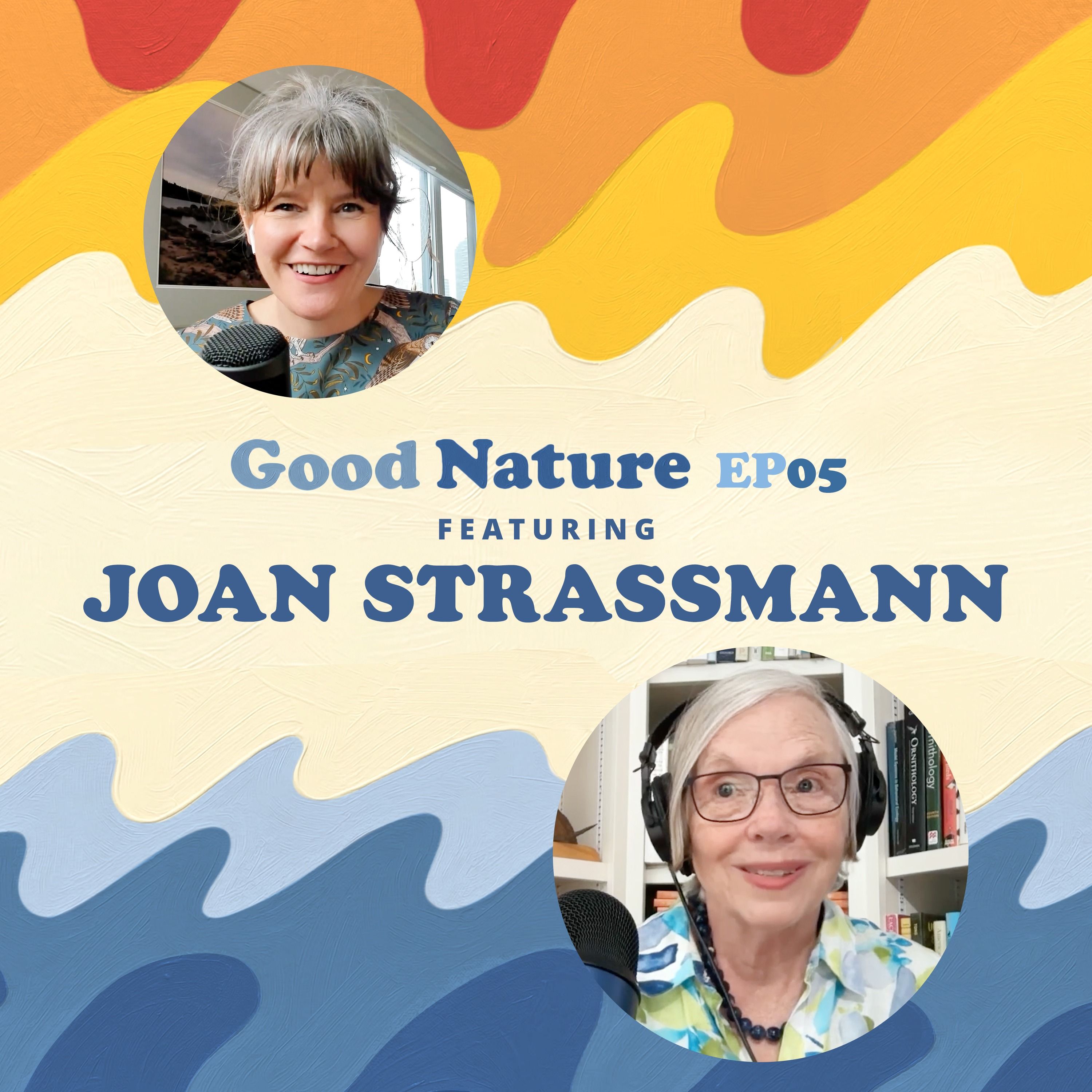
    The case for slow birding with Dr. Joan Strassmann

    What if the best way to go birding…was simply to slow down? Today on Good Nature, host Megan Leslie chats with Dr. Joan Strassmann, author of Slow Birding: The Art and Science of Enjoying the Birds in Your Own Backyard. Megan and Joan talk about why birding is having a moment, what makes slow birding so special, and why native plants matter so much for birds. Along the way, they swap birding stories and compare a few of their favourite bird calls. Megan also checks in with WWF-Canada soil expert Cathal Doherty to hear a truly mind-boggling story about peatland restoration. Learn more about WWF-Canada’s re:grow project at https://regrow.wwf.ca/ To stay up to date on what’s going on at WWF-Canada, sign up for Living Planet News: https://wwf.ca/signup-for-living-planet-news/ Email us: goodnature@wwfcanada.org Leave Megan a voice message: https://www.speakpipe.com/wwfgoodnature.

  • May 7 · 34 min

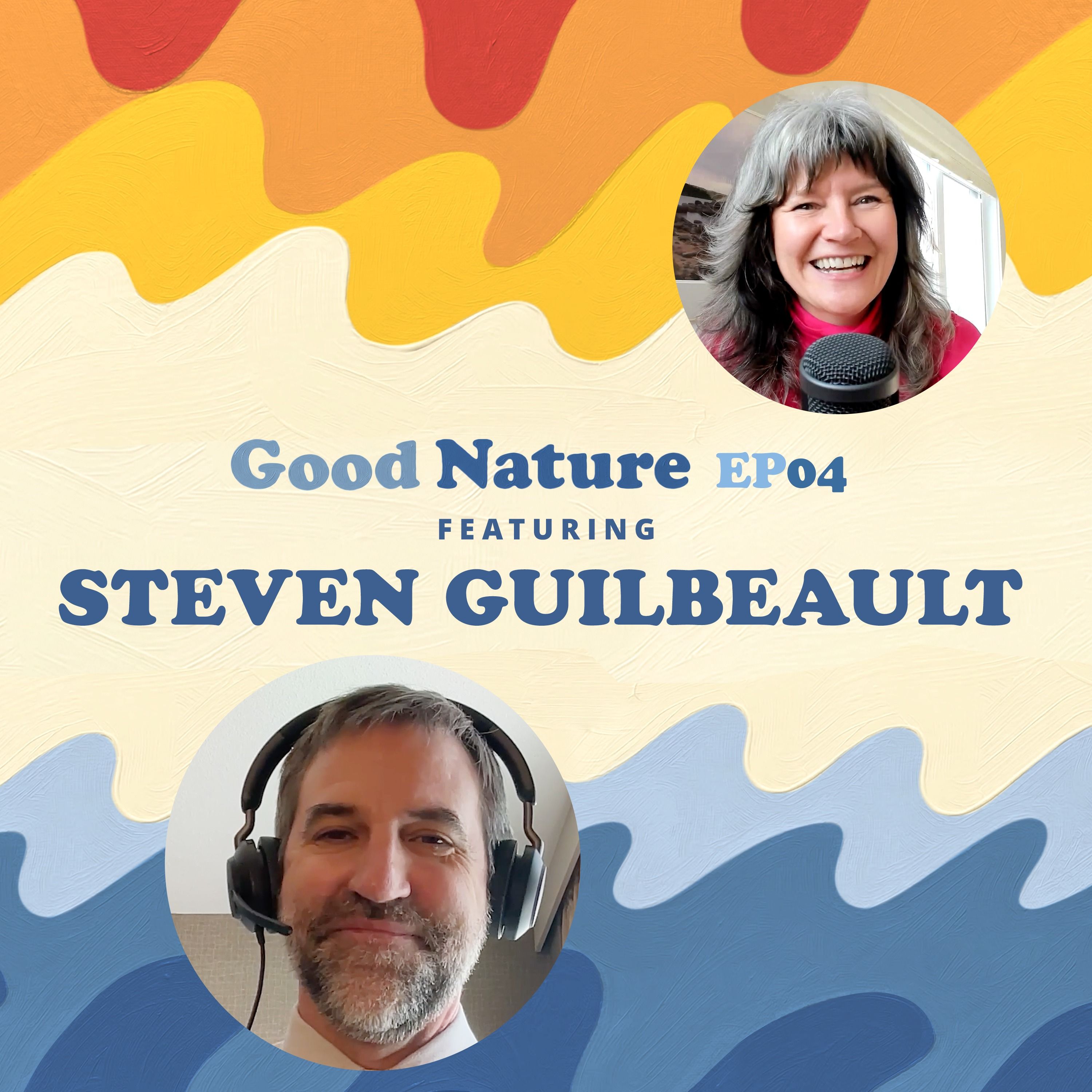
    MP Steven Guilbeault on Canada’s new nature strategy

    Canada has a new strategy for nature—but what does it actually mean on the ground? On this episode of Good Nature, host Megan Leslie sits down with the Honourable Steven Guilbeault, MP for Laurier–Sainte-Marie in Montreal and former Minister of Environment and Climate Change. They dig into Canada’s new nature strategy, including the tension between conservation and development, what it really means for lands and waters to be “protected,” and the challenge of meeting Canada’s commitment to protect 30% of lands and waters by 2030. But first, Megan’s checking in with WWF-Canada senior conservation scientist Jessica Currie for some good news about cooperation in forests. Learn more about WWF-Canada’s carbon mapping project at https://wwf.ca/carbonmap/ To stay up to date on what’s going on at WWF-Canada, sign up for Living Planet News: https://wwf.ca/signup-for-living-planet-news/ To leave Megan a voice message, go to https://www.speakpipe.com/wwfgoodnature.

  • April 23 · 34 min

    Puffins, sea slugs and Atlantic diving with Jill Taylor

    Who doesn’t love puffins?! In this episode, host Megan Leslie sits down with science communicator Jill Taylor. Jill is a Halifax-based biologist who researches the social behaviour of Atlantic puffins. Beyond her research, Jill has built a massive online following, sharing the beauty of Atlantic ecosystems, her love of scuba diving, and (of course) plenty of puffin antics. Jill and Megan get into the surprisingly complex world of Atlantic puffins: what makes them so distinctive, how they navigate life at sea and on land, and why scientists once believed they were actually two completely different birds. Plus, Jill recounts her adventures diving in the Atlantic and Megan discovers a new passion for sea slugs. But first, Megan checks in with WWF-Canada’s resident botanist Ryan Godfrey to talk about why coyotes actually belong in cities. Follow Jill on Instagram @_jill_taylor or on TikTok @jill.dives To stay up to date on what’s going on at WWF-Canada, sign up for Living Planet News: https://wwf.ca/signup-for-living-planet-news/ To leave Megan a voice message, go to https://www.speakpipe.com/wwfgoodnature.

  • April 9 · 34 min

    The power of Indigenous-led conservation with Ken Paul

    What if the future of conservation isn’t new at all — but rooted in knowledge systems that have existed for generations? In this episode, host Megan Leslie chats with Ken Paul, a member of Wolastoqey First Nation at Neqotkuk, in New Brunswick. Ken has spent his career advocating for First Nations, Inuit and Métis communities across Canada. In this episode, he joins us to unpack Indigenous-led conservation — what it looks like in practice and why it’s reshaping how we think about protecting land and water. Drawing on decades of experience, Ken explains Indigenous Protected and Conserved Areas (IPCAs) and reflects on his own journey into advocacy. He also introduces the idea of “Two-Eyed Seeing” — a powerful framework that brings together Indigenous knowledge systems and Western science. But first, Megan’s chatting with WWF-Canada community action specialist Kathy Nguyen, who’s here to share something good about some creative Canadians students building new habitats in their own backyard. To stay up to date on what’s going on at WWF-Canada, sign up for Living Planet News: https://wwf.ca/signup-for-living-planet-news/ To leave Megan a voice message, go to www.speakpipe.com/wwfgoodnature.

  • March 26 · 33 min

    Earth Hour, coral reefs, and the power of hope with Andy Ridley

    In the first episode of Good Nature, Megan sits down with Andy Ridley, the co‑founder of Earth Hour, just as the global movement marks its 20th anniversary. Andy reflects on how a simple idea — turning off the lights for one hour — sparked a worldwide expression of collective action. The conversation traces the evolution of the environmental movement over the past two decades and explores what Andy is working on now: protecting coral reefs by empowering everyday people to help monitor and restore them. From Earth Hour’s origins in Sydney Harbour to its little-known Toronto connection and eventual global ignition, this episode is a hopeful look at how creativity and shared purpose can help turn concern into action. Megan is also joined on this episode by WWF-Canada’s resident botanist, Ryan Godfrey, who answers her call on the orca phone to tell her something good about the weeds in your garden... To stay up-to-date on what’s going on at WWF-Canada, sign up for Living Planet News: https://wwf.ca/signup-for-living-planet-news/ To leave Megan a voice message, go to www.speakpipe.com/wwfgoodnature.

  • March 23 · 1 min

    Introducing Good Nature

    Nature is in need right now. More than ever. But who is answering the call? Good people, that’s who. And there are more of them than you might think. That’s why Megan Leslie, WWF‑Canada’s president and CEO, is chatting with folks who are proving that hope for nature isn’t just alive — it’s thriving. On this podcast, Megan celebrates both the good we find in nature and the good‑natured people working to protect it, proving that real change is not only possible, it’s already happening. First episo