Skip to content
Artwork for Global I.Q. Podcast
Global I.Q. Podcast · April 16 · 1 hr

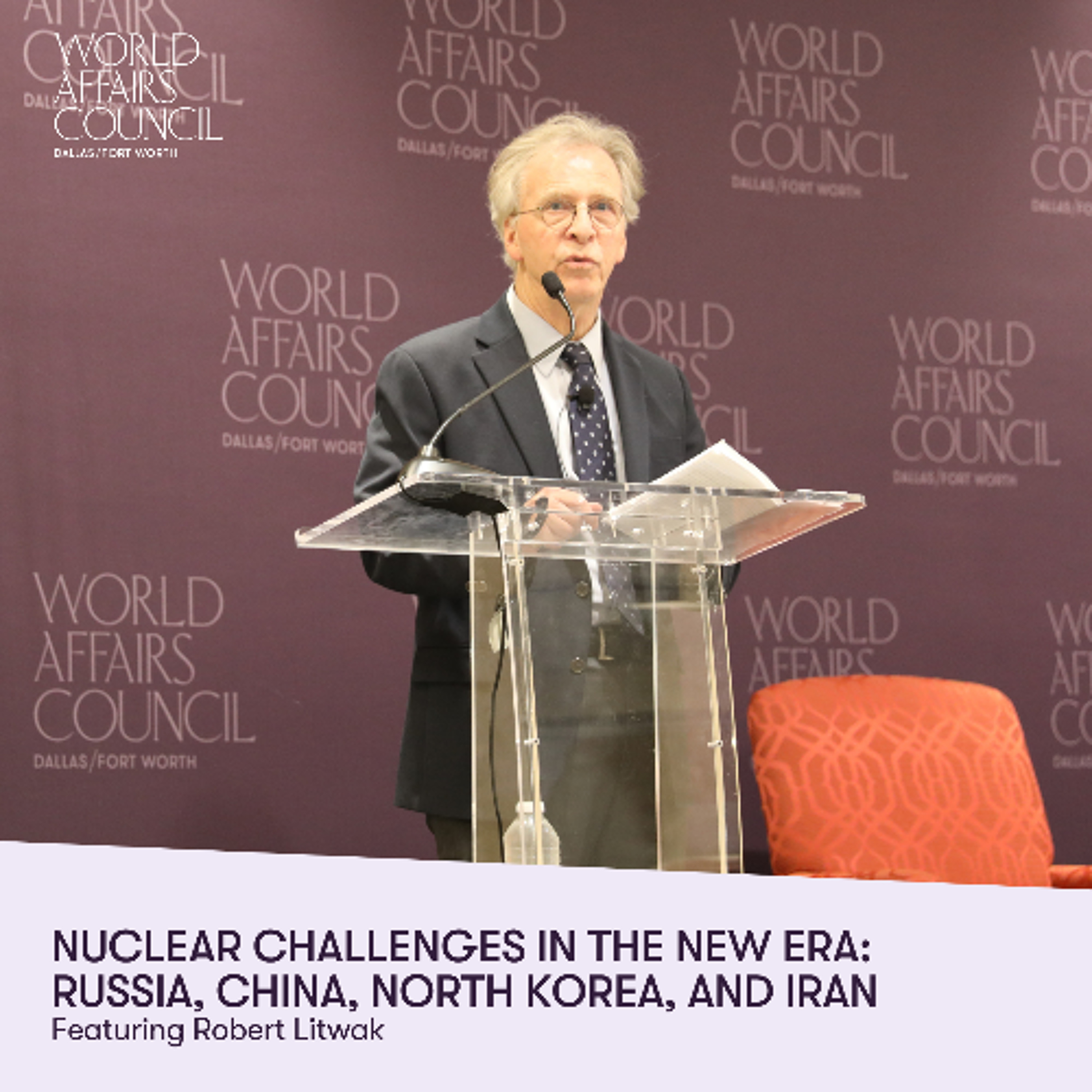
Nuclear Challenges in the New Era: Russia, China, North Korea, and Iran

The global nuclear landscape is shifting. The United States now faces a more complex set of challenges than at any point since the Cold War. Long-standing assumptions about deterrence and strategic stability are being tested – with serious implications for global security. We’ll examine the nuclear challenges posed by four key actors. Russia has used nuclear signaling during the war in Ukraine. China is rapidly expanding its nuclear forces to close the gap with the United States. North Korea continues to advance its arsenal and long-range missiles. And Iran’s nuclear potential remains a live concern in the wake of ongoing conflict in the region. We’ll also look at how U.S. policymakers are assessing risk and escalation in a more crowded nuclear environment – and what it all means for stability in the years ahead. ABOUT THE SPEAKER Robert Litwak is a Research Professor at George Washington University’s Elliott School of International Affairs. Litwak was previously Senior Vice President and Director of International Security Studies at the Woodrow Wilson International Center for Scholars. Litwak is a consultant to the Los Alamos National Laboratory. He served on the National Security Council staff as director for nonproliferation. He was an adjunct professor in the Security Studies Program at Georgetown University’s School of Foreign Service and has held visiting fellowships at Harvard University’s Center for International Affairs, the International Institute for Strategic Studies, the Russian Academy of Sciences, and Oxford University. Litwak is author of Rogue States and U.S Foreign Policy, Outlier States, Managing Nuclear Risks, Nuclear Crises with North Korea and Iran, and, most recently, Tripolar Instability: Nuclear Competition Among the United States, Russia, and China. He is a member of the Council on Foreign Relations. . . Do you believe in the importance of international education and connections? The nonprofit World Affairs Council of Dallas/Fort Worth is supported by gifts from people like you, who share our passion for engaging in dialogue on global affairs and building bridges of understanding. While the Council is not currently charging admission for virtual events, we ask you to please consider making a one-time or recurring gift to help us keep the conversation going through informative public programs and targeted events for students and teachers. Donate: https://www.dfwworld.org/donate

0:00-1:00:49

transcript

No transcript — this publisher did not publish one.

show notes

The global nuclear landscape is shifting. The United States now faces a more complex set of challenges than at any point since the Cold War. Long-standing assumptions about deterrence and strategic stability are being tested – with serious implications for global security.
We’ll examine the nuclear challenges posed by four key actors. Russia has used nuclear signaling during the war in Ukraine. China is rapidly expanding its nuclear forces to close the gap with the United States. North Korea continues to advance its arsenal and long-range missiles. And Iran’s nuclear potential remains a live concern in the wake of ongoing conflict in the region.
We’ll also look at how U.S. policymakers are assessing risk and escalation in a more crowded nuclear environment – and what it all means for stability in the years ahead.

ABOUT THE SPEAKER
Robert Litwak is a Research Professor at George Washington University’s Elliott School of International Affairs. Litwak was previously Senior Vice President and Director of International Security Studies at the Woodrow Wilson International Center for Scholars. Litwak is a consultant to the Los Alamos National Laboratory. He served on the National Security Council staff as director for nonproliferation. He was an adjunct professor in the Security Studies Program at Georgetown University’s School of Foreign Service and has held visiting fellowships at Harvard University’s Center for International Affairs, the International Institute for Strategic Studies, the Russian Academy of Sciences, and Oxford University. Litwak is author of Rogue States and U.S Foreign Policy, Outlier States, Managing Nuclear Risks, Nuclear Crises with North Korea and Iran, and, most recently, Tripolar Instability: Nuclear Competition Among the United States, Russia, and China. He is a member of the Council on Foreign Relations.

.
.
Do you believe in the importance of international education and connections? The nonprofit World Affairs Council of Dallas/Fort Worth is supported by gifts from people like you, who share our passion for engaging in dialogue on global affairs and building bridges of understanding. While the Council is not currently charging admission for virtual events, we ask you to please consider making a one-time or recurring gift to help us keep the conversation going through informative public programs and targeted events for students and teachers.

Donate: https://www.dfwworld.org/donate