Skip to content
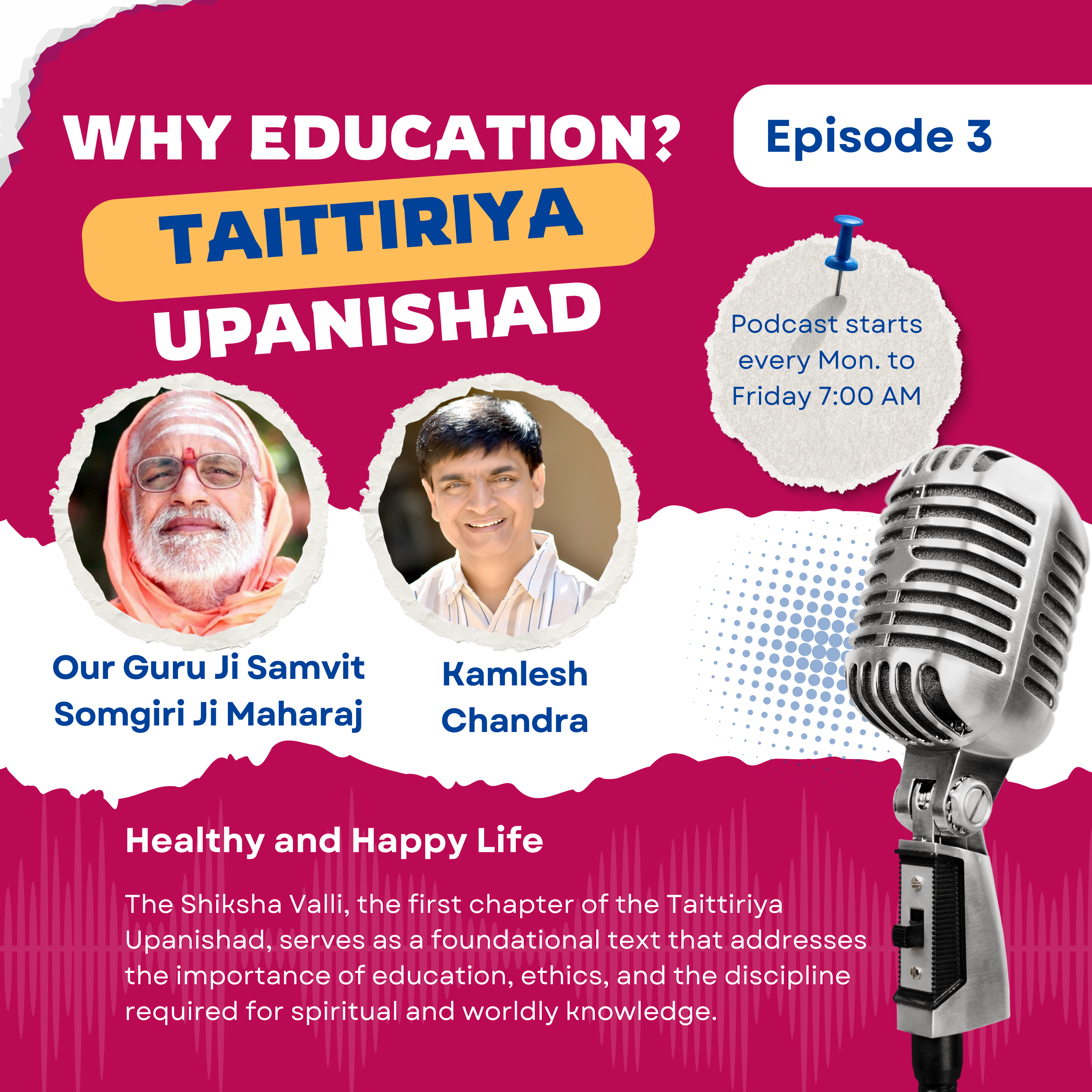
Artwork for Gita For Life
Gita For Life · Jan 20, 2025 · 19 min

Taittiriya Upanishad; The Purpose of Education

The Shiksha Valli: A Comprehensive Exploration The Shiksha Valli, the opening chapter of the Taittiriya Upanishad, holds a central place in the realm of ancient Indian spiritual texts. It serves as a profound guide to education, ethics, and discipline, emphasizing the interconnection between knowledge, morality, and the ultimate quest for self-realization. This chapter is not merely a discourse on spirituality; it also outlines practical and ethical principles essential for both worldly and transcendental pursuits. With its twelve meticulously organized sections (anuvakas), the Shiksha Valli provides a roadmap for a meaningful and harmonious life. Structure of Shiksha Valli The Shiksha Valli is divided into twelve anuvakas (sections), each focusing on a specific aspect of life and learning. These sections are sequentially arranged to guide a seeker through the progressive stages of acquiring knowledge, practicing discipline, and integrating ethical principles into daily life. The text offers a blend of spiritual wisdom, practical advice, and ethical injunctions that remain relevant to contemporary life.


0:00-19:38

transcript

No transcript — this publisher did not publish one.

show notes

The Shiksha Valli: A Comprehensive Exploration

The Shiksha Valli, the opening chapter of the Taittiriya Upanishad, holds a central place in the realm of ancient Indian spiritual texts. It serves as a profound guide to education, ethics, and discipline, emphasizing the interconnection between knowledge, morality, and the ultimate quest for self-realization. This chapter is not merely a discourse on spirituality; it also outlines practical and ethical principles essential for both worldly and transcendental pursuits. With its twelve meticulously organized sections (anuvakas), the Shiksha Valli provides a roadmap for a meaningful and harmonious life.

Structure of Shiksha Valli

The Shiksha Valli is divided into twelve anuvakas (sections), each focusing on a specific aspect of life and learning. These sections are sequentially arranged to guide a seeker through the progressive stages of acquiring knowledge, practicing discipline, and integrating ethical principles into daily life. The text offers a blend of spiritual wisdom, practical advice, and ethical injunctions that remain relevant to contemporary life.