Skip to content
Artwork for Fun Facts Daily
Fun Facts Daily · August 10 · 15 min

Fun Facts About Erasers

Before the widespread availability of commercial rubber erasers, artists, writers, and engineers commonly used pieces of rolled, crustless white bread to lift graphite marks from paper. The discovery of rubber’s erasing capabilities in 1770 by Joseph Priestley and Edward Nairne transformed writing tools, leading to the creation of the first commercial rubber erasers. Later advancements included Charles Goodyear’s development of vulcanization in 1839, a chemical process using sulfur and intense heat to stabilize rubber so it would not melt or become brittle under temperature changes. Over time, manufacturing evolved from natural tree rubber to synthetic materials such as vinyl, which offer greater longevity, flexibility, and smoother mark removal without tearing delicate paper fibers. Modern erasers remove writing through mechanical friction and adhesion rather than destruction. As an eraser rubs against paper, friction generates mild heat, softening the material and causing graphite or pigment particles to adhere to the eraser rather than the paper fibers. Beyond standard graphite, this adhesion mechanism allows erasers to lift charcoal, chalk, pastels, and crayons, as well as serve household functions like cleaning dirt from suede or lifting sticky adhesive residue from solid surfaces. Modern thermo-sensitive ink technology, such as that used in erasable pens, operates through heat-induced chemical reactions: rubbing the paper generates enough friction heat to render the special ink clear, though extreme cold can reverse the process and cause the writing to reappear. Related episode: Fun Facts About Pencils ⁠Listen Ad-Free on Patreon. ⁠ For just $3 per month, you can get ad-free versions of Fun Facts Daily, Who ARTed and Art Smart. Head over to ⁠https://www.patreon.com/cw/FunFactsDailyPod⁠ if you are interested. Want to learn more? Head over to my website www.funfactsdailypod.com and be sure to listen to my other podcasts Who ARTed: Weekly Art History for All Ages or Art Smart. For family fun, check out my son's podcast Rainbow Puppy Science Lab The image used in the episode cover art came from Adobe's stock photos. Fun Facts Daily is an Airwave Media Podcast. If you are interested in advertising on this or any other Airwave Media show, email: advertising@airwavemedia.com Learn more about your ad choices. Visit megaphone.fm/adchoices

0:00-15:45

transcript

No transcript — this publisher did not publish one.

show notes

Before the widespread availability of commercial rubber erasers, artists, writers, and engineers commonly used pieces of rolled, crustless white bread to lift graphite marks from paper. The discovery of rubber’s erasing capabilities in 1770 by Joseph Priestley and Edward Nairne transformed writing tools, leading to the creation of the first commercial rubber erasers. Later advancements included Charles Goodyear’s development of vulcanization in 1839, a chemical process using sulfur and intense heat to stabilize rubber so it would not melt or become brittle under temperature changes. Over time, manufacturing evolved from natural tree rubber to synthetic materials such as vinyl, which offer greater longevity, flexibility, and smoother mark removal without tearing delicate paper fibers.

Modern erasers remove writing through mechanical friction and adhesion rather than destruction. As an eraser rubs against paper, friction generates mild heat, softening the material and causing graphite or pigment particles to adhere to the eraser rather than the paper fibers. Beyond standard graphite, this adhesion mechanism allows erasers to lift charcoal, chalk, pastels, and crayons, as well as serve household functions like cleaning dirt from suede or lifting sticky adhesive residue from solid surfaces. Modern thermo-sensitive ink technology, such as that used in erasable pens, operates through heat-induced chemical reactions: rubbing the paper generates enough friction heat to render the special ink clear, though extreme cold can reverse the process and cause the writing to reappear.


Related episode: Fun Facts About Pencils


Listen Ad-Free on Patreon.

For just $3 per month, you can get ad-free versions of Fun Facts Daily, Who ARTed and Art Smart. Head over to ⁠https://www.patreon.com/cw/FunFactsDailyPod⁠ if you are interested.


Want to learn more? Head over to my website www.funfactsdailypod.com and be sure to listen to my other podcasts Who ARTed: Weekly Art History for All Ages or Art Smart. For family fun, check out my son's podcast Rainbow Puppy Science Lab


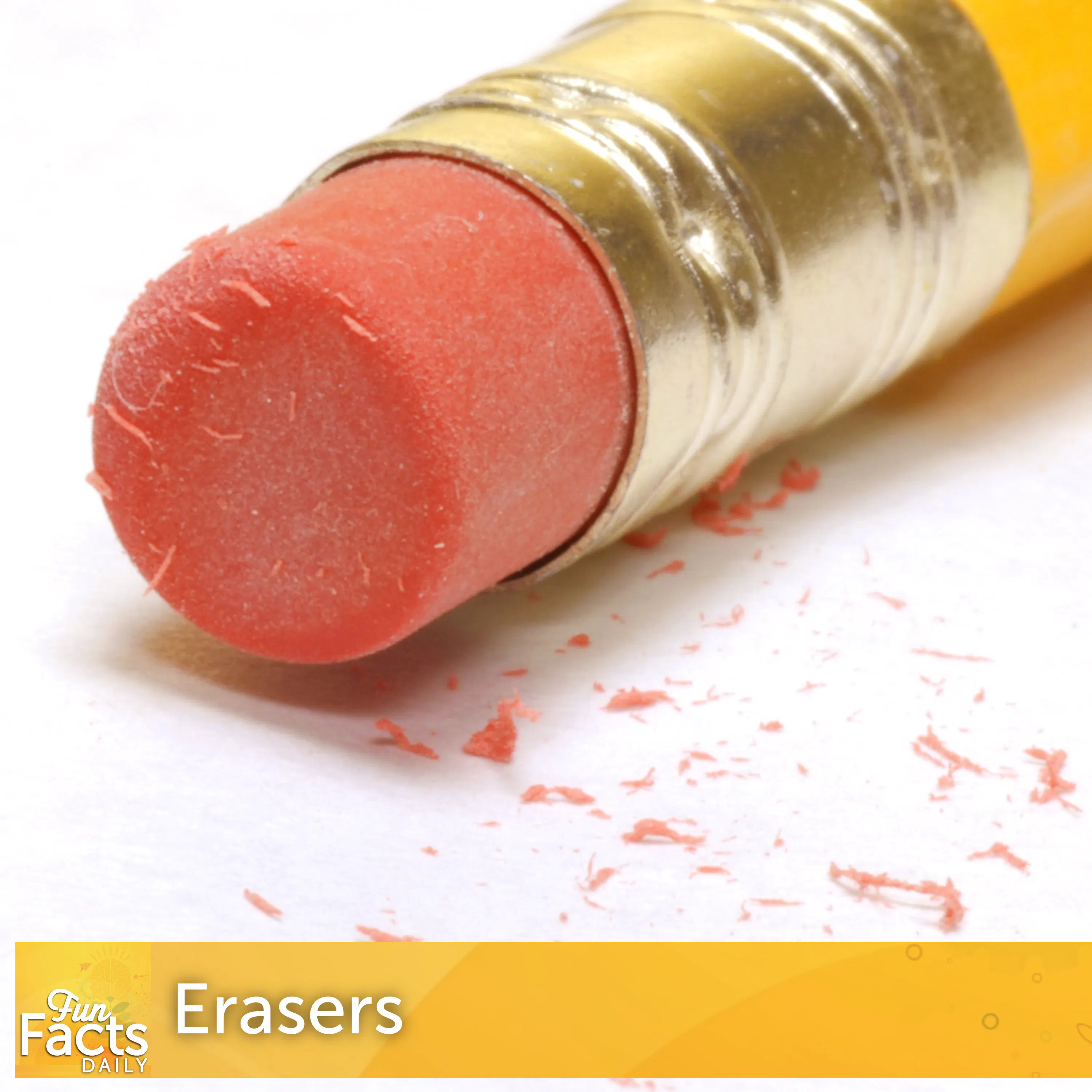
The image used in the episode cover art came from Adobe's stock photos.


Fun Facts Daily is an Airwave Media Podcast. If you are interested in advertising on this or any other Airwave Media show, email: advertising@airwavemedia.com


Learn more about your ad choices. Visit megaphone.fm/adchoices

links7

more episodes

All episodes