Everyone's Talking About Layoffs This Year. How Big Does My Emergency Fund Actually Need to Be?
transcript
show notes
Worried about your job? Yeah, you’re not alone—over half of employed Americans are feeling the heat, especially with all this chatter about AI and layoffs. Today, we're diving into how to build a solid emergency fund so you don’t have to freak out if the worst happens. We’re breaking it down step by step, from figuring out your essential monthly expenses to calculating how long you might need to cover yourself in this shaky job market. Everyone's Talking About Layoffs This Year. How Big Does My Emergency Fund Actually Need to Be? Let’s turn that vague anxiety into a real plan, because trust me, knowing your number is way better than just guessing. So grab a snack, kick back, and let’s get to work on making sure you’re ready for whatever comes next!
Check out the full podcast episode here
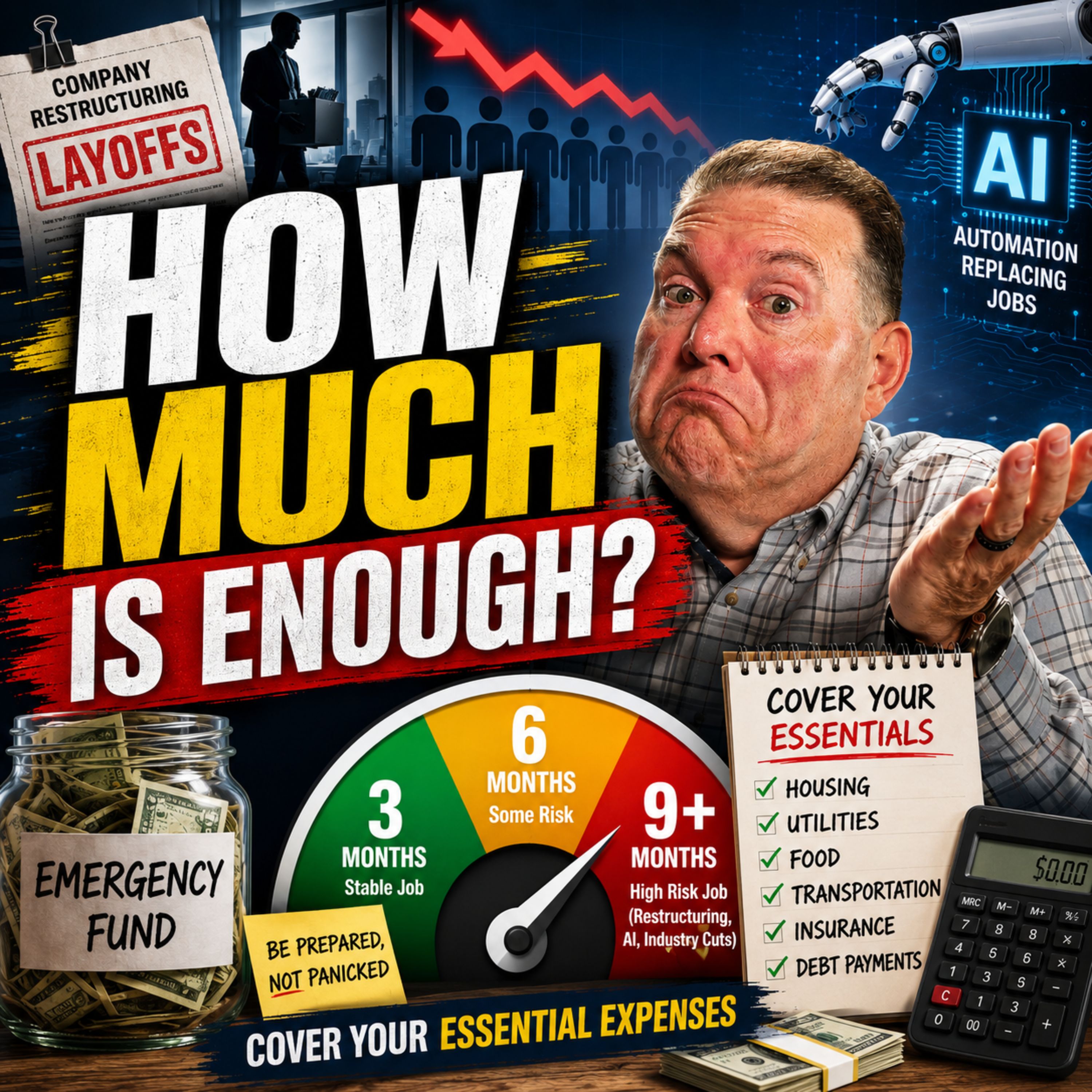
In a world where job security feels like a game of musical chairs, we dive deep into the nitty-gritty of building your emergency fund. With layoffs hitting headlines faster than you can say 'AI takeover,' it's time to get real about how much cash you actually need stashed away. We’re not just talking about a cozy little savings account; we’re talking about calculating your monthly essentials and then multiplying that by a good three to six months, depending on how shaky your job feels right now. By the end, we've got an actionable plan to tackle financial uncertainty head-on. Forget stressing about job loss, let's turn that anxiety into a solid number that gives us peace of mind. If you’ve ever wondered whether you're saving too little or way too much, I've got the answers you need, and trust me, you won't want to miss this episode.
Takeaways:
- In a world where layoffs are lurking, having a solid emergency fund is key to keeping that panic at bay.
- Calculating your essential monthly expenses can help you know exactly how much you need saved up, so you can chill if job loss hits.
- Job security feels shakier these days, so it's smart to stretch your savings target if you’re in a risky role.
- Don't forget, your emergency fund isn’t for vacations or extra spending—it’s for real emergencies when the job market gets rocky.
- Start small with that emergency fund and build it up over time; even a few hundred bucks can make a world of difference.
- Preparation is the name of the game; it’s not about fear, it’s about being ready for whatever life throws at you.
Links referenced in this episode:
💛 Join the Financially Confident Christian Community
If today’s episode encouraged you, we’d love to invite you to be part of something bigger — the Financially Confident Christian Community.
This is where faith and finances come together — a growing family of believers supporting one another, sharing encouragement, and helping spread God’s truth about money.
Your membership helps keep the show free for everyone while funding new devotionals, study guides, and outreach resources.
👉 Learn more and join the mission at financiallyconfidentchristian.com/join
Together, we’re helping believers everywhere break the cycle of financial shame and live with confidence in Christ. 🙏
Get Ralph's Book on becoming a Financially Confident Christian financiallyconfidentchristian.com/becoming
WATCH NOW ON YOUTUBE (OUR VIDEO VERSION)
WATCH NOW ON RUMBLE (OUR VIDEO VERSION)
Please share our Podcast with all your friends and family!
Submit your questions or ideas for future shows - email us at
ralph@askralph.com or leave a voicemail message on our podcast page