Skip to content
Artwork for Engineering Enablement by DX
Engineering Enablement by DX · August 7 · 39 min

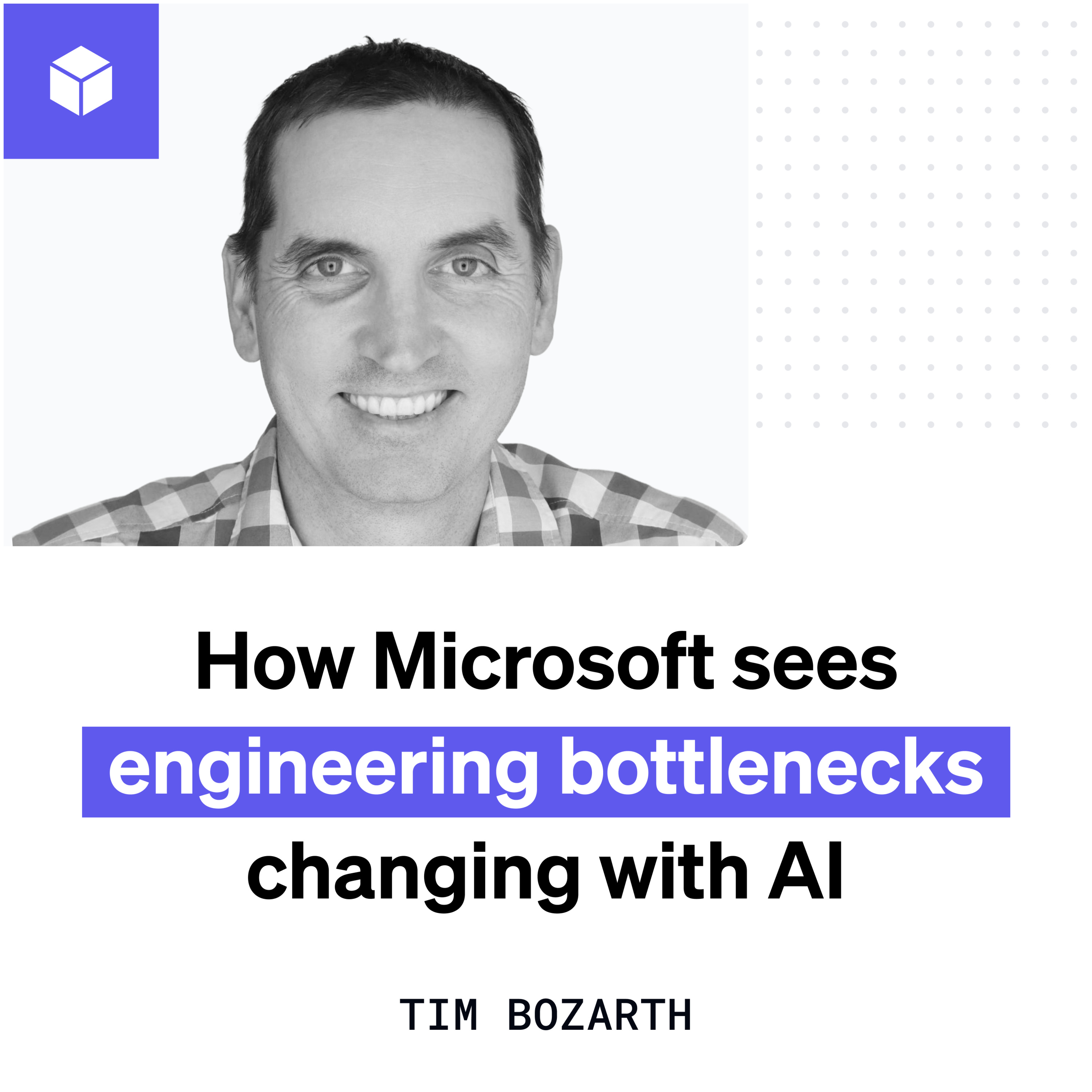
How Microsoft sees engineering bottlenecks changing with AI

Tim Bozarth is a Corporate Vice President in Microsoft CoreAI, where he leads engineering for next-generation developer experiences and Microsoft's Engineering Thrive initiative. Throughout his career at Microsoft, Google, Netflix, and Box, he has focused on developer productivity, engineering systems, and organizational effectiveness. In this episode of Engineering Enablement, Tim joins host Brian Houck to discuss Engineering Thrive, Microsoft's framework for measuring and improving engineering productivity. They explore why AI makes outcome-based metrics more important than ever, where new bottlenecks are emerging in the software development lifecycle, and why verification and confidence may become more valuable than code generation itself. Tim also shares why the purpose of engineering remains the same despite rising levels of abstraction, the skills that remain durable in an AI-driven world, and why engineering leaders should focus on outcomes rather than activity metrics. Where to find Tim Bozarth: • LinkedIn: linkedin.com/in/tbozarth Where to find Brian Houck: • LinkedIn: ⁠https://www.linkedin.com/in/brianhouck⁠ In this episode, we cover: (00:00) Intro (02:13) What Engineering Thrive is and the problem it solves (04:46) Why Engineering Thrive isn't specific to Microsoft (09:10) The impact of Engineering Thrive at Microsoft (14:31) Why AI makes outcome-based productivity metrics more important (18:22) Where AI is creating new bottlenecks in the SDLC (24:37) Why more abstraction doesn't change the purpose of engineering (27:25) The durable skills of good engineers (33:03) The changing economics of software development (36:56) Advice for leaders: measure outcomes, not activity Referenced: • DX Core 4 Productivity Framework • EngThrive: Make It Fast and Easy to Do Great Work: Building a durable model for outcome-oriented engineering measurement • Quote by Eliyahu M. Goldratt: “Tell me how you measure me and...” • Jevons paradox - Wikipedia

0:00-39:24

transcript

No transcript — this publisher did not publish one.

show notes

Tim Bozarth is a Corporate Vice President in Microsoft CoreAI, where he leads engineering for next-generation developer experiences and Microsoft's Engineering Thrive initiative. Throughout his career at Microsoft, Google, Netflix, and Box, he has focused on developer productivity, engineering systems, and organizational effectiveness.

In this episode of Engineering Enablement, Tim joins host Brian Houck to discuss Engineering Thrive, Microsoft's framework for measuring and improving engineering productivity. They explore why AI makes outcome-based metrics more important than ever, where new bottlenecks are emerging in the software development lifecycle, and why verification and confidence may become more valuable than code generation itself. Tim also shares why the purpose of engineering remains the same despite rising levels of abstraction, the skills that remain durable in an AI-driven world, and why engineering leaders should focus on outcomes rather than activity metrics.


Where to find Tim Bozarth:

• LinkedIn: linkedin.com/in/tbozarth


Where to find Brian Houck: 

• LinkedIn: ⁠https://www.linkedin.com/in/brianhouck⁠


In this episode, we cover:

(00:00) Intro

(02:13) What Engineering Thrive is and the problem it solves

(04:46) Why Engineering Thrive isn't specific to Microsoft

(09:10) The impact of Engineering Thrive at Microsoft

(14:31) Why AI makes outcome-based productivity metrics more important

(18:22) Where AI is creating new bottlenecks in the SDLC

(24:37) Why more abstraction doesn't change the purpose of engineering

(27:25) The durable skills of good engineers 

(33:03) The changing economics of software development

(36:56) Advice for leaders: measure outcomes, not activity


Referenced:

DX Core 4 Productivity Framework

EngThrive: Make It Fast and Easy to Do Great Work: Building a durable model for outcome-oriented engineering measurement

Quote by Eliyahu M. Goldratt: “Tell me how you measure me and...”
Jevons paradox - Wikipedia

links6