Why regulated enterprises can't skip AI governance
transcript
show notes
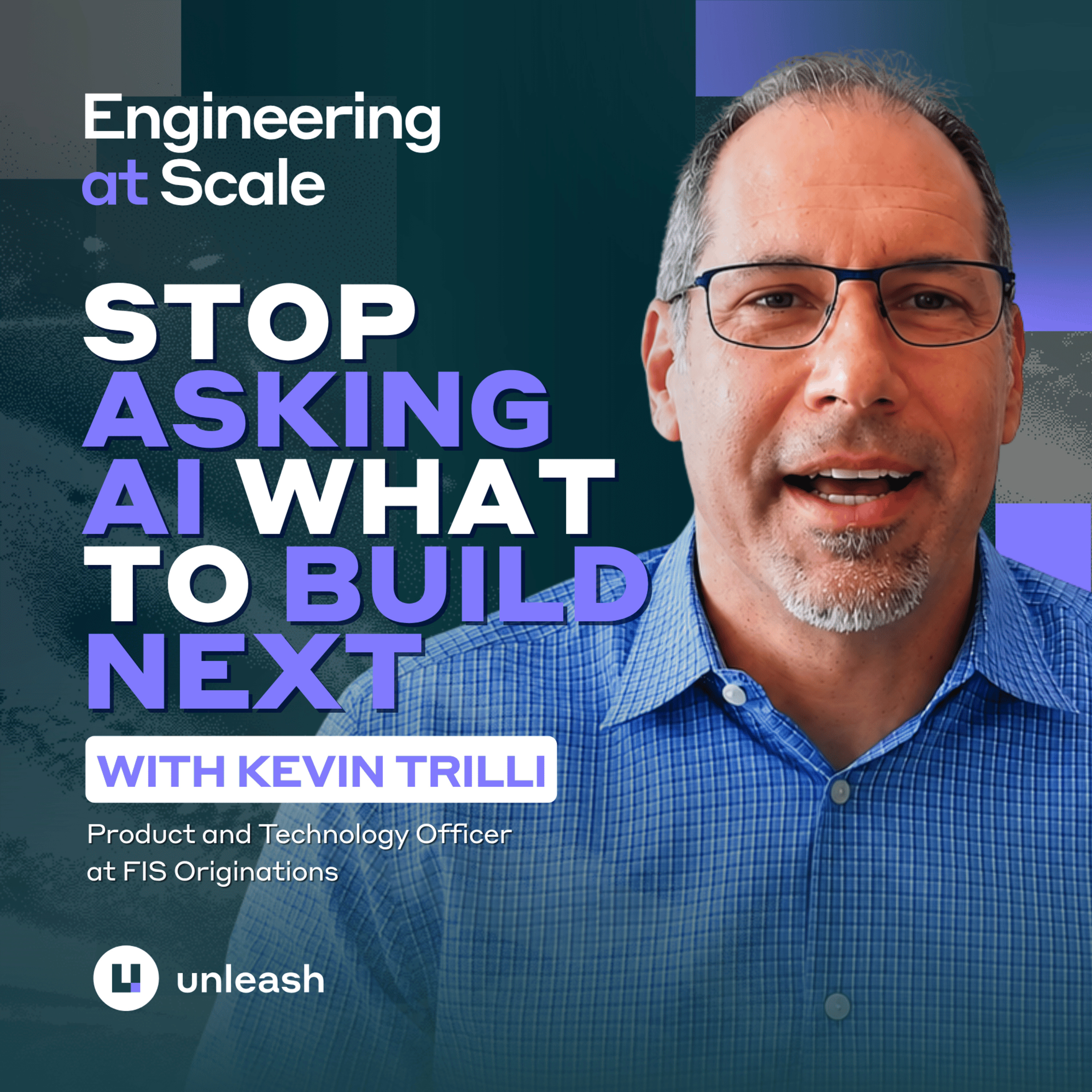
Kevin Trilli has spent multiple decades in product, founded a zero-to-one company where product and technology were one job by necessity, and now holds the combined Chief Product and Technology Officer role at FIS Originations. He comes to this conversation with a specific argument: the bottleneck in AI-accelerated product development is no longer writing code. It's everything downstream of it.
His framing is direct. Slapping an agent on top of a legacy platform doesn't eliminate tech debt, it just exposes it faster. Customers in B2B, especially regulated industries, can't consume features at the pace you can now generate them. And if your organization hasn't built a proprietary knowledge pipeline, your AI tooling is running on generic context and producing generic output. Kevin walks through how he's restructuring the product and engineering process at each stage, where he draws a hard line on not outsourcing strategy to AI, and what governance for agentic products actually looks like when your customers get audited.
Topics discussed:
Why platform limitations don't disappear when you add an agentic layer on top
Using AI as a signal aggregator for strategy without letting it become a "coin-operated strategy machine"
Building a proprietary knowledge pipeline as the prerequisite for any intelligent tooling
Customer consumption velocity as the real constraint on B2B product development speed
Governance and compliance requirements for agentic products in regulated enterprise markets
Why the strongest argument for top-down AI mandates is framing it as a career investment, not a company directive
Why AI fluency for senior leaders means being personally hands-on, not directing from the outside
Making customer and market context queryable by anyone in the org, so engineers don't need to be in the room to know what to build