Streams straight from the publisher. PodNod never proxies or re-hosts episode audio.
E-MOTIVE Mnemonic for Postpartum Hemorrhage: A Lifesaving Strategy
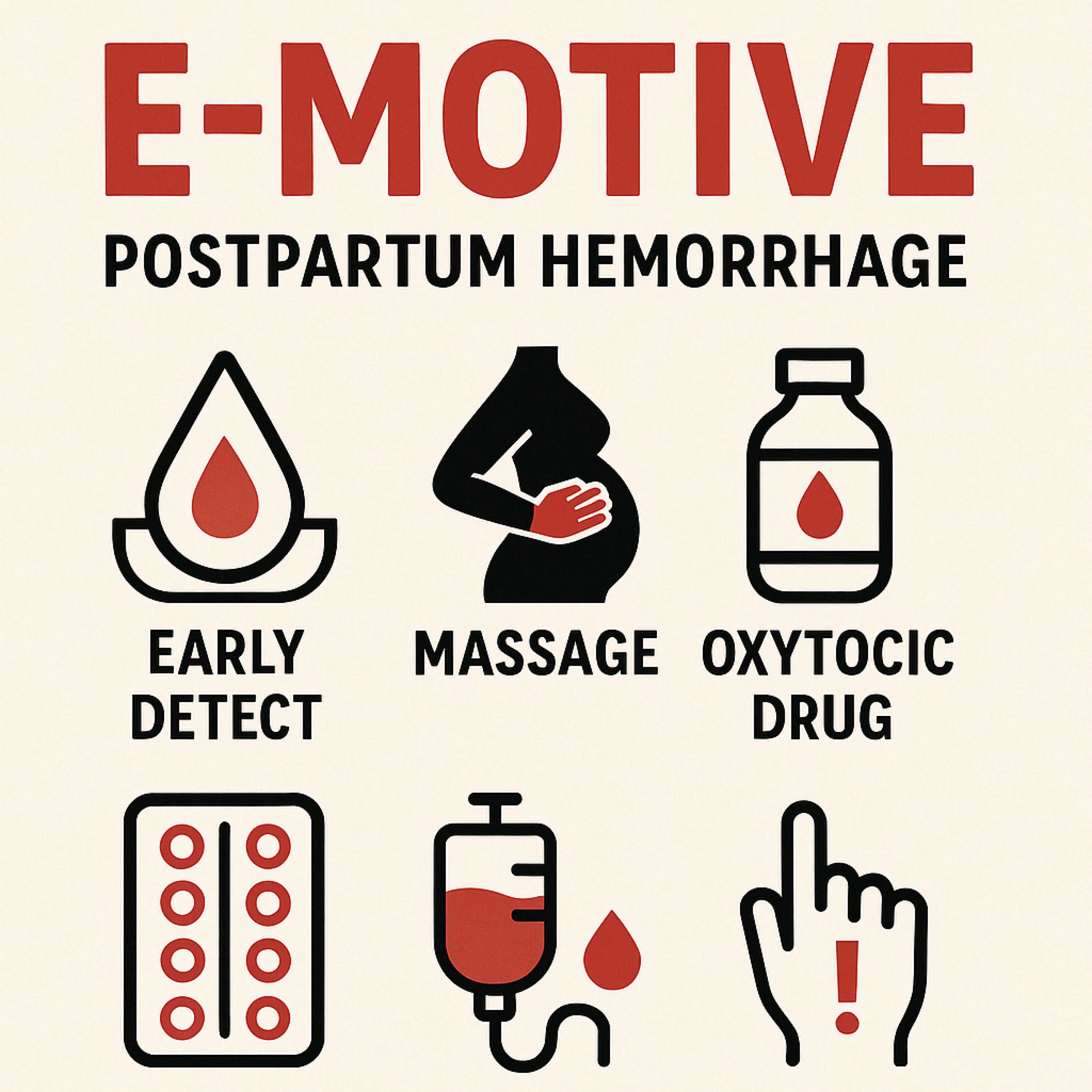
The E-MOTIVE mnemonic stands for a six-component bundle aimed at tackling postpartum hemorrhage (PPH), a major cause of maternal death, especially in low-resource settings. This approach, tested in a cluster-randomized trial across 80 hospitals in Kenya, Nigeria, South Africa, and Tanzania, was published in the New England Journal of Medicine in 2023. Here’s what E-MOTIVE stands for and why it matters:
• E – Early Detection: Uses a calibrated blood-collection drape to objectively measure blood loss after vaginal delivery. This ensures PPH (blood loss ≥500 ml) is identified quickly and accurately, unlike visual estimation, which can be unreliable.
• M – Massage: Uterine massage is performed to stimulate contractions and control bleeding, particularly for uterine atony, the most common cause of PPH.
• O – Oxytocic Drugs: Administers drugs like oxytocin to promote uterine contractions and reduce bleeding. These are critical for managing uterine atony effectively.
• T – Tranexamic Acid: An antifibrinolytic drug given to stabilize clots and reduce bleeding, especially when administered early after PPH onset.
• I – Intravenous Fluids: Provides fluids to maintain blood volume and prevent shock in women experiencing significant blood loss.
• V – Vaginal Examination and Escalation: Involves a thorough genital tract exam to identify trauma or retained tissue, with escalation to surgical or advanced care if bleeding persists.
• E – Effective Teamwork: Emphasizes communication, cooperation, and rapid response among healthcare providers to ensure all components are delivered promptly.
Why It’s a Game-Changer: The trial showed that E-MOTIVE reduced the risk of severe PPH (blood loss ≥1000 ml), laparotomy for bleeding, or maternal death by 60% compared to usual care.
PPH was detected in 93.1% of cases in the intervention group versus 51.1% in the control group, and the treatment bundle was used in 91.2% of cases versus 19.4%.
This bundle ensures evidence-based interventions are applied consistently and concurrently, saving lives by addressing PPH faster and more effectively.
E-MOTIVE is a practical, scalable solution, especially for low- and middle-income countries where PPH is deadliest. Its use of low-cost tools like the blood-collection drape makes it accessible, while the mnemonic simplifies training and implementation for healthcare teams under pressure.
This summary is based on the New England Journal of Medicine article.
No links were found in this episode’s notes.