Emergency Medicine Mnemonics
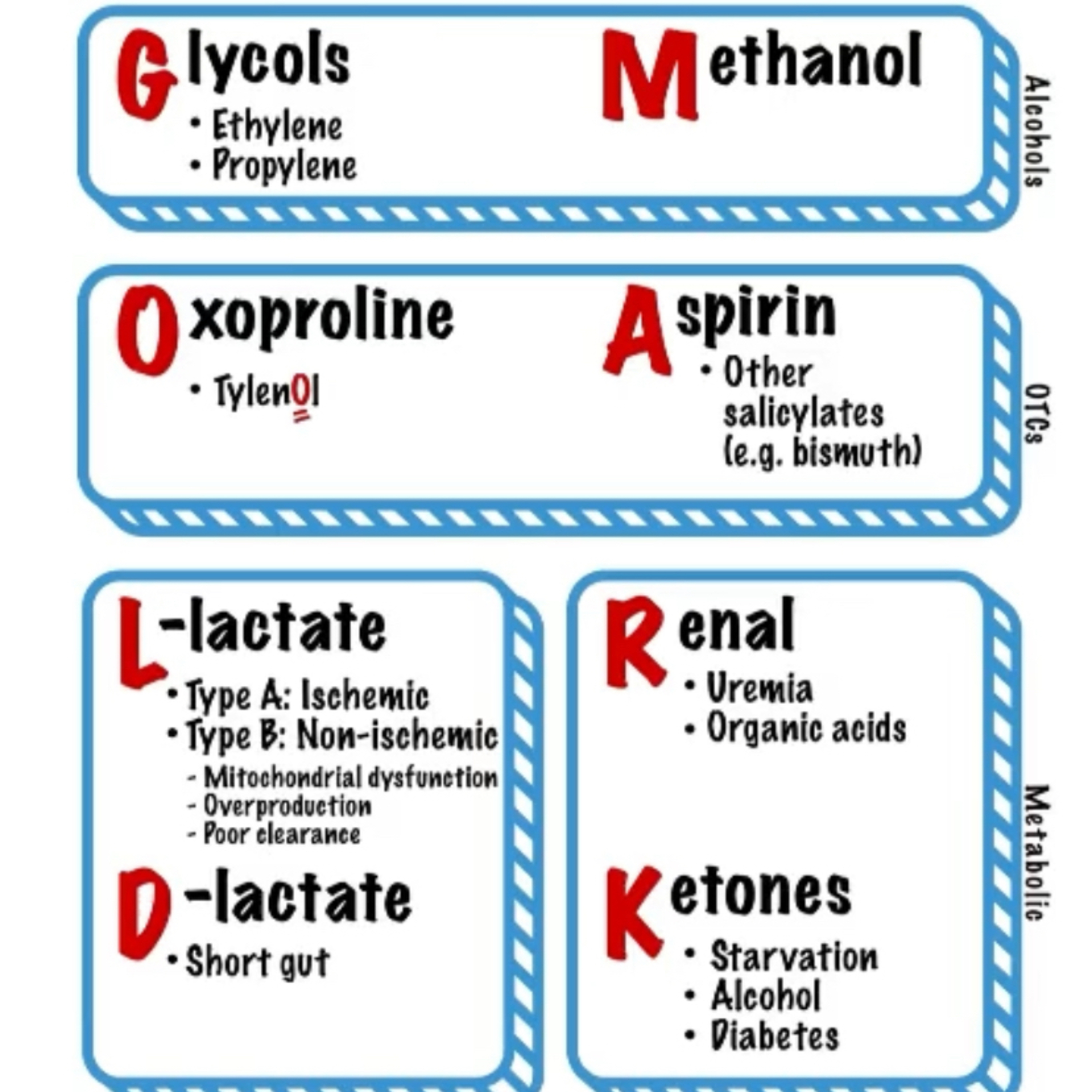
GOLD MARK (better than MUDPILES): Anion Gap Metabolic Acidosis Mnemonic (7,440.12 MRRM)
Mar 5, 2025 · 1 hr 2 min · 60.5 MB
0:00-1:02:59
Streams straight from the publisher. PodNod never proxies or re-hosts episode audio.
The GOLD MARK causes are divided into three major pathophysiologic groups based on the source of the acid production:
- Alcohols (Toxic Ingestions) → Emergency Toxins
- Glycols → Ethylene glycol (antifreeze) and propylene glycol
- Methanol → Windshield washer fluid, homemade alcohol substitutes
- Why grouped together?
- Common in suicide attempts, accidental ingestions, or chronic alcoholics.
- Key labs: Serum osmolality, anion gap, osmolar gap.
- Imaging: Calcium oxalate crystals on urine microscopy (ethylene glycol).
- Treatment: Fomepizole or ethanol (blocks alcohol dehydrogenase), hemodialysis in severe cases.
- OTCs & Medication-Related Causes → Common but Easily Missed
- Oxoproline → Chronic acetaminophen (Tylenol) use, often in malnourished patients
- Aspirin → Salicylates, including bismuth subsalicylate (Pepto-Bismol)
- Why grouped together?
- Often overlooked in chronic users or the elderly.
- Key signs: Tachypnea (respiratory alkalosis), tinnitus (aspirin), altered mental status.
- Key labs: Salicylate level, ABG (mixed acid-base disorder).
- Treatment: Alkalinization (sodium bicarb drip), dialysis for severe cases.
- Metabolic Causes → Endogenous Acid Production
- L-lactate → Type A (ischemia), Type B (mitochondrial dysfunction)…L for Loser anaerobic (super winded loser in the race: anaerobic)
- D-lactate → Short gut syndrome, bacterial overgrowth …GI can think “diet for D”
- Renal Failure → Uremia, organic acids
- Ketones → Starvation, alcohol, diabetic ketoacidosis (DKA) think… Keytones are SAD
- Why grouped together?
- These involve internal production of acids due to organ dysfunction.
- Key labs:
- Lactate level (for sepsis, ischemia).
- BHB (beta-hydroxybutyrate) for DKA.
- BUN/Cr for renal failure.
- Urinalysis (ketones, glucose, uremia markers).
- Treatment:
- Fluids, treat underlying cause (DKA → insulin drip, renal failure → dialysis).
Clinically Important Considerations for EM Physicians
In the ED, when a patient has metabolic acidosis with an elevated anion gap, think:
- What is the patient’s history?
- Suicide attempt or confusion? → Alcohols, aspirin
- Chronic Tylenol use or malnourished? → Oxoproline
- Sepsis, shock, ischemia? → L-lactate
- Short gut, diarrhea, recent antibiotics? → D-lactate
- Known diabetes, alcoholism, or fasting? → Ketones
- Chronic kidney disease? → Uremia
- What tests should I order immediately?
- ABG/VBG → Confirms metabolic acidosis.
- Anion gap calculation → Determines if the acidosis is anion gap or non-anion gap.
- Serum osmolality & osmolar gap → Alcohol toxicity (ethylene glycol, methanol).
- Lactate level → Sepsis, ischemia, mitochondrial dysfunction.
- BHB (Beta-hydroxybutyrate) → DKA vs. alcoholic/starvation ketosis.
- Salicylate level & acetaminophen level → Toxic ingestion screening.
- CMP (BUN/Cr, glucose, liver enzymes, electrolytes) → Renal failure, DKA, liver dysfunction.
Takeaway: What’s an Emergency?
- Dialysis Emergencies → Methanol, ethylene glycol, severe aspirin toxicity, uremia.
- Toxin Emergencies → Alcohols (treat with fomepizole), salicylates (alkalinization & dialysis).
- Septic Shock / Tissue Hypoxia → Elevated L-lactate = immediate resuscitation with fluids & source control!
- DKA → Fluids, insulin drip, and monitor for electrolyte shifts (esp. potassium).
No links were found in this episode’s notes.