Skip to content
Artwork for Dr. John Campbell
Dr. John Campbell · Tuesday · 27 min

Zinc nutrition as we enter endemic phase

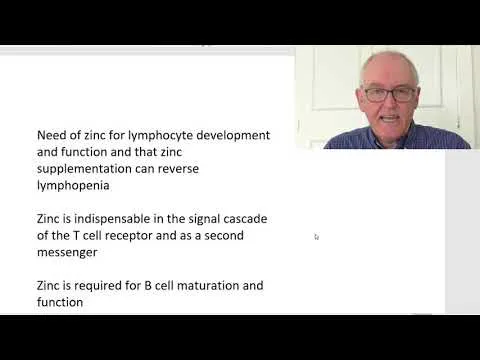
Zinc and immune function: the biological basis of altered resistance to infection https://pubmed.ncbi.nlm.nih.gov/9701160/ Zinc is known to play a central role in the immune system and zinc-deficient persons experience increased susceptibility to a variety of pathogens It is clear that zinc affects multiple aspects of the immune system Zinc is crucial for normal development and function of cells mediating nonspecific immunity such as neutrophils and natural killer cells Zinc deficiency also affects development of acquired immunity, activation of T lymphocytes and B lymphocyte help B lymphocyte development and antibody production, particularly immunoglobulin G, is compromised The macrophage, is adversely affected by zinc deficiency Zinc is needed by these key immunologic mediators Basic cellular functions such as DNA replication RNA transcription, cell division, and cell activation https://www.frontiersin.org/articles/10.3389/fimmu.2020.01712/full Zinc deficiency results in altered numbers and dysfunction of all immune cells Suboptimal zinc states have an increased risk for infectious diseases, autoimmune disorders, and cancer Risk groups for zinc deficiency Malnutrition Elderly and patients with various inflammatory and autoimmune diseases Mild zinc deficiency is largely sub-clinical, it is unnoticed in most people World Health Organization Assumes that at least one third of the world population is affected by zinc deficiency Zinc deficiency is responsible for 16% of all deep respiratory infections world-wide Supplementation, for which minimal to no side effects are known. Europe 10 to 20% zinc deficiency https://translate.google.com/translate?hl=en&sl=es&u=https://www.phmk.es/i-d/suplementar-con-zinc-podria-reducir-la-mortalidad-en-el-paciente-de-covid-19&prev=search&pto=aue Zinc Protects the Human Body From Entering of the Virus Essential for tissue barriers equipped with cilia and mucus, anti-microbial peptides like lysozymes and interferons The expression of tight junction proteins was found to be zinc-dependent Mucociliar clearance of viruses is affected by zinc Physiological concentrations of zinc increase ciliary beat frequency Zinc-dependent alterations in gene expression by pneumocytes Associations with interferons Zinc Directly Inhibits Viral Replication Direct antiviral effects of zinc have been demonstrated E.g. coronaviridae, picornavirus, papilloma virus, metapneumovirus, rhinovirus, herpes simplex virus, varicella-zoster virus, respiratory syncytial virus, human immunodeficiency virus (HIV), and the hepatitis C virus It was suggested that zinc can prevent fusion with the host membrane Decreases the viral polymerase function Blocks viral particle release Destabilizes the viral envelope Zinc Balances the Immune Response During Infectious Diseases Hyper-inflammation, immune products including pro-inflammatory cytokines Movement and over activation of immune cells to the lungs Acute respiratory distress syndrome (ARDS) Need of zinc for lymphocyte development and function and that zinc supplementation can reverse lymphopenia Zinc is indispensable in the signal cascade of the T cell receptor and as a second messenger Zinc is required for B cell maturation and function Zinc Supplementation in Respiratory Infections A row of successful supplementation studies focusing on respiratory tract infection In most cases, prophylactic zinc supplementation was more effective than therapeutic proceedings Studies showed reduced symptom severity, reduced frequency, and duration of the common cold after zinc administration Zinc supplementation of children in developing countries Reduced pneumonia-specific morality by 15% and 19% of pneumonia morbidity by 19% Risk Groups and Symptoms of COVID-19 and Zinc Deficiency Reveal a Large Overlap Low serum zinc levels are regularly observe Learn more about your ad choices. Visit megaphone.fm/adchoices

0:00-27:47

transcript

No transcript — this publisher did not publish one.

show notes

Zinc and immune function: the biological basis of altered resistance to infection https://pubmed.ncbi.nlm.nih.gov/9701160/ Zinc is known to play a central role in the immune system and zinc-deficient persons experience increased susceptibility to a variety of pathogens It is clear that zinc affects multiple aspects of the immune system Zinc is crucial for normal development and function of cells mediating nonspecific immunity such as neutrophils and natural killer cells Zinc deficiency also affects development of acquired immunity, activation of T lymphocytes and B lymphocyte help B lymphocyte development and antibody production, particularly immunoglobulin G, is compromised The macrophage, is adversely affected by zinc deficiency Zinc is needed by these key immunologic mediators Basic cellular functions such as DNA replication RNA transcription, cell division, and cell activation https://www.frontiersin.org/articles/10.3389/fimmu.2020.01712/full Zinc deficiency results in altered numbers and dysfunction of all immune cells Suboptimal zinc states have an increased risk for infectious diseases, autoimmune disorders, and cancer Risk groups for zinc deficiency Malnutrition Elderly and patients with various inflammatory and autoimmune diseases Mild zinc deficiency is largely sub-clinical, it is unnoticed in most people World Health Organization Assumes that at least one third of the world population is affected by zinc deficiency Zinc deficiency is responsible for 16% of all deep respiratory infections world-wide Supplementation, for which minimal to no side effects are known. Europe 10 to 20% zinc deficiency https://translate.google.com/translate?hl=en&sl=es&u=https://www.phmk.es/i-d/suplementar-con-zinc-podria-reducir-la-mortalidad-en-el-paciente-de-covid-19&prev=search&pto=aue Zinc Protects the Human Body From Entering of the Virus Essential for tissue barriers equipped with cilia and mucus, anti-microbial peptides like lysozymes and interferons The expression of tight junction proteins was found to be zinc-dependent Mucociliar clearance of viruses is affected by zinc Physiological concentrations of zinc increase ciliary beat frequency Zinc-dependent alterations in gene expression by pneumocytes Associations with interferons Zinc Directly Inhibits Viral Replication Direct antiviral effects of zinc have been demonstrated E.g. coronaviridae, picornavirus, papilloma virus, metapneumovirus, rhinovirus, herpes simplex virus, varicella-zoster virus, respiratory syncytial virus, human immunodeficiency virus (HIV), and the hepatitis C virus It was suggested that zinc can prevent fusion with the host membrane Decreases the viral polymerase function Blocks viral particle release Destabilizes the viral envelope Zinc Balances the Immune Response During Infectious Diseases Hyper-inflammation, immune products including pro-inflammatory cytokines Movement and over activation of immune cells to the lungs Acute respiratory distress syndrome (ARDS) Need of zinc for lymphocyte development and function and that zinc supplementation can reverse lymphopenia Zinc is indispensable in the signal cascade of the T cell receptor and as a second messenger Zinc is required for B cell maturation and function Zinc Supplementation in Respiratory Infections A row of successful supplementation studies focusing on respiratory tract infection In most cases, prophylactic zinc supplementation was more effective than therapeutic proceedings Studies showed reduced symptom severity, reduced frequency, and duration of the common cold after zinc administration Zinc supplementation of children in developing countries Reduced pneumonia-specific morality by 15% and 19% of pneumonia morbidity by 19% Risk Groups and Symptoms of COVID-19 and Zinc Deficiency Reveal a Large Overlap Low serum zinc levels are regularly observe

Learn more about your ad choices. Visit megaphone.fm/adchoices

links1

more episodes

All episodes