Skip to content
Artwork for Don't Kill the Messenger with Movie Strategist Kevin Goetz
TV & Film

Don't Kill the Messenger with Movie Strategist Kevin Goetz

Kevin Goetz

Don’t Kill the Messenger dives deep into the careers of Hollywood’s most influential voices including executives and filmmakers alike. Hosted by entertainment research expert Kevin Goetz, the interviews are more than story-sharing, they are intimate conversations between friends and a powerful filmmaking masterclass. Discover what it really takes to bring your favorite movies to life. Find Don’t Kill the Messenger on Apple, Spotify, or your favorite podcast platform.  Learn how movies begin, and end—with the audience.


Host: Kevin Goetz
Producer: Kari Campano
Writers: Kevin Goetz, Darlene Hayman, Nick Nunez, & Kari Campano
Audio Engineer: Gary Forbes
Produced at DG Entertainment, Los Angeles CA

Marketing Team: Kari Campano, Dax Ross, Daniel Gamino, & Ashton Brackett

Guest Booking:  Kari Campano & Kathy Manabat

  • 21 episodes
  • Updated Wednesday

Episodes21

  • Wednesday · 55 min

    Jim Orr (Universal Pictures) & Brandon Purdie (Angel Studios) on Distribution Strategy in Hollywood, Angel's Audience-First Model, & Why Content Is Still King

    Send Kevin a Text Message Jim Orr is President of Domestic Theatrical Distribution at Universal Pictures. He began his career at Paramount and joined Universal in 2016 after leading distribution at Focus Features and MGM. Brandon Purdie is Executive Vice President and Head of Theatrical Distribution at Angel Studios, the audience-funded studio behind Sound of Freedom, where he helped build a community-driven model that puts greenlight decisions in the hands of its 2.4 million members. Host Kevin Goetz brings the two together for a wide-ranging conversation on how films find audiences in an era of theaters, streaming, VOD, and direct fan engagement. From Del Monte to Distribution (08:41): Orr recounts talking his way into a sales job at Del Monte out of college, then cold-calling studio distribution heads until Paramount hired him on the spot. The Roadshow Era and the First Wide Break (11:36): Orr traces distribution's earliest days, when prints traveled by car with regional reps, through to the thousand-plus theater breaks standard by the time of Star Trek. Content Is Still King (23:02): Both guests agree the movie itself remains the deciding factor in box office success, with Purdie noting a quiet week usually just means there isn't a film people want to see yet. Building Angel Studios from a Membership, Not a Subscription (30:02): Purdie explains Angel's founding principle: no executive can greenlight a film without approval from the Angel Guild, whose members vote on projects and get free tickets to every release. Pay It Forward and the Sound of Freedom Phenomenon (34:06): Purdie details how Angel's "Pay It Forward" ticketing model generated more than $20 million in donated tickets, helping turn Sound of Freedom into a summer 2023 box office surprise. The Green Book Playbook (44:27): Orr points to Green Book as his proudest Universal moment, explaining how a deliberately limited release avoided split grosses and let the film build week over week toward a Best Picture win. What Keeps Them Up at Night, and the Next Five Years (49:26): Purdie names human apathy as Angel's biggest threat. Orr predicts modest theater consolidation and growth in premium formats, while Purdie sees Angel continuing to scale its guild and slate. Host: Kevin Goetz Guests: Jim Orr and Brandon Purdie Producer: Kari Campano Writers: Kevin Goetz, Darlene Hayman, and Kari Campano Audio Engineer: Gary Forbes (DG Entertainment) For more information about Jim Orr and Brandon Purdie: Jim Orr (Universal Pictures): https://www.universalpictures.com/leadership-team/?name=jim-orr Jim Orr (LinkedIn): https://www.linkedin.com/in/jim-orr-50ab7b8/ For more information about Kevin Goetz: - Website: www.KevinGoetz360.com - Audienceology Book: https://www.simonandschuster.com/books/Audience-ology/Kevin-Goetz/9781982186678 - How to Score in Hollywood: https://www.amazon.com/How-Score-Hollywood-Secrets-Business/dp/198218986X/ - Facebook, X, Instagram, TikTok, YouTube, Substack: @KevinGoetz360 - LinkedIn @Kevin Goetz - Screen Engine/ASI Website: www.ScreenEngineASI.com

  • July 15 · 47 min

    Lauren Shuler Donner (Legendary Producer) on X-Men, Pretty in Pink, and the Producer's Job of Protecting the Vision

    Send Kevin a Text Message Lauren Shuler Donner, one of Hollywood's most influential and adaptable producers, joins host Kevin Goetz for a wide-ranging career retrospective. Over nearly five decades, Shuler Donner has produced roughly 40 films that have grossed more than $5 billion worldwide — including Mr. Mom, St. Elmo's Fire, Pretty in Pink, Dave, Free Willy, and the X-Men franchise she helped build years before Marvel became Marvel. She talks with Goetz about breaking into a male-dominated industry, her 38-year love story and creative partnership with director Richard Donner, her philanthropic work with the Motion Picture & Television Fund, and her latest chapter producing the Broadway musical adaptation of The Lost Boys. Breaking Into a Male-Dominated Industry (06:10): Shuler Donner recalls knocking on doors with no connections, becoming one of only three women among 300 men in NBC's camera department, and working her way into producing. Discovering John Hughes and Making Mr. Mom (12:29): Shuler Donner recalls cold-calling John Hughes, championing his unproduced script Mr. Mom, and casting an unknown Michael Keaton after seeing him in Night Shift. Falling for Dick Donner on the Set of Ladyhawke (16:43): Shuler Donner describes pursuing Richard Donner to direct Ladyhawke, working with him as a producer, and falling in love with him during the Italian shoot. Radio Flyer, Free Willy, and the Power of Testing (24:53): Shuler Donner discusses Radio Flyer's heartbreaking low box office despite strong scores, and how a fan's $10 donation "for the whales" inspired Free Willy's end-credit hotline. The Midwest Gut Check and the Search for Real Villains (28:01): Shuler Donner explains testing projects against whether "a kid from Cleveland" would pay to see them, and demanding villains like Magneto have real, human motivations. Finding Hugh Jackman (30:40): Shuler Donner recounts spotting Hugh Jackman in a self-taped Oklahoma! audition, flying him to LA, and sending him to read for Bryan Singer in Toronto sight unseen. Getting X-Men Made (34:07): After Warner Bros. passed, Shuler Donner pitched X-Men to Fox's Bill Mechanic, who, unbeknownst to her, had sold his own comic collection to pay for college. The Lost Boys on Broadway (37:02): Shuler Donner talks about bringing The Lost Boys, and eventually Dave, to the Broadway stage. Testing Pretty in Pink's Ending (43:53): Shuler Donner explains how test audiences rejected the original ending of Pretty in Pink, leading to a reshoot that paired Molly Ringwald with Andrew McCarthy instead of Jon Cryer. Host: Kevin Goetz Guest: Lauren Shuler Donner Producer: Kari Campano Writers: Kevin Goetz, Darlene Hayman, Nick Nunez, and Kari Campano Audio Engineer: Gary Forbes (DG Entertainment) For more information about Lauren Shuler Donner: IMDb: https://www.imdb.com/name/nm0795682/ Wikipedia: https://en.wikipedia.org/wiki/Lauren_Shuler_Donner For more information about Kevin Goetz: - Website: www.KevinGoetz360.com - Audienceology Book: https://www.simonandschuster.com/books/Audience-ology/Kevin-Goetz/9781982186678 - How to Score in Hollywood: https://www.amazon.com/How-Score-Hollywood-Secrets-Business/dp/198218986X/ - Facebook, X, Instagram, TikTok, YouTube, Substack: @KevinGoetz360 - LinkedIn @Kevin Goetz - Screen Engine/ASI Website: www.ScreenEngineASI.com

  • July 1 · 45 min

    Bob Bookman (Literary Agent, Manager & Producer) on Adapting Great Books, Discovering Hollywood Classics, and Why the Best Movies Aren't Always Based on the Best Books

    Send Kevin a Text Message Bob Bookman, one of Hollywood's most respected literary agents, managers, and producers, joins host Kevin Goetz for a masterclass on the art of discovering stories that successfully make the leap from page to screen. Over a remarkable career, Bookman has represented authors and filmmakers including Michael Crichton, John Irving, Thomas Harris, Jonathan Demme, Cameron Crowe, and Tom Stoppard, helping bring to the screen films like Jurassic Park, The Silence of the Lambs, Hannibal, The Cider House Rules, A Beautiful Mind, and Jerry Maguire. In recent years he's brought that same eye for material to producing, including the Best Picture nominee A Complete Unknown. Running the Yale Law School Film Society (06:54): Bookman recalls building an underground film education out of 16mm prints borrowed from historian Bill Everson, bringing legends like Frank Capra, Fritz Lang, and Miloš Forman to campus for free screenings. Landing the Job and Skipping the Mailroom (18:26): Bookman shares how his father connected him with Abe Lastfogel, how a chance introduction from agent Jack Gilardi led to an interview with David Begelman, and how he ultimately landed at IFA, bypassing the mailroom. Becoming "The Book Guy" (23:24): Bookman describes how agency head Marvin Josephson handed him ICM's entire literary publications franchise,launching his decades-long reputation as Hollywood's go-to book agent. What Makes a Book Cinematic (27:09): Bookman breaks down why great novels rarely make great films, and what he actually looks for: three-act structure, character conflict, and a story that takes audiences somewhere new. The Secret to a Great Adaptation (29:15): Using John Irving's Oscar-winning adaptation of his own novel The Cider House Rules as the gold standard, Bookman explains why most authors shouldn't adapt their own books, and why Irving was the exception. The Best Adaptations, and a Hawks-Hemingway Bet (33:00): Bookman names The Silence of the Lambs and A Beautiful Mind among the best adaptations he's seen, then tells the story of how Howard Hawks turned Ernest Hemingway's self-described worst book into To Have and Have Not. Rapid-Fire on the Legends (37:43): Bookman gives quick, candid impressions of the writers and directors he's worked with — Michael Crichton, Jonathan Demme (including his own cameo in The Silence of the Lambs), Cameron Crowe, Tom Stoppard, and Paul Greengrass. Originality, AI, and What's Next (40:24): Bookman argues that algorithms can imitate stories but not replicate the human heart, and discusses his new venture producing low-budget original films. Host: Kevin Goetz Guest: Bob Bookman Producer: Kari Campano Writers: Kevin Goetz, Darlene Hayman, and Kari Campano Audio Engineer: Gary Forbes (DG Entertainment) For more information about Bob Bookman: IMDb: https://www.imdb.com/name/nm1023283/ Website: https://www.bobbookman.com/ For more information about Kevin Goetz: - Website: www.KevinGoetz360.com - Audienceology Book: https://www.simonandschuster.com/books/Audience-ology/Kevin-Goetz/9781982186678 - How to Score in Hollywood: https://www.amazon.com/How-Score-Hollywood-Secrets-Business/dp/198218986X/ - Facebook, X, Instagram, TikTok, YouTube, Substack: @KevinGoetz360 - LinkedIn @Kevin Goetz - Screen Engine/ASI Website: www.ScreenEngineASI.com

  • June 17 · 44 min

    Sid Ganis (Veteran Studio Executive, Producer) on Marketing Lucas and Spielberg's Biggest Films, Running Studios, & Leading the Academy

    Send Kevin a Text Message Sid Ganis, former President of the Motion Picture Group at Paramount Pictures, former Vice Chairman of Columbia Pictures, and four-term President of the Academy of Motion Picture Arts and Sciences, joins host Kevin Goetz for a wide-ranging conversation spanning more than five decades in Hollywood. Ganis traces his path from an office-boy job won through a chance connection, to marketing campaigns for The Empire Strikes Back and Raiders of the Lost Ark, to greenlighting Ghost and Fatal Attraction, and to acquiring the rights to Forrest Gump during his years running Paramount. Brooklyn Roots and Greek Jewish Heritage (03:14): Ganis traces his Romaniote Jewish heritage to Ioannina, Greece, and his grandparents' flight to New York's Lower East Side. Ganis recalls his first solo trip to the movies, seeing Gunga Din for 25 cents at a neighborhood theater. Quitting College and a Lucky Break (08:50): After dropping out of Brooklyn College, Ganis landed his first publicity job thanks to a chance connection from his Uncle Phil. Joining 20th Century Fox (12:57): Ganis describes his early years in publicity, working for Lee Solters and later joining Fox while Cleopatra was in production. Working with Joseph L. Mankiewicz (17:44): Ganis remembers collaborating with the director years later and calls him one of Hollywood's greats. Testing Ghost (28:01): Ganis shares a test-screening story from Ghost that captures how unpredictable audiences can be. Meeting George Lucas and Joining Lucasfilm (31:34): Ganis recalls being introduced to a young George Lucas by Francis Ford Coppola, then later joining Lucasfilm as Empire Strikes Back went into production. Marketing Raiders of the Lost Ark and Meeting Nancy (33:40): While promoting Raiders of the Lost Ark, Ganis met his future wife, Nancy Hult, through a PBS fundraiser project that later won him an Emmy. Columbia Pictures and a Career in Marketing (37:20): Recruited to Columbia by Peter Guber and Jon Peters, Ganis explains why he stayed in marketing rather than move into production. Four Terms as Academy President (42:26): Ganis reflects on his proudest achievement: spearheading the 17-year effort to build the Academy Museum of Motion Pictures. Sid Ganis's career is a reminder that cultivating relationships and a willingness to stay close to the audience can carry someone through every era of a changing industry. In his own words, his story is one of gratitude for the people who opened doors for him, and for a business he never stopped loving. Host: Kevin Goetz Guest: Sid Ganis Producer: Kari Campano Writers: Kevin Goetz, Darlene Hayman, Nick Nunez, and Kari Campano Audio Engineer: Gary Forbes (DG Entertainment) For more information about Sid Ganis: Wikipedia: https://en.wikipedia.org/wiki/Sid_Ganis IMDB: https://www.imdb.com/name/nm0304398/ Variety: https://variety.com/exec/sid-ganis/ For more information about Kevin Goetz: - Website: www.KevinGoetz360.com - Audienceology Book: https://www.simonandschuster.com/books/Audience-ology/Kevin-Goetz/9781982186678 - How to Score in Hollywood: https://www.amazon.com/How-Score-Hollywood-Secrets-Business/dp/198218986X/ - Facebook, X, Instagram, TikTok, YouTube, Substack: @KevinGoetz360 - LinkedIn @Kevin Goetz - Screen Engine/ASI Website: www.ScreenEngineASI.com

  • June 3 · 1 hr

    Jeff Annison & Paul Scanlan (Co-Founders, Legion M) on Democratizing Hollywood, Fan Ownership, and the Power of the Audience

    Send Kevin a Text Message Jeff Annison and Paul Scanlan, Emmy-winning co-founders of the world's first fan-owned entertainment company, Legion M, join host Kevin Goetz for a conversation about disrupting industries, building communities, and betting on the audience. Annison and Scanlan pioneered mobile television at MobiTV and launched the very first equity crowdfunding campaign in U.S. history. The duo have spent two decades proving that the audience is the most powerful force in entertainment. Chicago, Boston, and a Love of Film (01:48): Paul Scanlan traces his passion for filmmaking to the University of Wisconsin-Madison, and to a family trip to Cape Cod where seeing Jaws at age five both terrified and captivated him. Jeff Annison arrived at storytelling through an unlikely path: a mechanical engineering degree at UCLA and a series of screenwriting classes taken on a lark. MobiTV: Putting Television on a Flip Phone (07:18): The two founders recount how a mutual friend with a micro-display technology brought them together in 1999 to build what would become MobiTV, the first company to stream live television to mobile phones. Colossal (25:49): Legion M's first major move was a small P&A investment alongside the distributor Neon on the Anne Hathaway film Colossal. With just 3,500 investors and a million dollars, they organized screenings and community meetups. Community as Marketing Engine (29:54): Annison and Scanlan explain how Legion M's 60,000-plus investors are an organic grassroots marketing force. As Scanlan puts it, communicating with their community costs nothing but can drive millions in box office. Saving Coyote vs. Acme (35:25): One of the most discussed projects in recent Hollywood history found new life through Catchup Entertainment. Legion M is partnering on its release, and the trailer has already surpassed 50 million views. Advice for the New Filmmaker (43:22): Annison urges emerging creators to start with the end in mind, thinking not just about the key scene but about how to communicate a story in a brief window of attention. Scanlan adds a hard truth: the industry is more entrepreneurial than most people expect, and selling to a major studio is rarely the path. On Being on the Side of the Audience (56:44): Annison reflects on what keeps him grounded amid industry uncertainty and the rise of AI: the belief that no matter what technology produces, only human beings pay to watch movies. Building a company on the side of the audience, he argues, is the most defensible position in entertainment. Host: Kevin Goetz Guest: Jeff Annison and Paul Scanlan Producer: Kari Campano Writers: Kevin Goetz, Darlene Hayman, and Kari Campano Audio Engineer: Gary Forbes (DG Entertainment) For more information about Legion M: Wikipedia: https://en.wikipedia.org/wiki/Legion_M Website: https://legionm.com/ Facebook: https://www.facebook.com/legionmofficial/ For more information about Kevin Goetz: - Website: www.KevinGoetz360.com - Audienceology Book: https://www.simonandschuster.com/books/Audience-ology/Kevin-Goetz/9781982186678 - How to Score in Hollywood: https://www.amazon.com/How-Score-Hollywood-Secrets-Business/dp/198218986X/ - Facebook, X, Instagram, TikTok, YouTube, Substack: @KevinGoetz360 - LinkedIn @Kevin Goetz - Screen Engine/ASI Website: www.ScreenEngineASI.com

  • May 20 · 57 min

    Mark Canton (Producer, Veteran Studio Executive) on Showmanship, Smelling the Circus, and Trusting Your Instincts

    Send Kevin a Text Message Mark Canton, producer of 300, Immortals, Men in Black, Air Force One, and My Best Friend's Wedding, former President of Worldwide Production at Warner Bros., and former Chairman of Columbia Pictures and Columbia TriStar Motion Picture Companies, joins host Kevin Goetz for a conversation about a career defined by passion and instinct. From delivering mail on the Warner Bros. lot as a college student to greenlighting some of Hollywood's most beloved films, Canton reflects on the legends he learned from, the risks he took, and why he still smells the circus every time he walks onto a sound stage. Queens, New York, and Family (02:40): Canton traces his love of film to a father who survived being shot down over France in WWII, won an Oscar for a short film on Van Gogh, and went on to do publicity for Hitchcock and Dr. Martin Luther King Jr., and to a mother who was a published poet. The movies, he says, were always destiny. Learning from the Greats on Papillon (15:30): Working for director Franklin Schaffner in Jamaica and living between the houses of Steve McQueen and Dustin Hoffman, Canton learned what it meant to commit to a film. From the Warner Bros. Mail Room to Running the Studio (31:52): Canton traces his rise from UCLA film student to head of Worldwide Production at Warner Bros., sharing stories about the Vacation franchise, Caddyshack, and Lethal Weapon. Taking the Helm at Columbia Pictures (41:28): Recruited by Peter Guber and Jon Peters, Canton became Chairman of Columbia Pictures and later oversaw Columbia TriStar. He reflects on the team he assembled and the record-breaking run that followed, including Jerry Maguire, My Best Friend's Wedding, Bad Boys, and Air Force One. The Art of the Difficult Screening (47:02): Canton recounts two defining test screening moments: a chaotic preview of Scorsese's The Age of Innocence in a New Jersey bowling alley, and a tough audience response to Luc Besson's Léon: The Professional that led to an ultimatum and a reworked film that became a modern classic. The Cable Guy and No Regrets (49:35): Canton defends paying Jim Carrey $17 million and notes what history confirmed: the film launched Ben Stiller's directing career, introduced Jack Black, Owen Wilson, and Judd Apatow. He also recalls his affectionate standoff with Mike Nichols over the ending of Wolf. What Keeps Audiences Coming Back (54:09): Canton argues that what fills theaters today is the same thing that made Purple Rain a phenomenon: the feeling of a live, communal, irreplaceable experience. Host: Kevin Goetz Guest: Mark Canton Producer: Kari Campano Writers: Kevin Goetz, Darlene Hayman, and Kari Campano Audio Engineer: Gary Forbes (DG Entertainment) For more information about Mark Canton: Wikipedia: https://en.wikipedia.org/wiki/Mark_Canton IMDB: https://www.imdb.com/name/nm0004799/ Instagram: https://www.instagram.com/markcanton/?hl=en For more information about Kevin Goetz: - Website: www.KevinGoetz360.com - Audienceology Book: https://www.simonandschuster.com/books/Audience-ology/Kevin-Goetz/9781982186678 - How to Score in Hollywood: https://www.amazon.com/How-Score-Hollywood-Secrets-Business/dp/198218986X/ - Facebook, X, Instagram, TikTok, YouTube, Substack: @KevinGoetz360 - LinkedIn @Kevin Goetz - Screen Engine/ASI Website: www.ScreenEngineASI.com

  • May 6 · 44 min

    Mark Johnson (Academy Award-Winning Producer of Rain Man) on Diverse Storytelling, Discovering Talent, and a Lifelong Passion for Filmmaking

    Send Kevin a Text Message Mark Johnson, Academy Award-winning producer of Rain Man and Emmy Award-winning executive producer of Breaking Bad, joins host Kevin Goetz for a conversation about a career defined by creative restlessness and uncommon decency. The interview ranges from his transformative partnership with Barry Levinson, which produced Diner, The Natural, and Good Morning Vietnam, to shepherding beloved films like The Notebook, A Little Princess, Donnie Brasco, and Galaxy Quest to championing an unknown writer named Vince Gilligan, Johnson reflects on what it means to serve a director's vision, why he refuses to make the same movie twice, and how audience testing changed the way he thinks about filmmaking. Never the Same Movie Twice (02:14): Johnson explains his resistance to repeating himself across genres. From Galaxy Quest to The Notebook to Breaking Bad, he compares his varied tastes to simply deciding what he wants for breakfast. Meeting Barry Levinson (04:07): Johnson recalls how a chance connection on the Mel Brooks comedy launched one of Hollywood's most fruitful producing partnerships, and what he learned from working alongside a director who always began with character. The Lesson of Good Morning Vietnam (13:12): Johnson describes how audience testing transformed his understanding of filmmaking, including working with the mercurial and brilliant Robin Williams and the pivotal decision to restore a scene with J.T. Walsh. Winning the Oscar for Rain Man (18:29): Johnson reflects on the bittersweet experience of winning Best Picture for a film he credits largely to others, Tom Cruise's underappreciated subtlety in the role, and the one name he forgot to thank from the podium. The Closest Thing to a Perfect Movie (26:08): Johnson singles out Alfonso Cuarón's A Little Princess as the film he holds most dear as a lesson in collaborative craftsmanship. Discovering Vince Gilligan (30:06): In 1988, Johnson read a script by an unknown writer at a Virginia Film Festival jury and knew immediately he was in the presence of singular talent. He details how he championed Gilligan for years before Breaking Bad made the world take notice. The Producer's True Role (38:57): Johnson shares what he hopes listeners take away — that his passion for moviemaking is as alive today as when he started, and that a producer's job is never to claim ownership of a film, but to help a director realize their vision. Host: Kevin Goetz Guest: Mark Johnson Producer: Kari Campano Writers: Kevin Goetz, Darlene Hayman, and Kari Campano Audio Engineer: Gary Forbes (DG Entertainment) For more information about Mark Johnson: Wikipedia: https://en.wikipedia.org/wiki/Mark_Johnson_(producer) IMDB: https://www.imdb.com/name/nm0425741/ LinkedIn: https://www.linkedin.com/in/mark-johnson-3bbb7a9 For more information about Kevin Goetz: - Website: www.KevinGoetz360.com - Audienceology Book: https://www.simonandschuster.com/books/Audience-ology/Kevin-Goetz/9781982186678 - How to Score in Hollywood: https://www.amazon.com/How-Score-Hollywood-Secrets-Business/dp/198218986X/ - Facebook, X, Instagram, TikTok, YouTube, Substack: @KevinGoetz360 - LinkedIn @Kevin Goetz - Screen Engine/ASI Website: www.ScreenEngineASI.com

  • April 14 · 51 min

    Ann Sarnoff (First Female CEO of Warner Bros.) on Breaking Barriers, Knowing Your Audience, and Why the Best of Hollywood Is Still Ahead

    Send Kevin a Text Message Ann Sarnoff, the first woman to serve as Chair and CEO of a major Hollywood studio and named one of Forbes' World's Most Powerful Women, joins host Kevin Goetz for a conversation about her path from a working-class upbringing in Massachusetts to the top of the entertainment industry. From her early days at Nickelodeon pioneering audience research, to guiding Warner Bros. through one of the most turbulent periods in Hollywood history, to her current role on the boards of major entertainment companies, Sarnoff shares insights on leadership, the power of knowing your audience, and what theaters must do to survive. From Wilbraham to Warner Bros. (03:11): Sarnoff discusses her roots in a blue-collar, Polish-Catholic family in Massachusetts, where she played three varsity sports, instilling competitive instincts and teamwork skills that would define her leadership style. Georgetown, Harvard, and the Road to Media (04:06): With no family connections to the industry and student loans to repay, Sarnoff built her foundation in strategy consulting before finally making her move into media. Nickelodeon and MTV (22:23): As head of strategy and research at Nickelodeon, Sarnoff championed deep audience research, running 200 focus groups a year. That rigor produced breakout hits like Rugrats and Blue's Clues. Audience as North Star (21:21): Sarnoff explains how cable television changed the broadcast model by starting with the customer, building channels around specific passions rather than the broadest possible reach. That philosophy of programming for real audiences became the throughline of her entire career. Breaking the Barrier at Warner Bros. (28:03): Ann shares her experience of becoming the first female CEO of Warner Bros. in 2019 and occupying Jack Warner's office, her picture joining a wall of men dating back to 1923. Sarnoff reflects on the women who came before her, and guiding the iconic studio through a pandemic, a streaming revolution, and a corporate merger. What Comes Next (36:00): Sarnoff breaks down how the combination of streaming, COVID-era demand, and supply-side surplus led to a wave of content the industry is only now working through. She's cautiously optimistic that a leaner, more creatively diverse slate is emerging on the other side. Theaters as Third Spaces (47:04): Drawing on her board role at Regal Cineworld, Sarnoff argues that the future of theatrical exhibition lies in becoming a communal “third space, and that the only real limit is imagination.” Host: Kevin Goetz Guest: Ann Sarnoff Producer: Kari Campano Writers: Kevin Goetz, Darlene Hayman, and Kari Campano Audio Engineer: Gary Forbes (DG Entertainment) For more information about Ann Sarnoff: Wikipedia: https://en.wikipedia.org/wiki/Ann_Sarnoff IMDB: https://www.imdb.com/name/nm2115707/ Forbes: https://www.forbes.com/profile/ann-sarnoff/ For more information about Kevin Goetz: - Website: www.KevinGoetz360.com - Audienceology Book: https://www.simonandschuster.com/books/Audience-ology/Kevin-Goetz/9781982186678 - How to Score in Hollywood: https://www.amazon.com/How-Score-Hollywood-Secrets-Business/dp/198218986X/ - Facebook, X, Instagram, TikTok, YouTube, Substack: @KevinGoetz360 - LinkedIn @Kevin Goetz - Screen Engine/ASI Website: www.ScreenEngineASI.com

  • April 1 · 55 min

    Stuart Ford (Film & Television Producer and Entrepreneur) on Independent Film, Risk Management, and the Future of Hollywood

    Send Kevin a Text Message Stuart Ford, Chairman and CEO of AGC Studios and one of the most influential figures in independent cinema, joins host Kevin Goetz for a candid conversation about his journey from Oxford-educated lawyer to Miramax insider to founder of two major independent studios. Ford reflects on the mentors, deals, and instincts that shaped his career, and shares an optimistic vision for the future of independent film in an era of AI, streaming, and global market expansion. From Liverpool to Hollywood (04:17): Ford traces his unlikely path from an upbringing in Liverpool through Oxford, where he studied law and caught the entrepreneurial bug managing bands, to becoming an entertainment attorney during the British cinema boom of the early 90s. Miramax: The Real Film School (09:26): Drawn to the energy of American independent cinema, Ford leveraged his relationship with Miramax's UK office into a move to New York, where he rose to senior executive, co-heading acquisitions and ultimately leading international sales, working with filmmakers including Quentin Tarantino, Anthony Minghella, and James Mangold. The Birth of IM Global (14:55): After leaving Miramax, Ford moved to Los Angeles, borrowed $5 million from a London hedge fund, and launched IM Global in 2007. Paranormal Activity (19:50): Ford recounts acquiring the international rights to Paranormal Activity for $250,000 while the film languished at DreamWorks, then orchestrating a midnight screening that helped persuade Paramount to release it. Kevin Goetz reveals that a reshoot suggested by Steven Spielberg raised test scores by 15 to 20 points and sealed the deal. Launching AGC Studios (29:17): After selling IM Global to a Chinese private equity group, Ford launched AGC Studios in 2018. AGC has since produced nearly 45 films and television shows, including Hitman, Woman of the Hour, The Tinder Swindler, and Those About to Die. The Art of Risk Management (32:57): Ford lays out his core investment philosophy: financial and creative risk are inseparable, and the key is to manage both simultaneously. He offers Ron Howard's Eden as a case study in successful risk management. The Future of Independent Film (43:23): Ford shares an optimistic outlook for the independent sector, citing evolving streaming models, cost reductions, and growth in international markets as reasons for optimism. His message for the next generation is simple: responsible filmmaking doesn't mean compromising on creativity. It just means doing it at the right number. Host: Kevin Goetz Guest: Stuart Ford Producer: Kari Campano Writers: Kevin Goetz, Darlene Hayman, and Kari Campano Audio Engineer: Gary Forbes (DG Entertainment) For more information about Stuart Ford: Wikipedia: https://en.wikipedia.org/wiki/Stuart_Ford_(entertainment_executive) IMDB: https://www.imdb.com/name/nm1023349/ AGC Studios: https://www.agcstudios.com/stuart-ford For more information about Kevin Goetz: - Website: www.KevinGoetz360.com - Audienceology Book: https://www.simonandschuster.com/books/Audience-ology/Kevin-Goetz/9781982186678 - How to Score in Hollywood: https://www.amazon.com/How-Score-Hollywood-Secrets-Business/dp/198218986X/ - Facebook, X, Instagram, TikTok, YouTube, Substack: @KevinGoetz360 - LinkedIn @Kevin Goetz - Screen Engine/ASI Website: www.ScreenEngineASI.com

  • March 18 · 52 min

    Ric Roman Waugh (Director, Writer, Producer) on Growing Up in the Stunt World, Filmmaking with Purpose, and Listening to the Audience

    Send Kevin a Text Message Filmmaker Ric Roman Waugh joins host Kevin Goetz for a conversation about his unconventional path from stuntman's son to one of Hollywood's most distinctive action directors. Waugh discusses growing up inside the stunt world, his mentors, and his mission to make commercial action films that also deliver an important message. During the conversation, he touches on his collaborations with Dwayne Johnson, Gerard Butler, and Jason Statham, and on films such as Felon, Snitch, Shot Caller, Angel Has Fallen, Greenland, and Shelter that have defined his brand of character-driven action movies. Working with Tony Scott and Jerry Bruckheimer (02:47): Waugh credits Tony Scott and Jerry Bruckheimer as the mentors who shaped his collaborative instinct…leaders who respected everyone on set, demanded the best, and inspired those around them. Growing Up in Stunts Unlimited (06:13): Waugh's father, Fred Waugh, was a founding member of Stunts Unlimited, the legendary stunt group led by Hal Needham. Ric grew up on sets and, to his father’s disappointment, was more dazzled by the stuntmen than the movie stars. In the Writers' Room (15:20): Before directing, Waugh spent years writing originals for producers like Mark Gordon, Neil Moritz, and Jerry Bruckheimer. He describes how this process taught him how Hollywood actually worked. Finding His Voice and Making Felon (17:54): Inspired by Sidney Lumet's socially-conscious entertainments, he researched the California prison system, became a volunteer parole agent, and made Felon on spec. Snitch and Dwayne Johnson (24:10): Working with Dwayne Johnson on Snitch was a pivotal experience for Waugh. Both men were at a crossroads in their careers, and this film helped clarify Waugh’s mission: to use the commercial action films as a Trojan horse for social commentary. The Audience Is the Real Collaborator (29:56): Waugh reflects on his long working relationship with Kevin Goetz and the role of test screenings in his process. Waugh shares how he uses early and formal audience feedback to identify what isn't being communicated. Marketing in a Distracted World (46:10): Waugh and Goetz discuss the challenge of building audiences for original stories amid the declining effectiveness of traditional marketing. If you enjoyed this episode, please leave us a review and share it with a fellow film lover. We look forward to bringing you more behind-the-scenes stories next time on Don't Kill the Messenger. Host: Kevin Goetz Guest: Ric Roman Waugh Producer: Kari Campano Writers: Kevin Goetz, Darlene Hayman, and Kari Campano Audio Engineer: Gary Forbes (DG Entertainment) For more information about Ric Roman Waugh: Wikipedia: https://en.wikipedia.org/wiki/Ric_Roman_Waugh IMDB: https://www.imdb.com/name/nm0006846/ Instagram: https://www.instagram.com/ric.roman.waugh/ For more information about Kevin Goetz: - Website: www.KevinGoetz360.com - Audienceology Book: https://www.simonandschuster.com/books/Audience-ology/Kevin-Goetz/9781982186678 - How to Score in Hollywood: https://www.amazon.com/How-Score-Hollywood-Secrets-Business/dp/198218986X/ - Facebook, X, Instagram, TikTok, YouTube, Substack: @KevinGoetz360 - LinkedIn @Kevin Goetz - Screen Engine/ASI Website: www.ScreenEngineASI.com

  • March 4 · 42 min

    Robert Wagner (Legendary Actor) on Eight Decades in Hollywood, the Studio System, and a Life in Film & Television

    Send Kevin a Text Message Hollywood icon Robert Wagner (known as “RJ”) joins host Kevin Goetz for an intimate, wide-ranging conversation about his life and career. From caddying alongside Clark Gable and Cary Grant to starring opposite Spencer Tracy. From the golden age of the studio system to reinventing himself as a television star, Wagner reflects on the journey that made him one of Hollywood's most enduring figures, later delighting a new generation of audiences as Number 2 in the Austin Powers films. He also reflects on his personal life, including his marriage to actress Natalie Wood, and the family and friendships that shaped him, including his wife of nearly four decades, Jill St. John. Caddying for Legends (06:21): Wagner recounts his early days as a caddy, where he found himself watching Clark Gable, Cary Grant, Fred Astaire, and Randolph Scott walk down the fairway. Marilyn Monroe and Screen Tests (09:22): As Fox's go-to "screen test guy," Wagner did Marilyn Monroe's first two tests. His own breakthrough came when Zanuck cast him as a shell-shocked soldier in With a Song in My Heart. Spencer Tracy as Mentor (14:49): Working alongside Tracy in Broken Lance, Wagner earned the older actor's respect and friendship. Advice from Cary Grant (18:07): When Wagner was preparing to play a thief for It Takes a Thief, he went to Grant for guidance. Years later he would become a television icon again opposite Stefanie Powers in Hart to Hart. Lou Wasserman and the Move to Television 18:41): At a time when television was considered beneath film stars, Lew Wasserman called Wagner in and told him, "I think this is your medium." Barbara Stanwyck and Bette Davis (22:43): Wagner speaks warmly about his three-year relationship with Barbara Stanwyck. He also recalls reaching out to Bette Davis after she publicly praised his work. John Ford Knocks Him Down…Literally (26:39): On the set of a John Ford film, Wagner followed a script direction and glanced toward where music was playing. Ford stopped the scene, questioned him, and knocked him down. Pink Panther (29:21): When the studio system collapsed, and Fox dropped its contract players, Wagner moved to Rome and worked on The Pink Panther, his all-time favorite film. Jill St. John, Family, and Friends (36:16): In one of the episode's most moving moments, Wagner reflects on the profound role friends and family have played in his life. Few careers in Hollywood history span as many eras, genres, or legends as Robert Wagner's, and fewer still have been lived with such grace. Host: Kevin Goetz Guests: Robert Wagner Producer: Kari Campano Writers: Kevin Goetz, Darlene Hayman, and Kari Campano Audio Engineer: Gary Forbes (DG Entertainment) For more information about Robert Wagner: Wikipedia: https://en.wikipedia.org/wiki/Robert_Wagner IMDB: https://www.imdb.com/name/nm0001822/ Website: https://www.robert-wagner.com/ For more information about Kevin Goetz: - Website: www.KevinGoetz360.com - Audienceology Book: https://www.simonandschuster.com/books/Audience-ology/Kevin-Goetz/9781982186678 - How to Score in Hollywood: https://www.amazon.com/How-Score-Hollywood-Secrets-Business/dp/198218986X/ - Facebook, X, Instagram, TikTok, YouTube, Substack: @KevinGoetz360 - LinkedIn @Kevin Goetz - Screen Engine/ASI Website: www.ScreenEngineASI.com

  • February 18 · 50 min

    Bob Cooper (Veteran Studio Executive and Producer) on Finding Your "And", Transforming HBO, and Championing Bold True Stories

    Send Kevin a Text Message In this episode of Don't Kill the Messenger, host Kevin Goetz welcomes Bob Cooper, the influential executive who helped transform HBO from a movie channel into a creative powerhouse, producing landmark films like The Josephine Baker Story and Barbarians at the Gate, and who later shaped the theatrical landscape as President of Tri-Star Pictures and head of development and production at Dreamworks, where he championed American Beauty. From prosecuting organized crime in Montreal to greenlighting American Beauty, Bob's career is a lesson in reinvention and risk-taking. Finding Your "And" (00:28): Bob traces his winding path from studying acting at the Pasadena Playhouse to law school to founding Canada's first storefront legal aid office to prosecuting organized crime to hosting a national investigative news program. The Birth of HBO Originals (14:47): When his early Canadian film production company collapsed, Bob flew to New York in desperation and pitched HBO on making original movies, starting with The Terry Fox Story. No Vanilla Allowed (19:34): Bob developed a strategy of bold, true-story-based films that couldn't be seen in theaters or on network TV. The Josephine Baker Story became the blueprint. The Projects Nobody Wanted (22:29): Bob consistently bet on the projects others passed on, championing films like And the Band Played On, Barbarians at the Gate, and The Positively True Adventures of the Alleged Texas Cheerleader-Murdering Mom. Tristar and Jerry Maguire (28:26): Bob shares how he helped crack the marketing code on Jerry Maguire by identifying its core theme as "a comedy about not selling out.” Dreamworks and American Beauty (37:22): At Dreamworks, Bob got Steven Spielberg to read a script that was almost impossible to pitch – American Beauty. Spielberg read it overnight, called a meeting the next morning, and immediately declared it "an Academy movie." Meet the Parents and the Spielberg Phone Call (41:25): Bob spotted an unmade script at Universal called Meet the Parents and brought it to Spielberg, who simply picked up the phone and called Edgar Bronfman on the spot to acquire it. What Makes Stories Universal (47:15): Bob shares his deepest creative philosophy: that pain is the engine of every great story, including comedy. He closes with a moving account of his current stage project about Bobby Kennedy. Bob Cooper's career is a reminder that unconventional paths often lead to the most enduring work. If you enjoyed this episode, please leave us a review and share. We look forward to bringing you more behind-the-scenes revelations next time on Don't Kill the Messenger. Host: Kevin Goetz Guests: Bob Cooper Producer: Kari Campano Writers: Kevin Goetz, Darlene Hayman, Nick Nunez, and Kari Campano Audio Engineer & Editor: Gary Forbes (DG Entertainment) For more information about Kevin Goetz: - Website: www.KevinGoetz360.com - Audienceology Book: https://www.simonandschuster.com/books/Audience-ology/Kevin-Goetz/9781982186678 - How to Score in Hollywood: https://www.amazon.com/How-Score-Hollywood-Secrets-Business/dp/198218986X/ - Facebook, X, Instagram, TikTok, YouTube, Substack: @KevinGoetz360 - LinkedIn @Kevin Goetz - Screen Engine/ASI Website: www.ScreenEngineASI.com

  • February 4 · 49 min

    Chuck Roven (Legendary Producer) on Creative Financing, Oppenheimer, and Four Decades of Blockbuster Filmmaking

    Send Kevin a Text Message In this episode of Don’t Kill the Messenger, host Kevin Goetz sits down with Academy Award-winning producer Charles "Chuck" Roven, the co-founder of Atlas Entertainment, one of Hollywood’s most enduring and successful production companies. Across four decades, Chuck has built a producing career defined by creative ambition and commercial scale — including five of the 100 top-grossing films of all time. From his early struggles to winning the Academy Award for Oppenheimer, Chuck’s journey reveals how smart dealmaking, creative instinct, and relentless tenacity shaped one of the most impressive producing legacies in modern Hollywood. From Czechoslovakia to Cinderella Homes (03:22): Chuck's father escaped post-war Europe and built a real estate empire in Los Angeles, teaching Chuck the principle of horizontal business. Dawn Steel (08:16): Chuck recounts meeting his first wife, Dawn Steel, who revolutionized her way into Hollywood through merchandising hits like Gucci toilet paper before becoming Paramount's president of production. The 90-Day Escrow Deal (20:48): Instead of optioning Dick Tracy, Chuck negotiated a 90-day escrow deal to "check the title," wrote a script, and sold it to Universal. 12 Monkeys and the Art of International Financing (30:34): Chuck explains how he assembled a consortium of international partners to co-finance Terry Gilliam's $32 million film. The Phone Call That Led to Batman Begins (36:30): After producing the hit Scooby-Doo, Chuck received a call inviting him to partner with an up-and-coming director named Christopher Nolan on a little project called Batman Begins. Bringing Oppenheimer to Nolan and Winning the Oscar (37:29): Chuck recounts how he brought the Oppenheimer project to Christopher Nolan. The film earned 11 Oscar nominations and Chuck's first Best Picture win. Making Mercy (42:24): Chuck describes developing the "Screen Life" concept into the thriller Mercy, featuring an AI judge with access to every camera and computer. The Value of Test Screenings (46:34): Despite working with directors like Christopher Nolan who prefer friends-and-family screenings, Chuck explains why recruited audience testing remains invaluable. Chuck Roven's producing philosophy combines his father's business lessons with an unwavering respect for the audience, proving that hunger, passion, and smart dealmaking can result in four decades of Hollywood success. If you enjoyed this episode, please leave us a review and share. We look forward to bringing you more behind-the-scenes revelations next time on Don't Kill the Messenger. Host: Kevin Goetz Guests: Charles “Chuck” Roven Producer: Kari Campano Writers: Kevin Goetz, Darlene Hayman, and Kari Campano Audio Engineer: Gary Forbes (DG Entertainment) For more information about Chuck Roven: Wikipedia: https://en.wikipedia.org/wiki/Charles_Roven IMDB: https://www.imdb.com/name/nm0746273/ For more information about Kevin Goetz: - Website: www.KevinGoetz360.com - Audienceology Book: https://www.simonandschuster.com/books/Audience-ology/Kevin-Goetz/9781982186678 - How to Score in Hollywood: https://www.amazon.com/How-Score-Hollywood-Secrets-Business/dp/198218986X/ - Facebook, X, Instagram, TikTok, YouTube, Substack: @KevinGoetz360 - LinkedIn @Kevin Goetz - Screen Engine/ASI Website: www.ScreenEngineASI.com

  • January 21 · 53 min

    Gail Berman (Producer & Entertainment Executive) on Creative Fearlessness Across Stage, Television, and Film

    Send Kevin a Text Message In this episode of Don't Kill the Messenger, host Kevin Goetz welcomes Gail Berman, one of Hollywood's most versatile executives. From producing Joseph and the Amazing Technicolor Dreamcoat on Broadway at 22 to becoming the first woman to lead both a major TV network (Fox Entertainment) and a film studio (Paramount Pictures), she has consistently rewritten what creative leadership looks like in Hollywood. From Brooklyn to Broadway: The Joseph Origin Story (04:03): At just 22 years old, Gail and her partner, Susan Rose, produced Joseph and the Amazing Technicolor Dreamcoat. They brought the show to Broadway, earning seven Tony nominations. The Red Dress and the Palisades Fires (15:52): Gail's Tony Awards dress remains in storage due to insurance settlements following the recent Palisades fires that damaged her home. Starting Over in Television (19:30): Gail shares how she received a message on her answering machine about a new venture at HBO. Despite knowing nothing about television, she took the job at the comedy channel that would become Comedy Central. The Buffy Breakthrough at Sandollar (23:56): After reading the Buffy the Vampire Slayer film script, Gail saw it as a perfect TV show. While serving as President of Sandollar, she partnered with Sandy Gallin and Dolly Parton to develop and executive produce the show—launching a cultural phenomenon. The Austin Butler Screen Test for Elvis (28:26): When Baz Luhrmann showed four screen tests, Austin Butler's was last. The film would earn Gail an Academy Award nomination for Best Picture. From Regency Television to Running Fox (33:49): After producing Malcolm in the Middle, Roswell, and The Bernie Mac Show at Regency Television, Gail received a call from Peter Chernin asking her to run Fox Entertainment. The Paramount Years (40:28): Hired to run Paramount Pictures, MTV Films, and Nickelodeon Films, Gail faced some resistance. She secured the Star Trek film rights back from CBS with just 18 months to put it into production, hiring J.J. Abrams and Damon Lindelof to work fast. Black Swan: The Musical (50:43): After leaving Paramount, Gail launched The Jackal Group. She's now producing the musical adaptation of Black Swan with Darren Aronofsky, Kevin McCollum, and Scott Franklin. Gail Berman's story shows how versatility and the willingness to start over can create a remarkable career. From Broadway to broadcast television to film, she's proven that embracing new challenges leads to extraordinary places. Host: Kevin Goetz Guests: Gail Berman Producer: Kari Campano Writers: Kevin Goetz, Darlene Hayman, and Kari Campano Audio Engineer: Gary Forbes (DG Entertainment) For more information about Gail Berman: Wikipedia: https://en.wikipedia.org/wiki/Gail_Berman IMDB: https://www.imdb.com/name/nm0075762/ LinkedIn: https://www.linkedin.com/in/gail-berman-6786b538 For more information about Kevin Goetz: - Website: www.KevinGoetz360.com - Audienceology Book: https://www.simonandschuster.com/books/Audience-ology/Kevin-Goetz/9781982186678 - How to Score in Hollywood: https://www.amazon.com/How-Score-Hollywood-Secrets-Business/dp/198218986X/ - Facebook, X, Instagram, TikTok, YouTube, Substack: @KevinGoetz360 - LinkedIn @Kevin Goetz - Screen Engine/ASI Website: www.ScreenEngineASI.com

  • January 7 · 43 min

    Matthew Specktor (Novelist & Screenwriter) and Fred Specktor (Agent) on The Golden Hour, Hollywood Family, and a Changing Industry

    Send Kevin a Text Message In this episode of Don't Kill the Messenger, host Kevin Goetz welcomes acclaimed writer Matthew Specktor and his father, legendary CAA agent Fred Specktor. Matthew's latest book, The Golden Hour: A Story of Family and Power in Hollywood, captures the underbelly of Los Angeles through the lens of three generations embedded in the motion picture industry. Together, Matthew and Fred explore the industry that shaped American culture. The College Course with James Baldwin (9:47): Matthew describes being chosen by lottery to study with James Baldwin at Mount Holyoke. Baldwin taught Henry James and told his students, "For it to have happened or for it to be beautiful is not enough." Lew Wasserman's Assistant at 19 (18:26): Fred recalls working for Lew Wasserman at MCA, the most powerful man in the industry. The Birth of the Modern Motion Picture Industry (22:43): Matthew explains how his family lived through the entire transformation of Hollywood, recalling Lew Wasserman seeing the line of people waiting to see Jaws in a Texas rainstorm and pioneering the wide release. "No More Middle-Class Movies" (30:14): Matthew recounts a Fox 2000 corporate retreat where Bill Mechanic announced the studio would only make films over $100 million or under $10 million – nothing in between. The Gene Hackman Call That Won an Oscar (34:19): Fred describes how Gene Hackman passed on Unforgiven due to violence concerns. Fred gave Clint Eastwood Gene's phone number, and Clint convinced Gene to take the role that won Gene the Academy Award. Letting the Artist See What Others Don't (37:37): Fred's philosophy: "I believe every one of my clients belongs at the top of the list." He shares thoughts on his clients, including Morgan Freeman, Helen Mirren, Taylor Hackford, and Danny DeVito. This conversation reveals how great writers mine their personal history to illuminate an industry, and how great agents operate, not as cartoon hustlers but as believers in fairness and quality. Matthew and Fred Specktor show us that Hollywood's golden hour wasn't just about glamour; it was about families, power, and the American dream colliding in ways both beautiful and devastating. If you enjoyed this episode, please leave us a review and share. We look forward to bringing you more behind-the-scenes revelations next time on Don't Kill the Messenger. Host: Kevin Goetz Guests: Matthew and Fred Specktor Producer: Kari Campano Writers: Kevin Goetz, Darlene Hayman, and Kari Campano Audio Engineer: Gary Forbes (DG Entertainment) For more information about Matthew and Fred Specktor: Wikipedia: https://en.wikipedia.org/wiki/Matthew_Specktor The Golden Hour: A Story of Family and Power in Hollywood: https://a.co/d/8Qy91qa Website: https://matthewspecktor.com/ For more information about Kevin Goetz: - Website: www.KevinGoetz360.com - Audienceology Book: https://www.simonandschuster.com/books/Audience-ology/Kevin-Goetz/9781982186678 - How to Score in Hollywood: https://www.amazon.com/How-Score-Hollywood-Secrets-Business/dp/198218986X/ - Facebook, X, Instagram, TikTok, YouTube, Substack: @KevinGoetz360 - LinkedIn @Kevin Goetz - Screen Engine/ASI Website: www.ScreenEngineASI.com
  • Dec 17, 2025 · 57 min

    Jon M. Chu (Director, Producer, & Screenwriter) on Wicked, Casting Elphaba and Glinda, and Defending Cinema

    Send Kevin a Text Message In this episode of Don't Kill the Messenger, host Kevin Goetz welcomes Jon M. Chu on the opening day of Wicked: For Good, a film that generated exciting audience reactions during test screenings. From his family's Chinese restaurant in Silicon Valley to directing one of the most anticipated musicals in Hollywood history, Jon's journey reveals how generosity, gratitude, and respect for storytelling shape extraordinary movies. The Most Explosive Audience Reaction Ever (00:29): Kevin describes how Wicked test screenings produced reactions unlike anything he'd experienced. The Risk of Adapting a Broadway Phenomenon (03:57):After 20 years of failed attempts by other directors, Jon wasn't sure he should take on Wicked. But Elphaba's lyrics, "something has changed within me," convinced him to take on the project. The House of Stories: A Silicon Valley Restaurant (18:40):Jon's family restaurant, Chef Chu's (now 56 years strong), became "a house of stories,” an intersection where customers shared beginnings and endings while Silicon Valley engineers dreamed of the future. The Spielberg Meeting and the Costume Chest Pitch (29:52): After creating a musical short, Steven Spielberg saw it and invited Jon to Dreamworks. Jon describes the hilarious pitch meeting that included a trunk full of costumes. Finding Cynthia and Ariana: No Chemistry Read Required (41:15):When casting Wicked, Jon was guided by the saying, "It's about the girls, stupid." Cynthia Erivo brought vulnerability and dignity to Elphaba, while Ariana Grande proved to be the perfect choice. The Fiyero Tree Nest: What Cinema Is All About (46:10): Jon breaks down every intentional choice in the intimate scene between Elphaba and Fiyero. What's Next: From Dr. Seuss to Britney Spears (52:59): Jon's upcoming slate includes Oh, The Places You'll Go!,Joseph and the Amazing Technicolor Dreamcoat, the Britney Spears biopic based on The Woman in Me, and a live-action Hot Wheels movie. The Sacred Space of Movie Theaters (56:11): Jon delivers a passionate defense of theatrical exhibition, "You have to put your phone down, sit in the dark with strangers and live through someone else's eyes for two hours.” Jon Chu shows how great art can come from a foundation of gratitude, generosity received and given forward, and unwavering commitment to stories that challenge us to become who we want to be. Host: Kevin Goetz Guest: Jon Chu Producer: Kari Campano Writers: Kevin Goetz, Darlene Hayman, and Kari Campano Audio Engineer: Gary Forbes (DG Entertainment) For more information about Jon M. Chu: Wikipedia: https://en.wikipedia.org/wiki/Jon_M._Chu IMDB: https://www.imdb.com/name/nm0160840/ Instagram: https://www.instagram.com/jonmchu/?hl=en For more information about Kevin Goetz: - Website: www.KevinGoetz360.com - Audienceology Book: https://www.simonandschuster.com/books/Audience-ology/Kevin-Goetz/9781982186678 - How to Score in Hollywood: https://www.amazon.com/How-Score-Hollywood-Secrets-Business/dp/198218986X/ - Facebook, X, Instagram, TikTok, YouTube, Substack: @KevinGoetz360 - LinkedIn @Kevin Goetz - Screen Engine/ASI Website: www.ScreenEngineASI.com

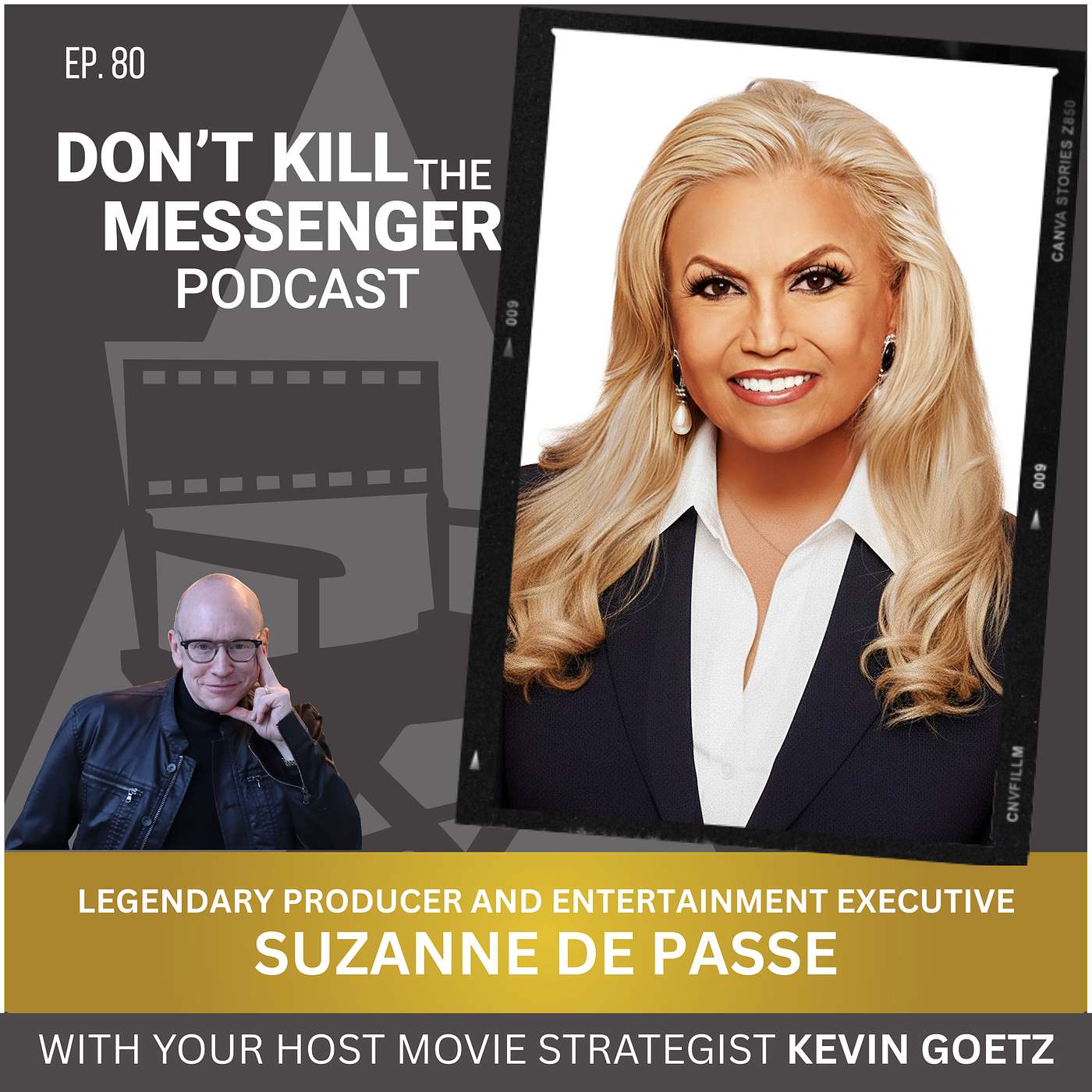
  • Dec 3, 2025 · 58 min

    Suzanne de Passe (Producer, Executive) on Motown, The Jackson 5, and Building an Entertainment Empire

    Send Kevin a Text Message In this episode of Don't Kill the Messenger, host Kevin Goetz sits down with legendary producer and entertainment executive Suzanne de Passe. From championing the Jackson 5 early in their career to producing Emmy Award–winning miniseries like Lonesome Dove, Suzanne’s career is defined by vision, talent recognition, and breaking barriers in Hollywood. An Eclectic, Wonderful Childhood (02:16) Suzanne describes growing up in Harlem, attending the progressive private school New Lincoln, and spending summers in Martha's Vineyard. Suzanne’s Superpower (12:46) Suzanne talks about her greatest talent: recognizing the talent of others and knowing what to do with it. The Meeting That Changed Everything (16:22) Through her friendship with Cindy Birdsong of The Supremes, Suzanne met Berry Gordy in 1967, a moment that changed her life forever. "One Day, That's Gonna Be Me" (21:19) Standing under the Essex House sign, watching Diana Ross depart in one limo, and the other Supremes in another, Suzanne had a realization: she wanted to be a part of that world. Championing The Jackson 5 (31:39) When Bobby Taylor invited her to hear a young group of brothers sing four songs a cappella, “the hair on the back of my neck flew up,” Suzanne recalls. Despite Berry Gordy’s initial resistance to signing another kid act, her relentless advocacy is what finally got the Jackson 5 their Motown audition. Rock and Roll Hall of Fame Induction (38:04) In 2024, Suzanne was inducted into the Rock and Roll Hall of Fame with the Ahmet Ertegun Award, the fifth woman and the first solo living female recipient among male legends. Lonesome Dove (40:28) After optioning Larry McMurtry's unpublished novel for $50,000, Swifty Lazar called with news: it had won the Pulitzer Prize. The resulting CBS miniseries was nominated for 19 Emmys, won 11, and received a Golden Globe and a Peabody Award. Immortal Studio: The Next Chapter (51:17) Suzanne has launched the production company Immortal Studio with partners Madison Jones, Cory Martin, and investor Yang Ben Wang. Focused on premium television, the company already has full seasons scripted and is built to be nimble, artist-friendly, and protective of creative vision — avoiding the industry’s usual “fingerprinting process,” where too many people try to leave their mark. Suzanne de Passe demonstrates that recognizing talent, whether in five kids singing a capella or an unpublished western novel, combined with persistence and vision, can build an entertainment legacy that spans decades. Host: Kevin Goetz Guest: Suzanne de Passe Producer: Kari Campano Writers: Kevin Goetz, Darlene Hayman, and Kari Campano Audio Engineer: Gary Forbes (DG Entertainment) For more information about Suzanne de Passe: Wikipedia: https://en.wikipedia.org/wiki/Suzanne_de_Passe IMDB:https://www.imdb.com/name/nm0210867/ Rock and Roll Hall of Fame: https://www.rockhall.com/inductees/suzanne-de-passe For more information about Kevin Goetz: - Website: www.KevinGoetz360.com - Audienceology Book: https://www.simonandschuster.com/books/Audience-ology/Kevin-Goetz/9781982186678 - How to Score in Hollywood: https://www.amazon.com/How-Score-Hollywood-Secrets-Business/dp/198218986X/ - Facebook, X, Instagram, TikTok, YouTube, Substack: @KevinGoetz360 - LinkedIn @Kevin Goetz - Screen Engine/ASI Website: www.ScreenEngineASI.com

  • Nov 19, 2025 · 59 min

    Nia Vardalos (Writer, Actress, Director, & Producer) on My Big Fat Greek Wedding, Motherhood, and Authenticity

    Send Kevin a Text Message In this episode of Don't Kill the Messenger, host Kevin Goetz sits down with Academy Award-nominated writer, actor, director, and producer Nia Vardalos. From her one-woman show in a tiny Los Angeles theater to creating one of the highest-grossing independent movies of all time, Nia's path shows what happens when you refuse to give up on your story. The Topline She Carried for 24 Years (01:36) Kevin reveals that Nia has carried the original test screening results from My Big Fat Greek Wedding in her wallet for over 24 years. Kevin shares why the film isn’t allowed to be referenced at his company, not because it was bad, but because it was such an unprecedented outlier that had no business doing what it did, except that it was "so damn good." Second City Training and Seizing the Moment (04:40) Nia traces her journey from Shakespearean training at Ryerson to discovering improv. From Rejection to the Stage (19:15) When Nia couldn't get her screenplay read, she rented a small theater and performed her story for audiences who kept coming back. She shares how she placed a $500 ad in the Los Angeles Times that caught Rita Wilson's attention. Rita Wilson, Tom Hanks, and Unwavering Loyalty (26:51) When Rita Wilson saw the show, her first words were "I love you." When she said, "this should be a movie," Nia instantly handed her the screenplay so fast that “her hair flew back." The result: $241.4 million domestic, $368.7 million worldwide. 14 Hours Notice to Motherhood (35:53) After years of fertility treatments, Nia received just 14 hours notice to adopt a daughter from foster care. She talks about the trials, and the joys of motherhood and adoption. Academy Award Nomination (39:35) On the morning of her Best Original Screenplay nomination, Nia was driving through rain to a fertility clinic when her best friend called first with the news. Returning to Theater (48:38) Nia returned to her theatrical roots with Tiny Beautiful Things, adapted from Cheryl Strayed's book and directed by Hamilton's Thomas Kail. The play became a New York Times Critics' Pick and was licensed in 250+ productions worldwide. She recently performed it in Greek in Athens at a 1,500-seat theater. Nia Vardalos proves that Hollywood's greatest success stories don't always follow the expected path. Sometimes they start with a $300 theater rental and an unshakeable belief in your own voice. If you enjoyed this episode, please leave us a review and share. We look forward to bringing you more behind-the-scenes revelations next time on Don't Kill the Messenger. Host: Kevin Goetz Guest: Nia Vardalos Producer: Kari Campano Writers: Kevin Goetz, Darlene Hayman, and Kari Campano Audio Engineer: Gary Forbes (DG Entertainment) For more information about Nia Vardalos: Wikipedia: https://en.wikipedia.org/wiki/Nia_Vardalos IMDB: https://www.imdb.com/name/nm0889522/ Instagram: https://www.instagram.com/niavardalos/ For more information about Kevin Goetz: - Website: www.KevinGoetz360.com - Audienceology Book: https://www.simonandschuster.com/books/Audience-ology/Kevin-Goetz/9781982186678 - How to Score in Hollywood: https://www.amazon.com/How-Score-Hollywood-Secrets-Business/dp/198218986X/ - Facebook, X, Instagram, TikTok, YouTube, Substack: @KevinGoetz360 - LinkedIn @Kevin Goetz - Screen Engine/ASI Website: www.ScreenEngineASI.com

  • Nov 5, 2025 · 58 min

    Bob Levin (Veteran Marketing Executive) on Audience Insights, Campaign Strategy, and the Business of Movie Appeal

    Send Kevin a Text Message In this engaging episode of Don't Kill the Messenger, host Kevin Goetz interviews his business associate, Bob Levin, about his remarkable journey from Sears catalog copywriter to President of Worldwide Marketing at Disney, Sony Pictures, and MGM, before joining Kevin at Screen Engine in the role of President and COO. Listen in as these two industry veterans share marketing insights and discuss their upcoming book, How to Score in Hollywood (Simon & Schuster, November 11th), which reveals the hidden formula behind a movie’s profitability — showing how audience understanding drives smarter decisions from greenlight to release. Disney's Renaissance Era (09:00) Bob recounts joining Disney just as Eisner and Katzenberg were revitalizing the studio, leading marketing during 17 consecutive hits, including Down and Out in Beverly Hills, The Lion King, and Pretty Woman. Marketing Philosophy (15:51) "Good marketing is both instinct and data," Bob explains, describing his pioneering approach of creating targeted messaging for different audience segments at Disney's animation division. Pretty Woman & Marketing Triumphs (19:33) Bob reveals how he helped to transform Pretty Woman from a potentially dark R-rated film into a celebration of female empowerment, even suggesting the iconic title to replace the original "3000". The Screen Engine Years (34:40) After leading marketing at three major studios, Bob joined Screen Engine, helping to build their research business, which started in Kevin's living room, into an industry powerhouse that expanded beyond film into other industries. How to Score in Hollywood (42:48) Bob discusses their upcoming book, which examines how movies get greenlit, applying the principle that "every movie if made and marketed for the right price should make money.” Understanding Audience Response (47:42) Levy notes that audiences aren't "wrong" when they dislike something; they're simply reacting honestly. Bob learned that viewers fundamentally seek characters with whom they can identify. The Attention Economy (48:54) Rather than thinking in terms of being in "the movie business," Levin suggests viewing entertainment as part of "the attention economy" where respecting the audience and telling great stories remains paramount. If you enjoyed this episode, please leave us a review and share. We look forward to bringing you more behind-the-scenes revelations next time on Don't Kill the Messenger. Host: Kevin Goetz Guest: Bob Levin Producer: Kari Campano Writers: Kevin Goetz, Darlene Hayman, and Kari Campano Audio Engineer: Gary Forbes (DG Entertainment) For more information about Bob Levin: Simon and Schuster:https://www.simonandschuster.com/authors/Bob-Levin/240343657 LinkedIn: https://www.linkedin.com/in/robert-levin-843797125/ IMDB: https://www.imdb.com/news/ni55955402/ For more information about Kevin Goetz: - Website: www.KevinGoetz360.com - Audienceology Book: https://www.simonandschuster.com/books/Audience-ology/Kevin-Goetz/9781982186678 - How to Score in Hollywood: https://www.amazon.com/How-Score-Hollywood-Secrets-Business/dp/198218986X/ - Facebook, X, Instagram, TikTok, YouTube, Substack: @KevinGoetz360 - LinkedIn @Kevin Goetz - Screen Engine/ASI Website: www.ScreenEngineASI.com

  • Oct 15, 2025 · 56 min

    Stephen Follows (Film Industry Data Analyst) on Getting the Greenlight and Film Profitability

    Send Kevin a Text Message In this episode of Don't Kill the Messenger, host Kevin Goetz welcomes film industry analyst Stephen Follows for a discussion about film profitability and its connection to data. Stephen's digital book Greenlight Signals analyzes over 10,000 films and 4 million audience responses using secondary data (existing reviews, ratings, and comments from across the internet) to discover what makes a film successful. Together, Kevin and Stephen explore the same mission from different angles: ensuring filmmakers can make money while making the movies they're passionate about. From Film School to Data Research (2:32) Stephen shares his path from producing micro-budget features to becoming an entertainment data analyst, driven by his love of cinema and his passion for solving problems through logic and research. The Numbers Don’t Lie (9:59) Stephen recounts the eye-opening experience of helping a producer friend with a business plan, only to discover that every similar film had lost money. Why Experience Doesn't Equal Success (12:47) Stephen reveals his surprising research finding: there's little to no correlation between a producer's experience and their film's profitability, showing how passion can interfere with business sense. Two Books, One Goal (22:01) Kevin and Stephen discuss their approaches to data: Kevin's How to Score in Hollywood focuses on pre-greenlight capability testing using audience data, while Stephen's Greenlight Signals uses secondary data to identify patterns across genres. Both emphasize that data guides decisions rather than dictating them. Horror Films: Control and Atmosphere (33:50) Stephen and Kevin discuss what makes horror movies work, from declaring your genre early to shot-length and how controlling what audiences see and when they see it is essential to creating fear. Every Movie Should Make Money (45:50) Kevin and Stephen discuss Kevin's theory that every film, if made and marketed for the right price, should be profitable. Universal Rules Across All Genres (47:49) Stephen and Kevin identify critical commonalities of successful films: emotional authenticity, clear character wants, visible stakes, avoiding confusion, respecting established rules, and maintaining consistent tone throughout. This episode offers invaluable insights for anyone interested in the intersection of art and commerce in Hollywood. If you enjoyed this episode, please leave us a review and share. We look forward to bringing you more behind-the-scenes revelations next time on Don't Kill the Messenger. Host: Kevin Goetz Guest: Stephen Follows Producer: Kari Campano Writers: Kevin Goetz, Darlene Hayman, and Kari Campano Audio Engineer: Gary Forbes (DG Entertainment) For more information about Stephen Follows: Website: https://stephenfollows.com/ Instagram: https://www.instagram.com/stephenfollows/ IMDB: https://www.imdb.com/name/nm1637486/ For more information about Kevin Goetz: - Website: www.KevinGoetz360.com - Audienceology Book: https://www.simonandschuster.com/books/Audience-ology/Kevin-Goetz/9781982186678 - How to Score in Hollywood: https://www.amazon.com/How-Score-Hollywood-Secrets-Business/dp/198218986X/ - Facebook, X, Instagram, TikTok, YouTube, Substack: @KevinGoetz360 - LinkedIn @Kevin Goetz - Screen Engine/ASI Website: www.ScreenEngineASI.com