Skip to content
Artwork for [Dev]olution
[Dev]olution · October 21 · 56 min

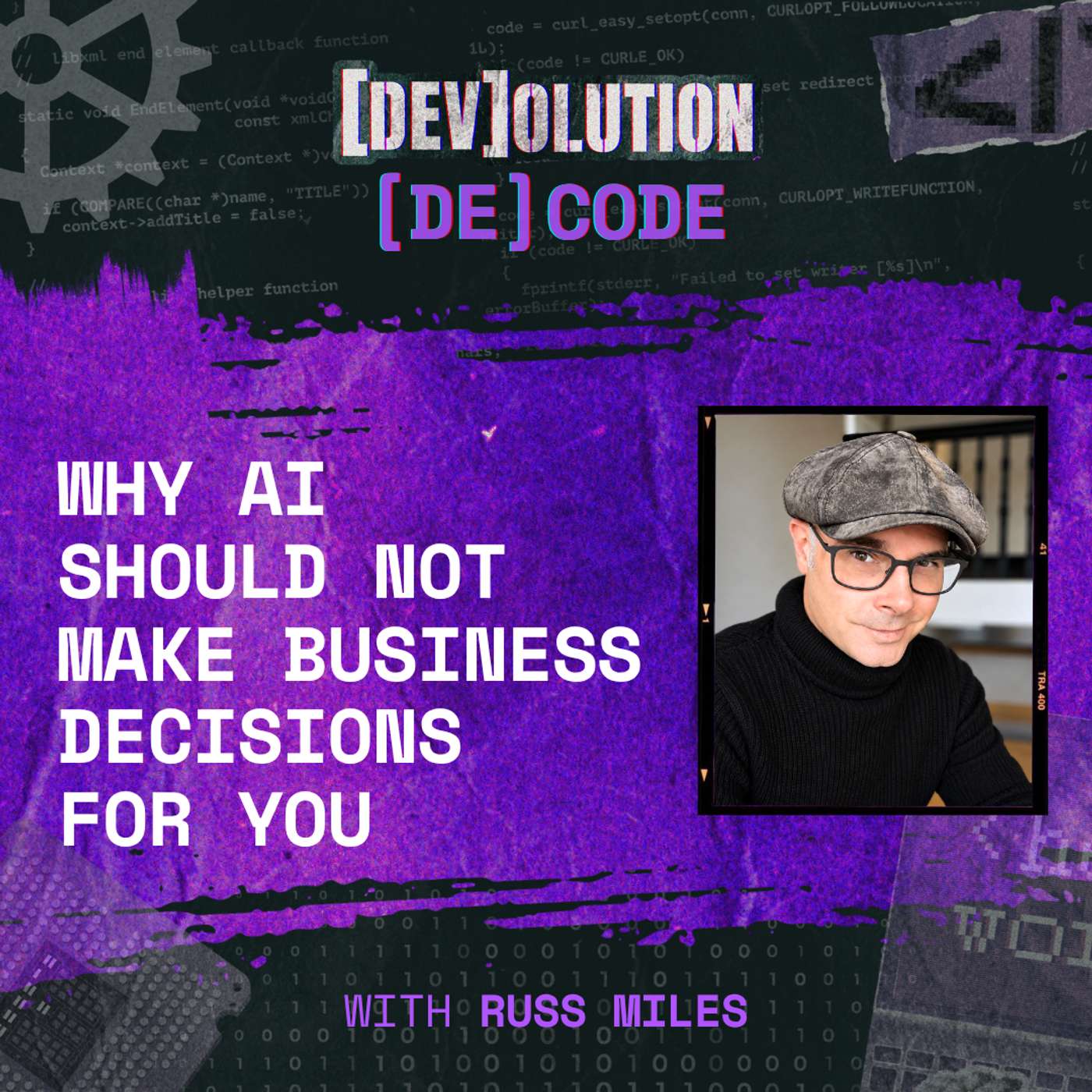
Why AI Should Never Make Business Decisions For You

When an agent makes a call on your behalf and it goes sideways 6 months from now, the model can't answer for it. It doesn't know what it did, and you can't make it care. So whose name is on that? Russ Miles, Principal Engineer in Agentic Engineering at TechTalk, has spent 30 years in software, written 9 titles for O'Reilly, and self-published The Sovereign Engineer and The Sovereign Apprentice. His argument is simple and uncomfortable: You can hand an agent a mountain of responsibility, but accountability never leaves your desk. When a retry config nobody reviewed takes production down three months later, there's no precedent for pointing at the model or the vendor. In this episode, Russ and Nicky Pike dig into why accountability is a position you take rather than a role you're given, what cognitive debt feels like from the inside, and the sentinel agents Russ built to keep his own judgment honest, even the ones he ignored for an entire day at Prodacity. The challenge for this episode: Faros AI studied two years of telemetry across 22,000 developers and more than 4,000 teams and found that pull requests merged with zero review are up 31%. Nobody chose to drop oversight. Reviewers just can't keep up with what the machines are producing. Nicky admits he's hit approved on a diff he only skimmed and told himself it was fine. So be honest. When's the last time you did it, and did it come back to bite you later? In this episode, you'll learn: Why a decision's real size depends on how hard it is to roll back Why context switching drains your judgment faster than the number of decisions you make Why "code is free" ignores the real cost of tokens and human attention Things to listen for: (00:00) Meet Russ Miles (02:40) Where the word habitat came from (10:15) Every literacy shift asks who owns agency (15:50) Why Russ self-published on Leanpub (21:05) The rise of PRs merged with zero review (22:25) Responsibility versus accountability (26:35) Why big decisions are the hard-to-revert ones (30:00) Why LLMs don't think like humans do (34:05) The frictionless trap and cognitive debt (37:05) The sentinels Russ built and then ignored (40:00) Judgment is a reservoir that runs dry (42:15) The choice cartographer and the Carpaccio agent (48:00) Why the devil's advocate agent saves money (54:50) Predictions: The odds a court blames the vendor (55:45) Defining a Coder: Owning the decisions behind the outcome Resources Russ Miles's LinkedIn: https://www.linkedin.com/in/russmiles/ TechTalk website: https://www.techtalk.at/ The Sovereign Engineer: https://Leanpub.com/thesovereignengineer The Sovereign Apprentice: https://Leanpub.com/thesovereignapprentice Habitat Thinking on GitHub: Habitat-Thinking/ai-literacy-superpowers Patterns of Software: https://archive.org/details/PatternsOfSoftware The Sentinels: https://github.com/Habitat-Thinking/ai-literacy-superpowers

0:00 · DEV-Video-Russ Miles-V1-56:25

transcript

No transcript — this publisher did not publish one.

show notes

When an agent makes a call on your behalf and it goes sideways 6 months from now, the model can't answer for it. It doesn't know what it did, and you can't make it care. So whose name is on that? 

Russ Miles, Principal Engineer in Agentic Engineering at TechTalk, has spent 30 years in software, written 9 titles for O'Reilly, and self-published The Sovereign Engineer and The Sovereign Apprentice. 

His argument is simple and uncomfortable: You can hand an agent a mountain of responsibility, but accountability never leaves your desk. When a retry config nobody reviewed takes production down three months later, there's no precedent for pointing at the model or the vendor.

In this episode, Russ and Nicky Pike dig into why accountability is a position you take rather than a role you're given, what cognitive debt feels like from the inside, and the sentinel agents Russ built to keep his own judgment honest, even the ones he ignored for an entire day at Prodacity.


The challenge for this episode:

Faros AI studied two years of telemetry across 22,000 developers and more than 4,000 teams and found that pull requests merged with zero review are up 31%. Nobody chose to drop oversight. Reviewers just can't keep up with what the machines are producing. Nicky admits he's hit approved on a diff he only skimmed and told himself it was fine. So be honest. When's the last time you did it, and did it come back to bite you later? 

In this episode, you'll learn:

  1. Why a decision's real size depends on how hard it is to roll back
  2. Why context switching drains your judgment faster than the number of decisions you make
  3. Why "code is free" ignores the real cost of tokens and human attention

Things to listen for:

 (00:00) Meet Russ Miles
 (02:40) Where the word habitat came from
 (10:15) Every literacy shift asks who owns agency
 (15:50) Why Russ self-published on Leanpub
 (21:05) The rise of PRs merged with zero review
 (22:25) Responsibility versus accountability
 (26:35) Why big decisions are the hard-to-revert ones
 (30:00) Why LLMs don't think like humans do
 (34:05) The frictionless trap and cognitive debt
 (37:05) The sentinels Russ built and then ignored
 (40:00) Judgment is a reservoir that runs dry
 (42:15) The choice cartographer and the Carpaccio agent
 (48:00) Why the devil's advocate agent saves money
 (54:50) Predictions: The odds a court blames the vendor
 (55:45) Defining a Coder: Owning the decisions behind the outcome


Resources

Russ Miles's LinkedIn: https://www.linkedin.com/in/russmiles/
TechTalk website: https://www.techtalk.at/
The Sovereign Engineer: https://Leanpub.com/thesovereignengineer
The Sovereign Apprentice: https://Leanpub.com/thesovereignapprentice
Habitat Thinking on GitHub: Habitat-Thinking/ai-literacy-superpowers

Patterns of Software: https://archive.org/details/PatternsOfSoftware

The Sentinels: https://github.com/Habitat-Thinking/ai-literacy-superpowers
links7

chapters

4 chapters