Skip to content
Artwork for David Bombal
David Bombal · Today · 30 min

#602: How Compilers Turn Secure C Code Into Vulnerable Binaries

Big thanks to ‪@ThreatLocker‬ for sponsoring my trip to Black Hat USA 2026 and also for sponsoring this video. To start your free trial with ThreatLocker please use the following link: https://www.threatlocker.com/davidbombal You can write secure C code, follow accepted best practices and still end up with a vulnerable binary. The reason is simple: the CPU does not run your source code. It runs whatever the compiler produces. David sits down with security researcher Chris Domas at Black Hat to examine how legal compiler optimizations can remove security protections, delete memory-clearing operations and introduce time-of-check to time-of-use vulnerabilities into code that appeared secure. Chris explains the C abstract machine, why compilers are allowed to transform code so dramatically and how register pressure, structure layout and even data size can affect whether a binary is vulnerable. In one striking example, 17 or 33 bytes can be safe while nearby sizes produce vulnerable code. They also discuss whether Rust solves the problem, why switching between GCC and Clang is not the answer and how AI helped analyse 500 million lines of open-source code to identify 300 potentially dangerous patterns. Most importantly, Chris explains what developers can do now, including enabling compiler warnings, using sanitizers, analysing optimized builds and testing the exact binary that will be shipped. // Christopher Domas’ SOCIAL // LinkedIn: / christopher-domas GitHub: https://github.com/xoreaxeaxeax X: https://x.com/xoreaxeaxeax // David's SOCIAL // Discord: discord.com/invite/usKSyzb Twitter: www.twitter.com/davidbombal Instagram: www.instagram.com/davidbombal LinkedIn: www.linkedin.com/in/davidbombal Facebook: www.facebook.com/davidbombal.co TikTok: tiktok.com/@davidbombal YouTube: / @davidbombal Spotify: open.spotify.com/show/3f6k6gE... SoundCloud: / davidbombal Apple Podcast: podcasts.apple.com/us/podcast... // MY STUFF // https://www.amazon.com/shop/davidbombal // SPONSORS // Interested in sponsoring my videos? Reach out to my team here: sponsors@davidbombal.com // MENU // 0:00 - Coming Up 0:48 - Intro 02:05 - Different Ways of Exploiting CPU’s 04:10 - The C Specifications 06:17 - The Compiler Deleting Nemsec 08:40 - Do we need to use a new Compiler ? 10:09 - Compiler Inventing Vulnerabilities 12:13 - Don't Give up Writing Secure Code 12:44 - Sponsored Section 14:25 - Any Easy Options To Create A New Compiler ? 15:09 - Chris’s Presentation at Black Hat 20:00 - Weird Situations with Size of Data 21:22 - What Can Developers Do ? 23:32 - Who Can Leverage this Vulnerability ? 25:02 - Could AI Make it Easy For Attackers To Leverage This? 28:27 - Recommendations For Developers 29:48 - Advice To Be Like Chris 30:36 - Conclusion & Outro Please note that links listed may be affiliate links and provide me with a small percentage/kickback should you use them to purchase any of the items listed or recommended. Thank you for supporting me and this channel! Disclaimer: This video is for educational purposes only. #bhusa2026 #securecoding #compiler

0:00-30:39

transcript

No transcript — this publisher did not publish one.

show notes

Big thanks to ‪@ThreatLocker‬ for sponsoring my trip to Black Hat USA 2026 and also for sponsoring this video. To start your free trial with ThreatLocker please use the following link: https://www.threatlocker.com/davidbombal

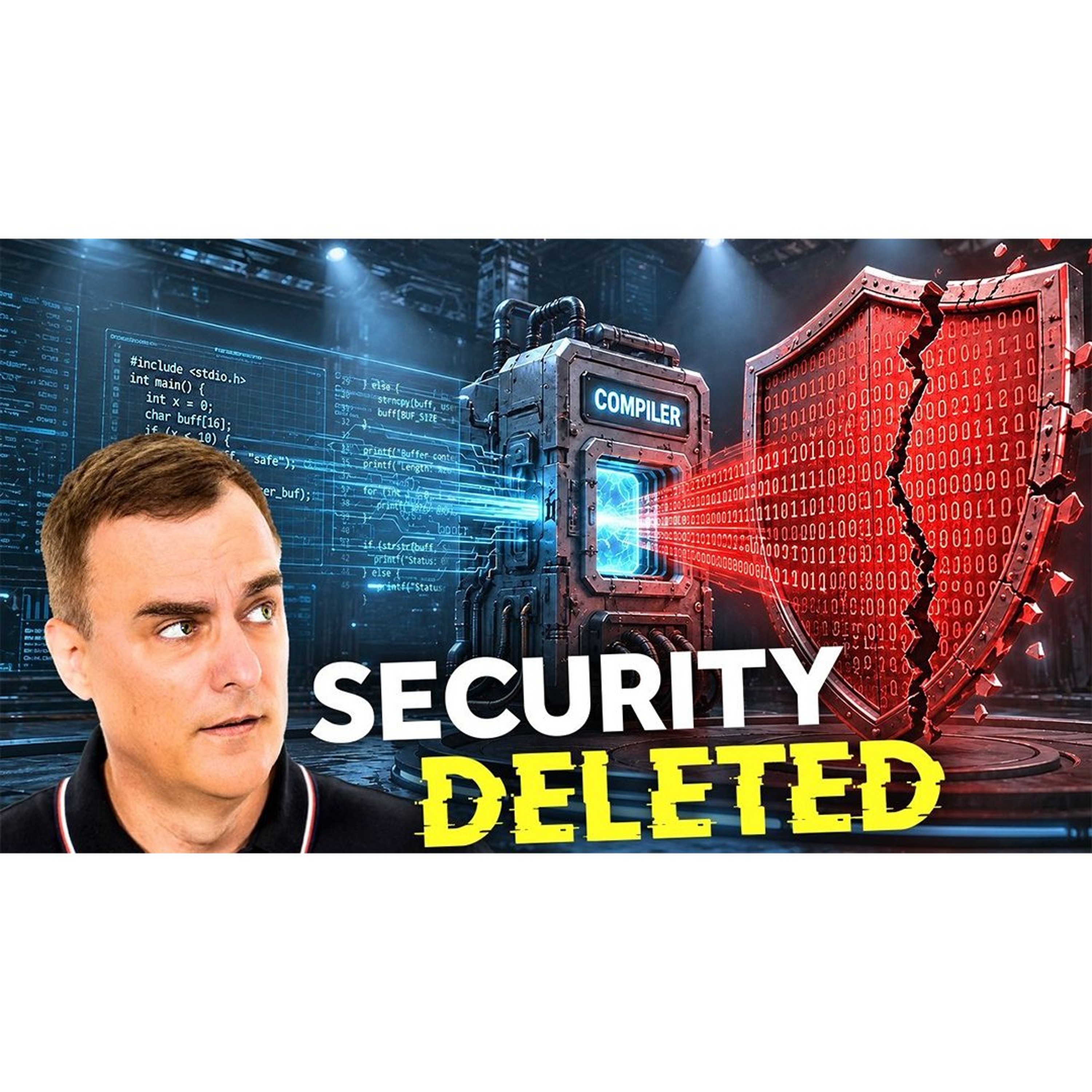
You can write secure C code, follow accepted best practices and still end up with a vulnerable binary. The reason is simple: the CPU does not run your source code. It runs whatever the compiler produces.

David sits down with security researcher Chris Domas at Black Hat to examine how legal compiler optimizations can remove security protections, delete memory-clearing operations and introduce time-of-check to time-of-use vulnerabilities into code that appeared secure.

Chris explains the C abstract machine, why compilers are allowed to transform code so dramatically and how register pressure, structure layout and even data size can affect whether a binary is vulnerable. In one striking example, 17 or 33 bytes can be safe while nearby sizes produce vulnerable code. They also discuss whether Rust solves the problem, why switching between GCC and Clang is not the answer and how AI helped analyse 500 million lines of open-source code to identify 300 potentially dangerous patterns.

Most importantly, Chris explains what developers can do now, including enabling compiler warnings, using sanitizers, analysing optimized builds and testing the exact binary that will be shipped.

// Christopher Domas’ SOCIAL //
LinkedIn: / christopher-domas
GitHub: https://github.com/xoreaxeaxeax
X: https://x.com/xoreaxeaxeax

// David's SOCIAL //
Discord: discord.com/invite/usKSyzb
Twitter: www.twitter.com/davidbombal
Instagram: www.instagram.com/davidbombal
LinkedIn: www.linkedin.com/in/davidbombal
Facebook: www.facebook.com/davidbombal.co
TikTok: tiktok.com/@davidbombal
YouTube: / @davidbombal
Spotify: open.spotify.com/show/3f6k6gE...
SoundCloud: / davidbombal
Apple Podcast: podcasts.apple.com/us/podcast...

// MY STUFF //
https://www.amazon.com/shop/davidbombal

// SPONSORS //
Interested in sponsoring my videos? Reach out to my team here: sponsors@davidbombal.com

// MENU //
0:00 - Coming Up
0:48 - Intro
02:05 - Different Ways of Exploiting CPU’s
04:10 - The C Specifications
06:17 - The Compiler Deleting Nemsec
08:40 - Do we need to use a new Compiler ?
10:09 - Compiler Inventing Vulnerabilities
12:13 - Don't Give up Writing Secure Code
12:44 - Sponsored Section
14:25 - Any Easy Options To Create A New Compiler ?
15:09 - Chris’s Presentation at Black Hat
20:00 - Weird Situations with Size of Data
21:22 - What Can Developers Do ?
23:32 - Who Can Leverage this Vulnerability ?
25:02 - Could AI Make it Easy For Attackers To Leverage This?
28:27 - Recommendations For Developers
29:48 - Advice To Be Like Chris
30:36 - Conclusion & Outro

Please note that links listed may be affiliate links and provide me with a small percentage/kickback should you use them to purchase any of the items listed or recommended. Thank you for supporting me and this channel!

Disclaimer: This video is for educational purposes only.
#bhusa2026 #securecoding #compiler