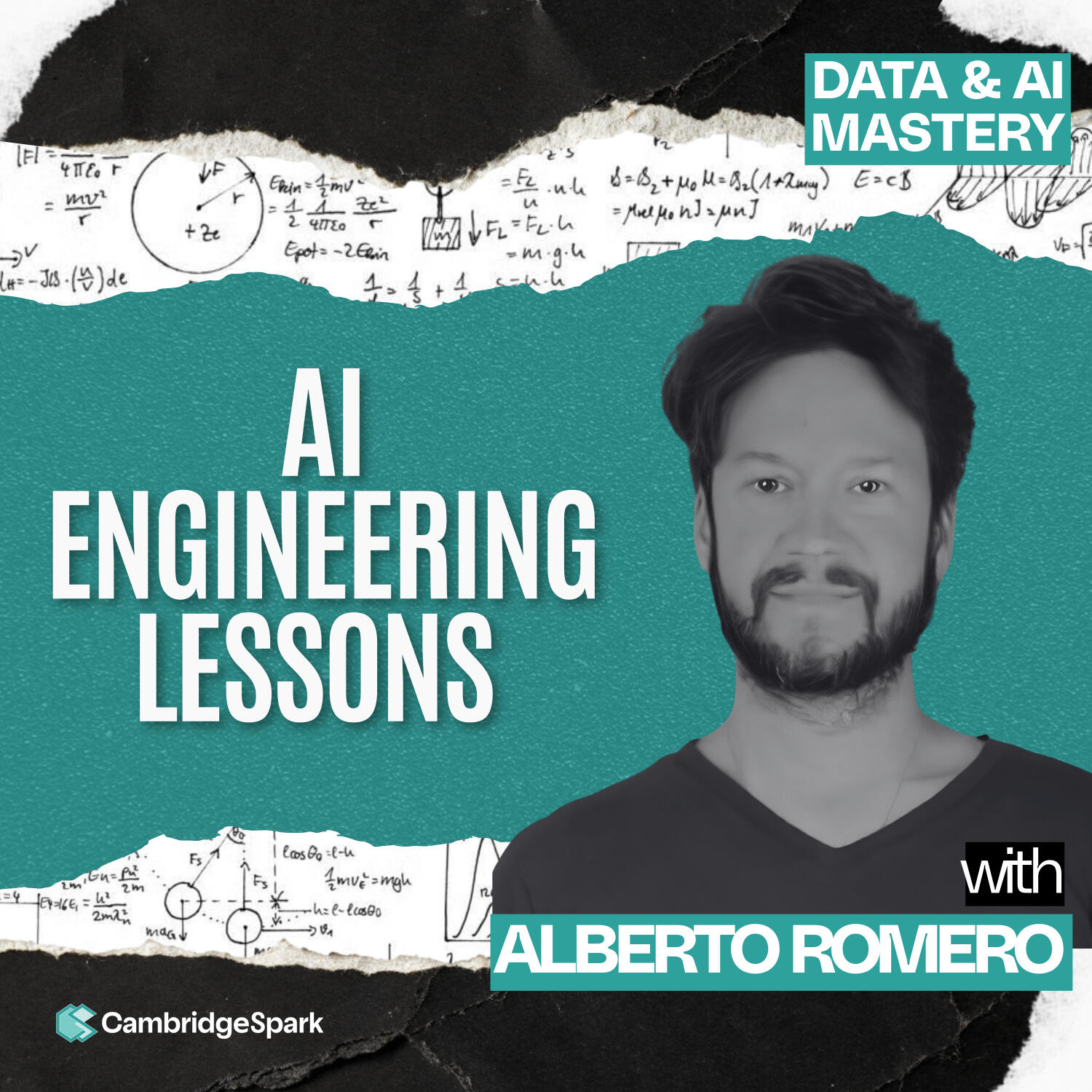
DAIM: Inside The Algorithm | Alberto Romero on Engineering AI at scale at Aviva
transcript
show notes
👉 Discover how Cambridge Spark helps organisations build the data and AI capabilities needed to turn strategy into measurable impact: cambridgespark.com
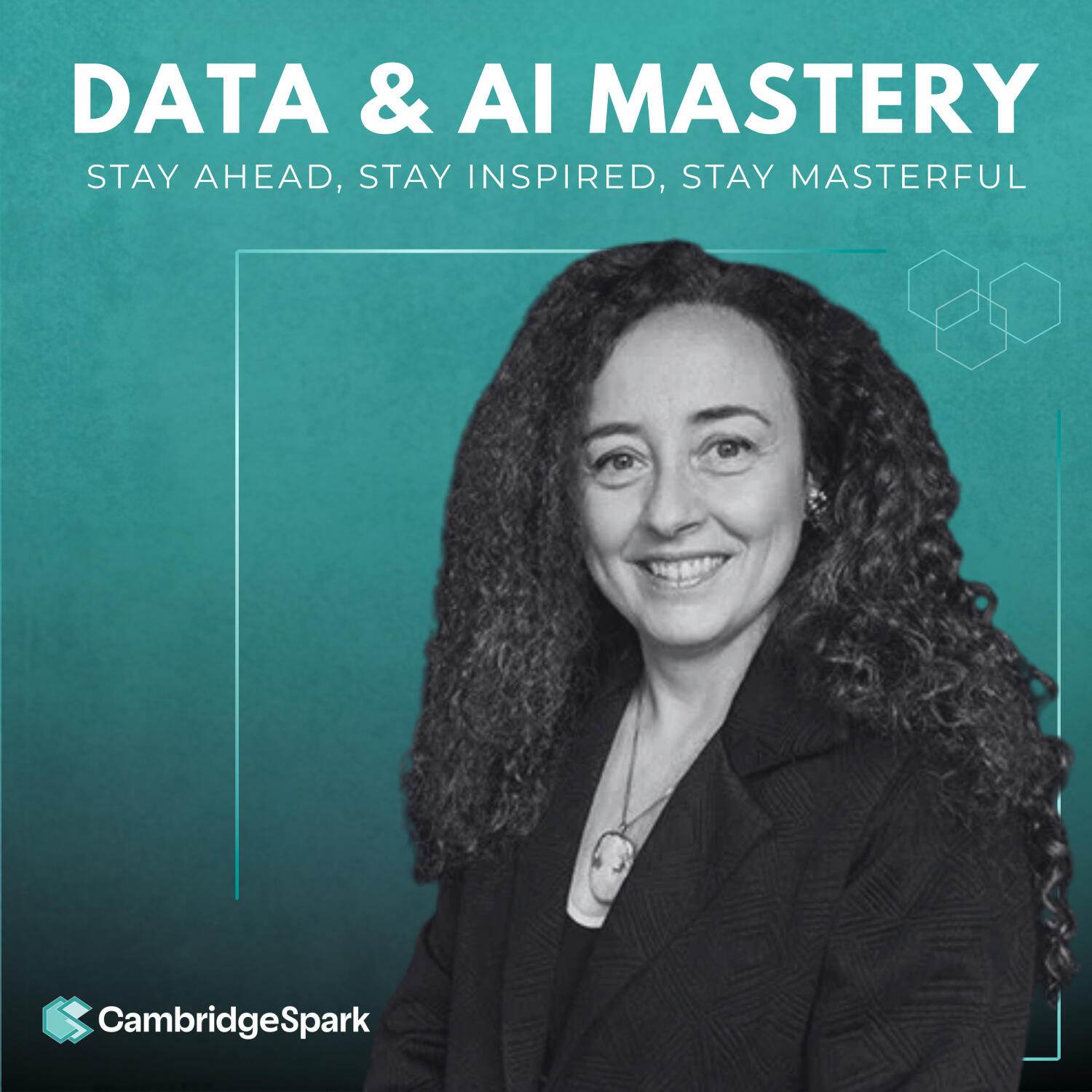
What does it actually take to ship machine learning inside one of the UK's largest insurers? Jeremy Bradley sits down with Alberto Romero, director of AI engineering at Aviva, to trace his path from InsurTech founder to enterprise AI leader.
Alberto explains why prototypes are so often mistaken for finished products and what production readiness really demands once edge cases, drift and adversarial behaviour enter the picture. The conversation covers how to get genuine explainability out of large language models rather than plausible-sounding justification, when fine-tuning earns its place in a regulated stack, and why Aviva built its own internal platform to govern AI use cases at scale.
Alberto also shares his take on fraud detection as an adversarial ML problem and the one failure mode he sees engineering teams repeat most often.
Follow Data & AI Mastery so you never miss an episode, and share it with a colleague working through similar production challenges.
If you enjoyed this conversation, you might also like this episode featuring Sarah Self. She joined us on Data and AI Mastery to explore what most organisations get wrong when deploying AI.
Apple: https://podcasts.apple.com/gb/podcast/from-cybersecurity-to-ai-director-sarah-self-on-leading/id1779783413?i=1000764247007
Spotify: https://open.spotify.com/episode/0BpSq5X1ZP8ctIYTxWVAJT?si=1264586e79f3446f
YouTube: https://www.youtube.com/watch?v=2jgM095SYG0
Glossary Terms
RAG: Retrieval-Augmented Generation is an AI methodology that enhances Large Language Models by pulling factual context from external knowledge bases.
GAN: Generative Adversarial Network is a deep learning architecture in which two neural networks compete against each other to create highly realistic synthetic data from a training dataset
Non-deterministic: describes a process, algorithm, or system whose outcome is inherently unpredictable and cannot be guaranteed to repeat exactly, even when it starts from the exact same initial conditions
ReAct (Reasoning + Acting) approach: a prompting technique that enables AI models to solve complex problems by alternating between thinking and taking action
Chapter Markers
(00:00) - Cold open: why prototypes get mistaken for production
(02:53) - Avoiding common AI adoption pitfalls in regulated sectors
(05:44) - Real explainability versus post-hoc justification in LLMs
(09:18) - From startup founder to enterprise: the mindset shift
(11:38) - Managing AI across 70+ use cases at Aviva
(13:31) - Standards first, technology second
(17:19) - Where fine-tuning earns its place
(20:33) - Building Aviva's own governed AI platform
(23:51) - Fraud detection as an adversarial ML problem
(28:34) - Quick fire: the most common AI failure mode
(29:37) - What deserves more attention as AI scales
Useful Links
Connect with Alberto Romero on LinkedIn: https://uk.linkedin.com/in/albertoromero-uk
For more AI insights follow Jeremy on LinkedIn: https://uk.linkedin.com/in/jeremy-bradley
Explore Cambridge Spark’s AI upskilling programmes at https://www.cambridgespark.com