CyberCode Academy · Yesterday · 12 min
Course 46 - CompTIA Cybersecurity Analyst | Episode 32: Secure Software Development
0:00-12:24
transcript
show notes
Foundations of Secure Software DevelopmentEpisode OverviewThis episode explores how security can be integrated throughout the software development process, connecting the Software Development Life Cycle (SDLC), common development methodologies, and practical secure coding principles. It emphasizes the importance of addressing security early rather than treating it as an afterthought during deployment or maintenance.Key Topics Covered1. The Software Development Life Cycle (SDLC)The episode examines the major stages of the software lifecycle:
You can listen and download our episodes for free on more than 10 different platforms:
https://linktr.ee/cybercode_academy
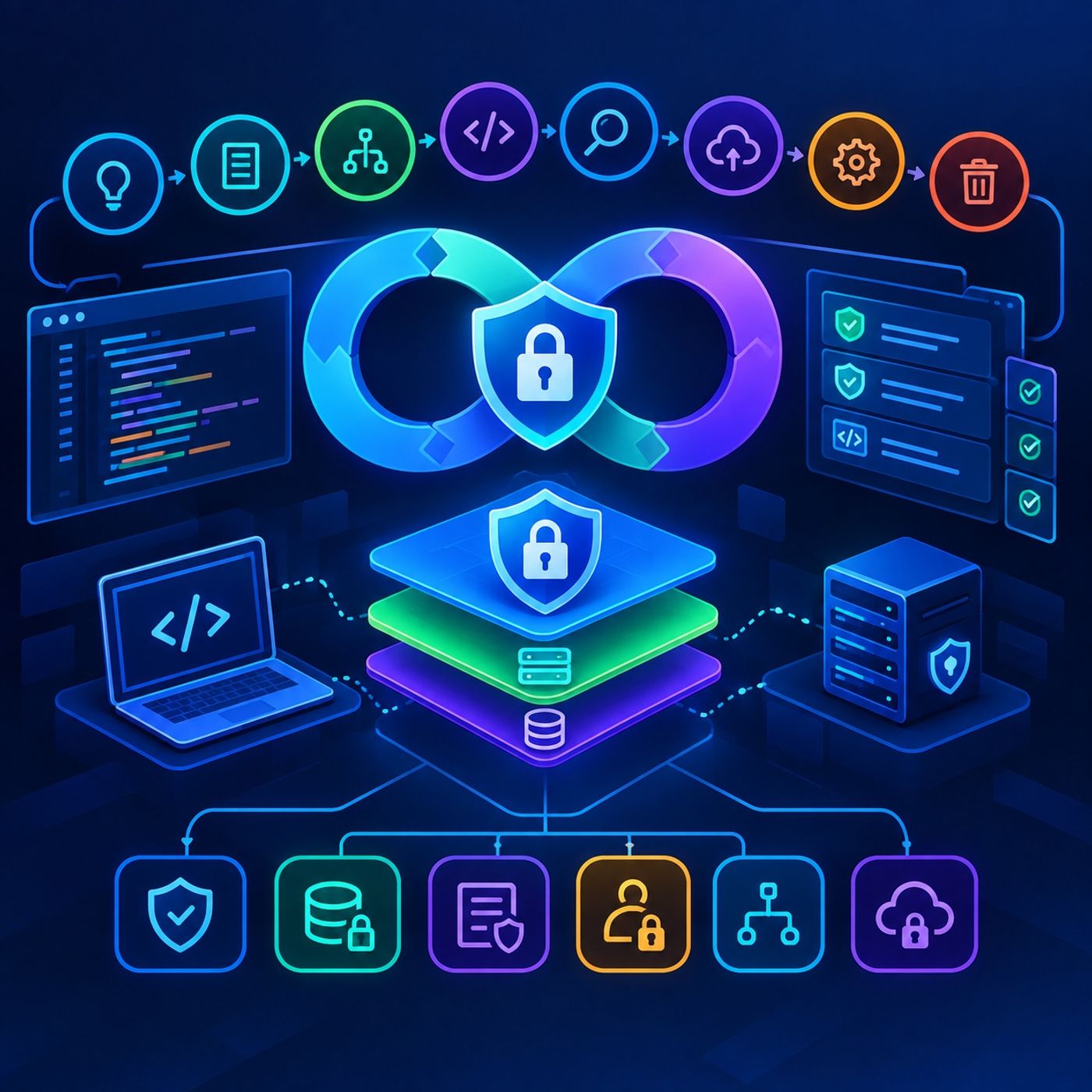
- Planning and Feasibility — defining business objectives, scope, resources, and constraints.
- Requirements Analysis — identifying functional, technical, and cybersecurity requirements.
- System and Application Design — incorporating secure architecture, access controls, data protection, and threat considerations.
- Development — implementing functionality according to secure coding standards.
- Testing and Validation — performing functional, security, integration, and user acceptance testing.
- Deployment, Training, and Transition — moving the application into operational use while preparing users and administrators.
- Operations and Maintenance — monitoring, patching, fixing defects, addressing vulnerabilities, and adapting to changing requirements.
- Retirement — securely decommissioning applications, systems, credentials, data, and supporting infrastructure.
- Waterfall — sequential progression through defined phases.
- V-Model — emphasizes corresponding verification and validation activities alongside development stages.
- Spiral — iterative development centered on risk identification and mitigation.
- Rapid Application Development (RAD) — emphasizes rapid prototyping and iterative user feedback.
- Agile — iterative and incremental delivery through short development cycles.
- Big Bang — minimal formal planning or structure, carrying significant project and quality risks.
- Establishing organizational security policies and coding standards.
- Performing threat and risk assessments during development.
- Validating and safely handling untrusted input.
- Preventing SQL injection through parameterized queries and appropriate database access controls.
- Defending against cross-site scripting (XSS) through context-appropriate output encoding and additional browser-side protections such as Content Security Policy where appropriate.
- Designing informative but non-sensitive error messages.
- Implementing multi-factor authentication for appropriate accounts and applications.
- Protecting sessions through secure session management and appropriate cookie controls.
- Using HTTPS/TLS to protect data in transit.
- Hardening the underlying operating systems, servers, databases, and deployment infrastructure.
- Applying established security guidance such as the OWASP application security resources.
- Using version-control systems such as Git or Subversion to track changes, support code review, improve accountability, and provide a reliable development history.
- Incorporating modern practices such as dependency management, secret protection, automated security testing, and security-focused code review.
- Security should be considered throughout the entire SDLC, not added only after development is complete.
- Different development models provide different approaches to planning, iteration, testing, and risk management.
- Secure coding requires more than input validation; applications need layered defenses across authentication, authorization, sessions, data handling, error management, and infrastructure.
- Parameterized queries are a fundamental defense against SQL injection.
- XSS protection requires context-appropriate output encoding and other application/browser security controls.
- Version control improves traceability, collaboration, review, and accountability.
- Secure software development is a continuous process that extends from initial planning through deployment, maintenance, and retirement.
You can listen and download our episodes for free on more than 10 different platforms:
https://linktr.ee/cybercode_academy
links1