Skip to content
Artwork for CyberCode Academy
CyberCode Academy · Friday · 21 min

Course 46 - CompTIA Cybersecurity Analyst | Episode 24: Digital Forensics Essentials

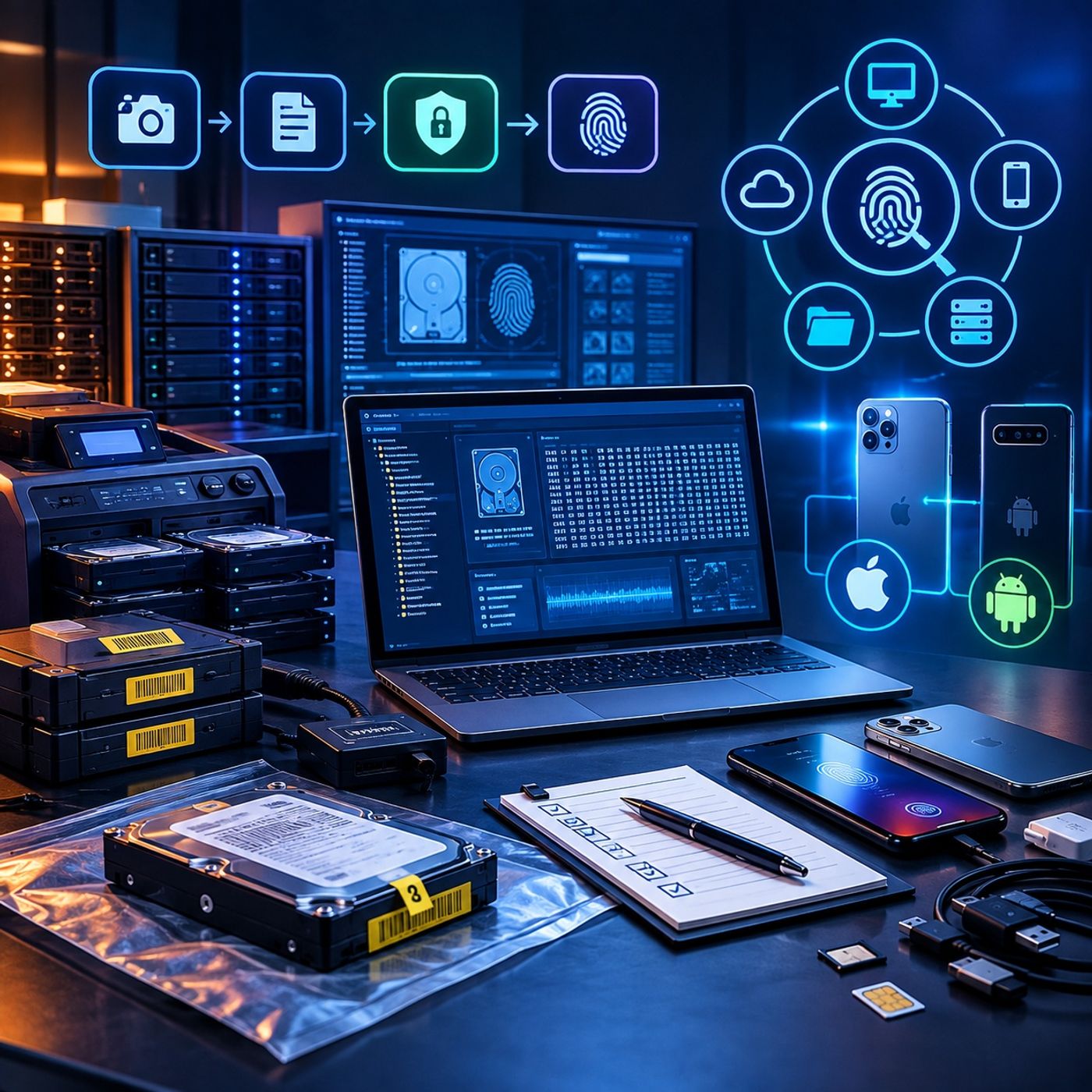
Digital Forensics: Evidence Collection, Preservation, and Mobile Device InvestigationEpisode OverviewThis episode provides an end-to-end overview of the hardware, software, and operational procedures used to conduct forensically sound digital investigations. It explains how investigators collect, preserve, acquire, and analyze digital evidence from traditional computer systems and mobile devices while maintaining evidence integrity and a defensible chain of custody.The episode emphasizes the importance of separating original evidence from working copies, preventing unintended modifications during acquisition, and maintaining accurate documentation throughout the investigation lifecycle.Key Topics Covered1. Forensic Workstations and Evidence Storage Forensic Workstations: Design high-performance investigation platforms with suitable multi-core CPUs, substantial RAM, fast system storage, and dedicated evidence-storage capacity. Large-Scale Evidence Storage: Use high-capacity storage systems and RAID configurations where appropriate to accommodate large disk images and forensic datasets. Multi-Terabyte Evidence: Plan storage capacity around the size and number of acquired devices, working copies, case artifacts, and required backups. Controlled Investigation Environment: Separate operating-system and application storage from evidence storage to reduce accidental modification and improve case organization. 2. Forensic Software and Evidence Acquisition Hardware Commercial Forensic Suites: Explore established platforms such as EnCase and FTK for evidence acquisition, indexing, examination, and analysis. Open-Source and Free Tools: Examine alternatives such as SIFT and the Sleuth Kit (TSK) for forensic analysis and investigation workflows. Hardware Write Blockers: Use write-blocking technology during appropriate acquisition procedures to prevent the forensic workstation from modifying the source media. Forensic Drive Duplicators: Perform controlled, bit-for-bit acquisition of storage media while preserving the original evidence. Evidence Drives: Prepare appropriately sanitized or forensically managed destination media before acquisition and maintain clear identification of each evidence copy. Integrity Verification: Use cryptographic hashes and acquisition logs to verify that forensic images remain consistent with the acquired evidence. 3. Field Collection and Investigative Documentation Scene Documentation: Use digital photography to document devices, connections, physical conditions, screens, and the overall environment before equipment is disturbed. Cable and Equipment Identification: Use labels and systematic documentation to record complex hardware and network connections accurately. Chain of Custody: Maintain a documented record of who collected, transferred, accessed, stored, or examined each piece of evidence. Investigation Procedures: Use standardized playbooks, collection procedures, and incident-response checklists to promote consistency across investigations. Evidence Handling: Clearly identify original evidence, forensic images, working copies, and derived artifacts throughout the case lifecycle. 4. Mobile Device Forensics Platform Differences: Understand the distinct security architectures, operating systems, hardware protections, and acquisition challenges associated with iOS and Android devices. Mobile Acquisition: Select acquisition techniques according to the device model, operating-system version, security configuration, available access, and investigative authority. SIM and Subscriber Data: Examine SIM-related artifacts where technically accessible, potentially including contacts and call-related information. Connectivity and Accessories: Maintain comprehensive cable and adapter kits to support different mobile-device interfaces. Specialized Forensic Software: Use mobile forensic platforms to acquire and analyze artifacts such as photographs, messages, notes, contacts, application data, and call records. Relationship and Communication Analysis: Use visualization capabilities to identify relationships and communication patterns between relevant contacts and events. Acquisition Limitations: Recognize that encryption, secure boot, device locks, operating-system versions, application protections, and hardware security features can significantly restrict the evidence available for extraction. Forensically Sound Investigation WorkflowPrepare the Environment → Document the Scene → Identify Evidence → Preserve Original Media → Acquire Forensic Images → Verify Integrity → Maintain Chain of Custody → Analyze Working Copies → Correlate Artifacts → Document Findings → Preserve Case RecordsKey Takeaways Digital forensics depends on both technical capability and disciplined evidence-handling procedures. A forensic workstation should provide sufficient processing power, memory, and controlled storage for the investigation's expected workload. Write blockers, forensic imaging, hashing, and chain-of-custody documentation help preserve evidence integrity and support the defensibility of investigative findings. Commercial and open-source forensic platforms provide different capabilities and can be selected according to the investigation's requirements. Field documentation is as important as technical analysis because investigators must be able to demonstrate how evidence was collected and handled. Mobile forensics requires specialized techniques because iOS and Android devices incorporate strong hardware and software security controls. The objective is not simply to extract data, but to preserve evidence integrity, maintain provenance, analyze artifacts systematically, and produce findings that can be independently reviewed. You can listen and download our episodes for free on more than 10 different platforms: https://linktr.ee/cybercode_academy

0:00-21:51

transcript

No transcript — this publisher did not publish one.

show notes

Digital Forensics: Evidence Collection, Preservation, and Mobile Device InvestigationEpisode OverviewThis episode provides an end-to-end overview of the hardware, software, and operational procedures used to conduct forensically sound digital investigations. It explains how investigators collect, preserve, acquire, and analyze digital evidence from traditional computer systems and mobile devices while maintaining evidence integrity and a defensible chain of custody.The episode emphasizes the importance of separating original evidence from working copies, preventing unintended modifications during acquisition, and maintaining accurate documentation throughout the investigation lifecycle.Key Topics Covered1. Forensic Workstations and Evidence Storage
  • Forensic Workstations: Design high-performance investigation platforms with suitable multi-core CPUs, substantial RAM, fast system storage, and dedicated evidence-storage capacity.
  • Large-Scale Evidence Storage: Use high-capacity storage systems and RAID configurations where appropriate to accommodate large disk images and forensic datasets.
  • Multi-Terabyte Evidence: Plan storage capacity around the size and number of acquired devices, working copies, case artifacts, and required backups.
  • Controlled Investigation Environment: Separate operating-system and application storage from evidence storage to reduce accidental modification and improve case organization.
2. Forensic Software and Evidence Acquisition Hardware
  • Commercial Forensic Suites: Explore established platforms such as EnCase and FTK for evidence acquisition, indexing, examination, and analysis.
  • Open-Source and Free Tools: Examine alternatives such as SIFT and the Sleuth Kit (TSK) for forensic analysis and investigation workflows.
  • Hardware Write Blockers: Use write-blocking technology during appropriate acquisition procedures to prevent the forensic workstation from modifying the source media.
  • Forensic Drive Duplicators: Perform controlled, bit-for-bit acquisition of storage media while preserving the original evidence.
  • Evidence Drives: Prepare appropriately sanitized or forensically managed destination media before acquisition and maintain clear identification of each evidence copy.
  • Integrity Verification: Use cryptographic hashes and acquisition logs to verify that forensic images remain consistent with the acquired evidence.
3. Field Collection and Investigative Documentation
  • Scene Documentation: Use digital photography to document devices, connections, physical conditions, screens, and the overall environment before equipment is disturbed.
  • Cable and Equipment Identification: Use labels and systematic documentation to record complex hardware and network connections accurately.
  • Chain of Custody: Maintain a documented record of who collected, transferred, accessed, stored, or examined each piece of evidence.
  • Investigation Procedures: Use standardized playbooks, collection procedures, and incident-response checklists to promote consistency across investigations.
  • Evidence Handling: Clearly identify original evidence, forensic images, working copies, and derived artifacts throughout the case lifecycle.
4. Mobile Device Forensics
  • Platform Differences: Understand the distinct security architectures, operating systems, hardware protections, and acquisition challenges associated with iOS and Android devices.
  • Mobile Acquisition: Select acquisition techniques according to the device model, operating-system version, security configuration, available access, and investigative authority.
  • SIM and Subscriber Data: Examine SIM-related artifacts where technically accessible, potentially including contacts and call-related information.
  • Connectivity and Accessories: Maintain comprehensive cable and adapter kits to support different mobile-device interfaces.
  • Specialized Forensic Software: Use mobile forensic platforms to acquire and analyze artifacts such as photographs, messages, notes, contacts, application data, and call records.
  • Relationship and Communication Analysis: Use visualization capabilities to identify relationships and communication patterns between relevant contacts and events.
  • Acquisition Limitations: Recognize that encryption, secure boot, device locks, operating-system versions, application protections, and hardware security features can significantly restrict the evidence available for extraction.
Forensically Sound Investigation WorkflowPrepare the Environment → Document the Scene → Identify Evidence → Preserve Original Media → Acquire Forensic Images → Verify Integrity → Maintain Chain of Custody → Analyze Working Copies → Correlate Artifacts → Document Findings → Preserve Case RecordsKey Takeaways
  • Digital forensics depends on both technical capability and disciplined evidence-handling procedures.
  • A forensic workstation should provide sufficient processing power, memory, and controlled storage for the investigation's expected workload.
  • Write blockers, forensic imaging, hashing, and chain-of-custody documentation help preserve evidence integrity and support the defensibility of investigative findings.
  • Commercial and open-source forensic platforms provide different capabilities and can be selected according to the investigation's requirements.
  • Field documentation is as important as technical analysis because investigators must be able to demonstrate how evidence was collected and handled.
  • Mobile forensics requires specialized techniques because iOS and Android devices incorporate strong hardware and software security controls.
  • The objective is not simply to extract data, but to preserve evidence integrity, maintain provenance, analyze artifacts systematically, and produce findings that can be independently reviewed.


You can listen and download our episodes for free on more than 10 different platforms:
https://linktr.ee/cybercode_academy
links1