CyberCode Academy · Yesterday · 21 min
Course 46 - CompTIA Cybersecurity Analyst | Episode 18: Host & Network Security Essentials
0:00-21:38
transcript
show notes
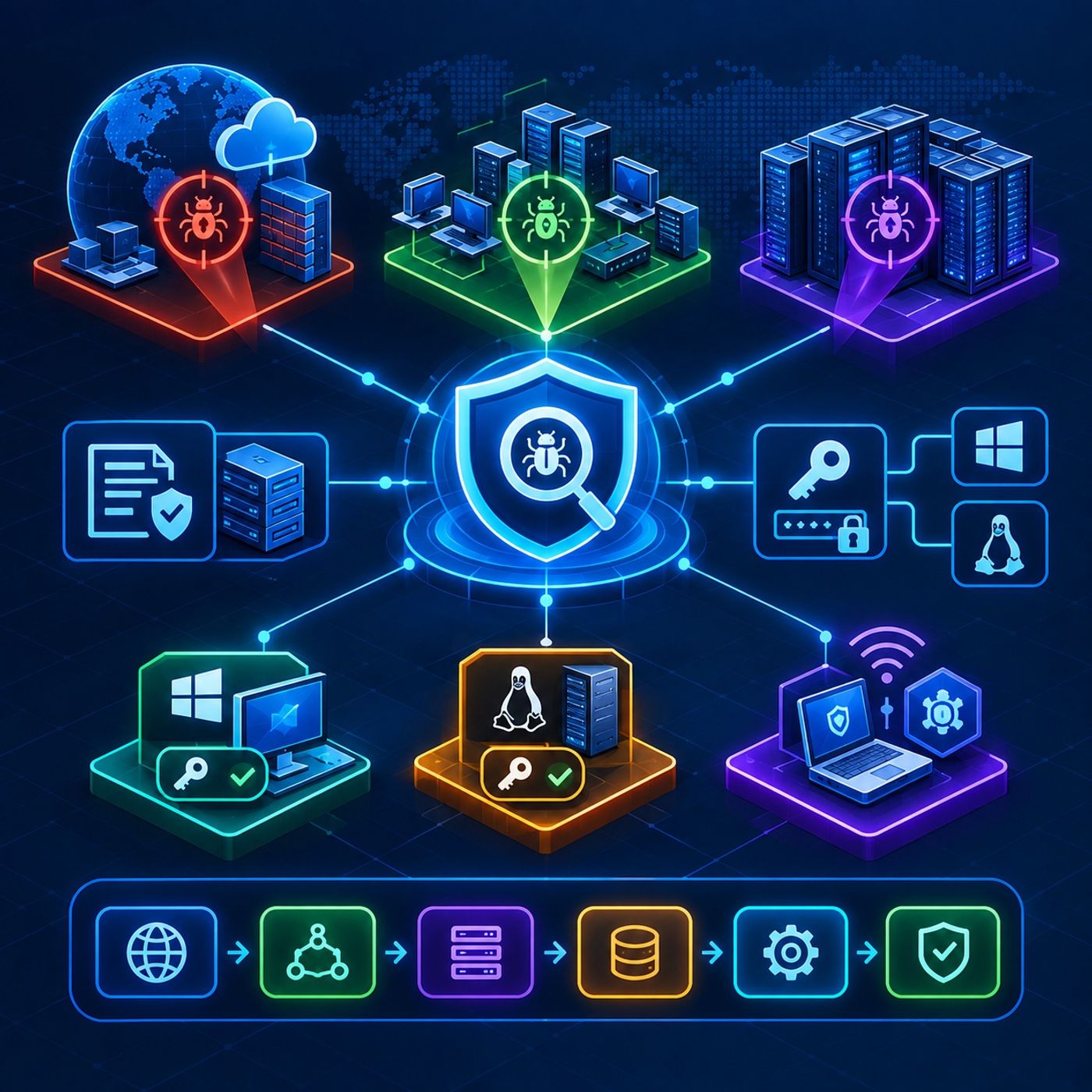
Episode OverviewThis episode provides a comprehensive examination of vulnerabilities affecting both host systems and network infrastructure, showing how outdated software, insecure configurations, vulnerable protocols, and missing patches can expose an enterprise to compromise.The discussion begins with host and server security, focusing on unsupported operating systems, software vulnerabilities, memory-safety issues, privilege escalation, debugging configurations, and unpatched systems. It then moves into network infrastructure, examining firmware management, secure administration, TLS security, certificate validation, DNS protection, information disclosure, and VPN security.Finally, the episode brings these concepts together through vulnerability-scanning and remediation workflows, demonstrating how tools such as Nessus and Qualys can help security teams identify weaknesses across endpoints and network devices.Key Topics Covered1. Host and Server VulnerabilitiesHost-based vulnerabilities can arise from outdated software, insecure configurations, missing patches, and excessive privileges.A major concern is the continued operation of unsupported or end-of-life operating systems and applications. Once vendors stop providing security updates, newly discovered vulnerabilities may remain permanently exposed unless the organization upgrades, replaces, or otherwise mitigates the affected technology.Key areas include:
- End-of-life operating systems and applications
- Missing security patches
- Vulnerable services and applications
- Insecure configurations
- Excessive privileges
- Debugging functionality left enabled
- Memory-safety vulnerabilities
- Privilege-escalation opportunities
2. Buffer Overflows and Memory-Safety RisksThe episode examines buffer overflows, a class of memory-safety vulnerability in which data exceeds the boundaries of an allocated memory region.Depending on the affected software and execution environment, memory corruption can potentially result in:
- Application crashes
- Unexpected program behavior
- Memory corruption
- Denial of service
- Arbitrary code execution
- Privilege escalation
The episode highlights the historical importance of memory-corruption vulnerabilities while emphasizing that precise prevalence statistics depend heavily on the dataset, time period, and definition of a breach.3. Privilege EscalationA vulnerability does not necessarily provide an attacker with the highest level of system access immediately.Privilege escalation involves obtaining permissions beyond those initially available.Security teams should therefore assess:
- Local user privileges
- Administrative accounts
- Service-account permissions
- SUID or equivalent privileged execution mechanisms
- Vulnerable privileged applications
- Operating-system security controls
- Separation of administrative and standard-user access
Effective privilege management limits the impact of a successful initial compromise.4. Debugging and Development FeaturesDebugging functionality can provide valuable information during software development but can create unnecessary exposure when enabled on production systems.Depending on the application, debug modes may reveal:
- Detailed error messages
- File paths
- Stack traces
- Configuration information
- Database details
- Software versions
- Internal application behavior
Production environments should therefore use appropriate release configurations and avoid exposing unnecessary diagnostic information.5. Patch and Update ManagementMissing security patches remain one of the most common sources of preventable vulnerability exposure.A structured patch-management process includes:
- Identify affected systems.
- Determine the applicable security update.
- Assess business and technical impact.
- Test the update in an appropriate environment.
- Deploy according to change-management procedures.
- Verify successful installation.
- Rescan or otherwise validate remediation.
Patch management should also account for systems that cannot be immediately updated, using appropriate compensating controls where necessary.Part 2: Network Infrastructure and Protocol Security6. Securing Network DevicesRouters, switches, firewalls, and other network appliances require security maintenance just like endpoint systems.Security teams should regularly evaluate:
- Device firmware versions
- Security advisories
- Configuration weaknesses
- Administrative interfaces
- Management protocols
- Access-control policies
- Unnecessary services
- Vendor-supported upgrade paths
Administrative access should use secure management protocols such as SSH rather than insecure plaintext alternatives.Firmware should be obtained through trusted vendor channels and validated according to the platform's security procedures.7. SSL/TLS SecurityThe episode examines the transition from obsolete SSL protocols to modern TLS.SSL 2.0 and SSL 3.0 are obsolete and should not be enabled on modern systems. Modern deployments should use appropriately supported TLS versions and secure cipher configurations.The episode also discusses vulnerabilities affecting historical TLS implementations, including Heartbleed, which affected certain versions of OpenSSL's implementation of the TLS heartbeat functionality.The broader lesson is that protocol security depends not only on encryption being present, but also on using supported protocol versions and secure implementations.8. Certificate ValidationEncrypted communication does not automatically guarantee that a connection is trustworthy.Security teams should verify:
- Certificate validity
- Certificate expiration
- Hostname matching
- Trusted certificate authorities
- Certificate chains
- Appropriate key usage and extensions
- Revocation status where applicable
- Correct TLS configuration
Invalid or improperly configured certificates can create trust failures and, depending on the circumstances, increase exposure to interception or impersonation attacks.9. DNS SecurityDNS infrastructure plays a critical role in enterprise networking and can expose valuable information when improperly configured.Security considerations include:
- Restricting unauthorized zone transfers
- Protecting DNS administration interfaces
- Monitoring unusual DNS activity
- Preventing unnecessary information disclosure
- Maintaining secure DNS server configurations
- Applying appropriate patches
- Protecting against vulnerabilities in DNS software
DNS reconnaissance can reveal hostnames, services, and infrastructure relationships that assist an attacker in mapping an environment.DNS vulnerabilities can also have more serious consequences when a flaw permits unauthorized access or code execution, making timely patching and configuration management essential.10. Internal IP Address DisclosureApplications and network services may unintentionally expose private IP addresses or internal host information.Potential disclosure sources include:
- HTTP headers
- Application error messages
- DNS records
- Debug output
- Web pages
- Email headers
- Configuration files
- Metadata
Although an internal IP address by itself does not necessarily constitute a critical vulnerability, unnecessary disclosure can provide useful reconnaissance information and help an attacker understand the internal network architecture.11. VPN and Encrypted TunnelsVPNs provide protected communication across untrusted networks, but the security of the tunnel depends on its configuration and implementation.Security teams should evaluate:
- Supported encryption algorithms
- Authentication mechanisms
- Key-exchange configuration
- Protocol versions
- Certificate management
- Endpoint security
- Tunnel configuration
- Software and firmware patch levels
VPN infrastructure should be maintained and monitored like any other security-sensitive network service.Part 3: Detection and Remediation12. Automated Vulnerability ScanningTools such as Nessus and Qualys can automate the discovery of vulnerabilities across hosts, applications, and network infrastructure.Depending on configuration and visibility, scans can identify issues such as:
- Missing security updates
- Unsupported software
- Vulnerable services
- Weak protocol configurations
- Certificate problems
- Network-device vulnerabilities
- Configuration weaknesses
- Information-disclosure issues
Automated scanning provides scale, but scanner findings should still be validated against the actual environment.13. From Detection to RemediationA vulnerability-management workflow connects automated discovery with human analysis and controlled remediation:Discover → Scan → Validate → Assess Risk → Prioritize → Remediate → Verify → Rescan → MonitorSecurity teams
You can listen and download our episodes for free on more than 10 different platforms:
https://linktr.ee/cybercode_academy
links1