CyberCode Academy · Today · 25 min
Course 46 - CompTIA Cybersecurity Analyst | Episode 17: CVSS Temporal Scores & Result Validation
0:00-25:49
transcript
show notes
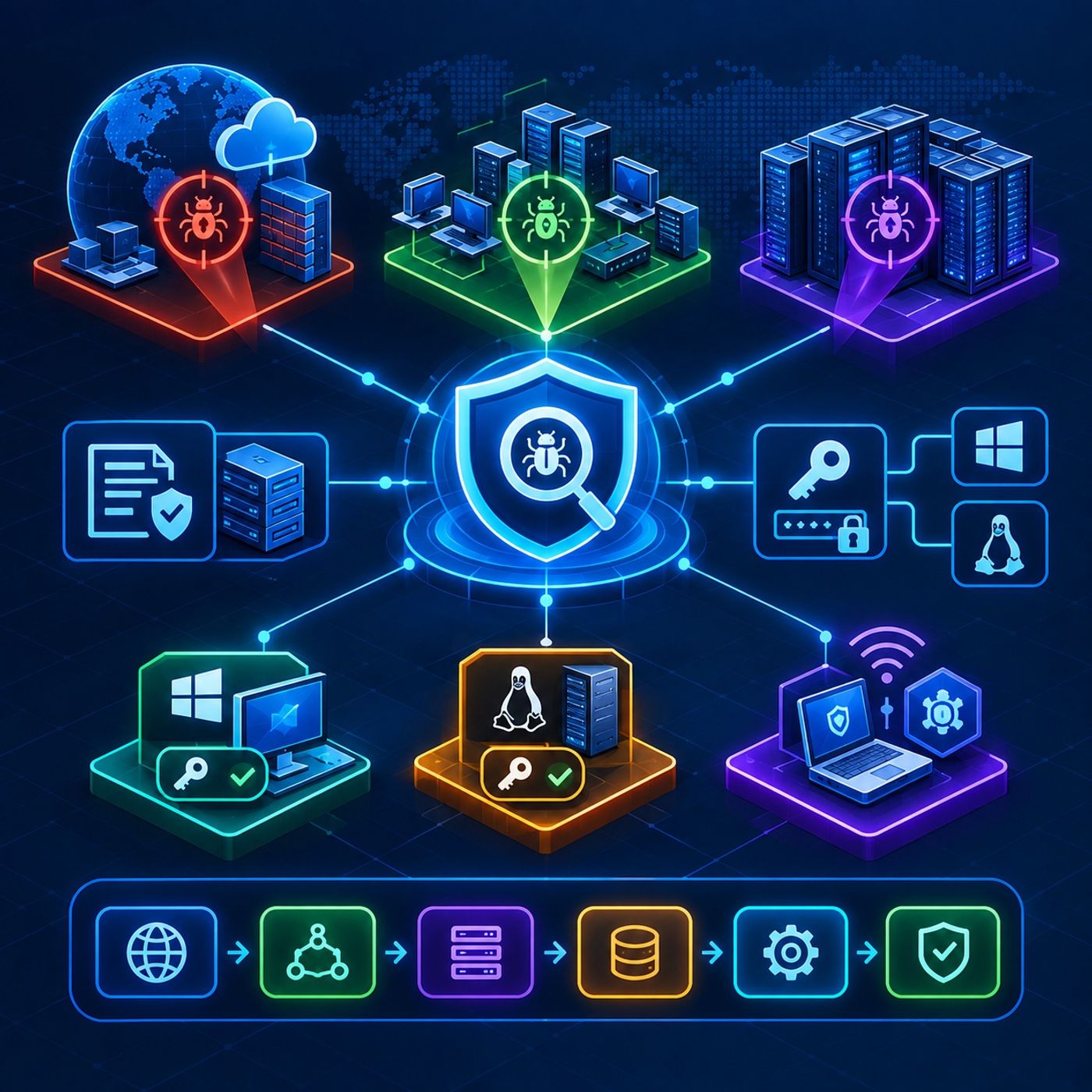
Episode OverviewThis episode explores the practical realities of enterprise vulnerability management, focusing on how security teams evaluate changing vulnerability conditions, validate automated scan results, and use multiple data sources to maintain an accurate view of organizational risk.The episode begins with CVSS Temporal Scores, which extend vulnerability assessment beyond an initial base score by incorporating factors that can change over time. These include the availability and maturity of exploitation, the availability of remediation, and confidence in the vulnerability report. As patches, workarounds, or other mitigations become available, the temporal assessment can change accordingly.The discussion then moves into scan-result validation, emphasizing that automated scanners are valuable assessment tools but cannot replace analyst judgment. Security teams must distinguish genuine vulnerabilities from false positives, documented exceptions, and informational findings.Finally, the episode examines how organizations corroborate scanner results using server logs, configuration-management information, and SIEM data while applying trend analysis to monitor vulnerability-management performance and predictable changes in finding volumes.Key Topics Covered1. Understanding CVSS Temporal ScoringA vulnerability's technical characteristics do not necessarily remain unchanged throughout its lifecycle. New exploits, vendor patches, workarounds, and additional evidence can alter how security teams assess the current state of the vulnerability.CVSS Temporal metrics provide a mechanism for incorporating this changing context.Key concepts include:
- Exploit Code Maturity (E) — reflects the current availability and maturity of exploit code or techniques.
- Remediation Level (RL) — reflects the availability of fixes, workarounds, or other remediation options.
- Report Confidence (RC) — represents the level of confidence in the vulnerability information.
These factors allow an initial assessment to be adjusted as the vulnerability evolves.For example, a vulnerability may initially receive a high technical severity while no remediation is available. Once a vendor releases a reliable patch or mitigation, its temporal assessment can change to reflect the improved remediation situation.2. Vulnerability Lifecycle and Changing RiskVulnerability management is not a one-time activity. A vulnerability can move through several stages:Discovery → Disclosure → Exploit Development → Exploitation Availability → Remediation → VerificationThe security implications may change at each stage.Analysts therefore need to consider current conditions rather than treating the original vulnerability score as permanently fixed.Temporal scoring can provide additional context for prioritization, although organizations should still consider factors such as:
- Asset criticality
- Internet exposure
- Active exploitation
- Threat intelligence
- Available compensating controls
- Business impact
- Remediation complexity
3. Validating Automated Scan ResultsAutomated vulnerability scanners can identify large numbers of potential issues, but every finding should not automatically be treated as a confirmed vulnerability.Analysts should investigate whether the reported condition actually exists on the affected system.A validation process may include:
- Review the scanner's evidence.
- Identify the affected host and service.
- Check the installed software or configuration.
- Confirm the relevant patch or security update status.
- Compare the finding against system-management records.
- Review logs or other supporting evidence.
- Determine whether the finding is valid, a false positive, an exception, or informational.
- Document the conclusion and required action.
This human validation layer helps prevent security teams from wasting resources on inaccurate or irrelevant findings.4. Handling False PositivesA false positive occurs when a scanner reports a vulnerability that does not actually apply to the target system.One example is a scanner continuing to report a vulnerability after the relevant security update has already been installed.Possible causes include:
- Incomplete scanner detection logic
- Outdated vulnerability plugins or signatures
- Software-version detection limitations
- Backported vendor patches
- Configuration differences
- Insufficient scanner visibility
False positives should be investigated and documented rather than simply ignored.5. Managing Documented ExceptionsNot every scanner finding necessarily requires immediate removal or remediation.An organization may intentionally operate a service that would otherwise generate a finding because it is required for a legitimate business purpose.For example, an organization may have a documented requirement for an FTP service.In such cases, the organization should maintain a formal exception process that records:
- The affected asset
- The identified vulnerability or configuration issue
- The business justification
- The associated risk
- Compensating controls
- Approval and ownership
- Expiration or review date
An exception should represent a managed risk decision rather than an undocumented way of suppressing findings.6. Understanding Informational FindingsVulnerability scanners can also generate informational findings that do not necessarily represent exploitable vulnerabilities.However, informational data can still have security value.For example, exposed configuration details, service information, software versions, or network characteristics may help an attacker perform reconnaissance.Security teams should therefore evaluate informational findings according to their potential contribution to an attacker's understanding of the environment.7. Cross-Source CorroborationReliable vulnerability management often requires comparing scanner results against independent sources of information.Useful sources include:
- Server and system logs
- Configuration-management databases
- Asset-management systems
- Patch-management platforms
- Security Information and Event Management (SIEM) systems
- Endpoint-management platforms
- Software and configuration inventories
For example, if a scanner reports a missing security update, an analyst can compare the result with patch-management records and the target system's installed-update information.This cross-source validation helps determine whether the scanner finding reflects the actual state of the system.8. SIEM and Security Event CorrelationSIEM platforms can provide additional context around vulnerability findings.Analysts can correlate vulnerabilities with:
- Authentication events
- Network activity
- Service activity
- Security alerts
- Configuration changes
- Endpoint events
- Indicators of compromise
This can help distinguish a theoretical vulnerability from one that may be receiving suspicious activity in the environment.9. Trend Analysis and Vulnerability MetricsVulnerability management should also be evaluated over time rather than through isolated scan results.Organizations can track metrics such as:
- Total vulnerabilities
- Critical and high-severity findings
- Open versus remediated findings
- Mean time to remediate
- Recurring vulnerabilities
- Vulnerabilities by business unit or asset group
- Exception volumes
- False-positive rates
- Aging of unresolved findings
Trend analysis helps security teams determine whether the vulnerability-management program is improving, deteriorating, or experiencing recurring operational problems.10. Accounting for Patch CyclesRegular vendor patch cycles can create predictable changes in vulnerability counts.Microsoft's Patch Tuesday is a common example. Following a scheduled security-update release, vulnerability scanners may identify a temporary increase in findings as newly disclosed or newly detectable issues appear across the environment.A temporary increase is therefore not automatically evidence that the vulnerability-management program has become less effective.Analysts should examine trends over an appropriate time period and distinguish normal patch-cycle behavior from persistent increases in unresolved risk.Practical Validation WorkflowA complete workflow can be summarized as:Scan → Review → Validate → Corroborate → Classify → Document → Prioritize → Remediate → Rescan → TrendThis process combines automated discovery with human analysis and independent evidence.Key Takeaways
- Vulnerability risk can change over time as exploitation, remediation, and confidence evolve.
- CVSS Temporal metrics provide additional lifecycle context beyond the base assessment.
- Exploit Code Maturity, Remediation Level, and Report Confidence are key temporal concepts.
- Automated scanner findings require human validation.
- False positives should be investigated and documented rather than blindly accepted or ignored.
- Legitimate business requirements may require formally managed exceptions.
- Informational findings can still expose useful reconnaissance information and shou
You can listen and download our episodes for free on more than 10 different platforms:
https://linktr.ee/cybercode_academy
links1