CyberCode Academy · September 14 · 20 min
Course 43 - Practical Malware Development | Episode 3: Recon, Registry Persistence, and Web Downloading
0:00-20:44
transcript
show notes
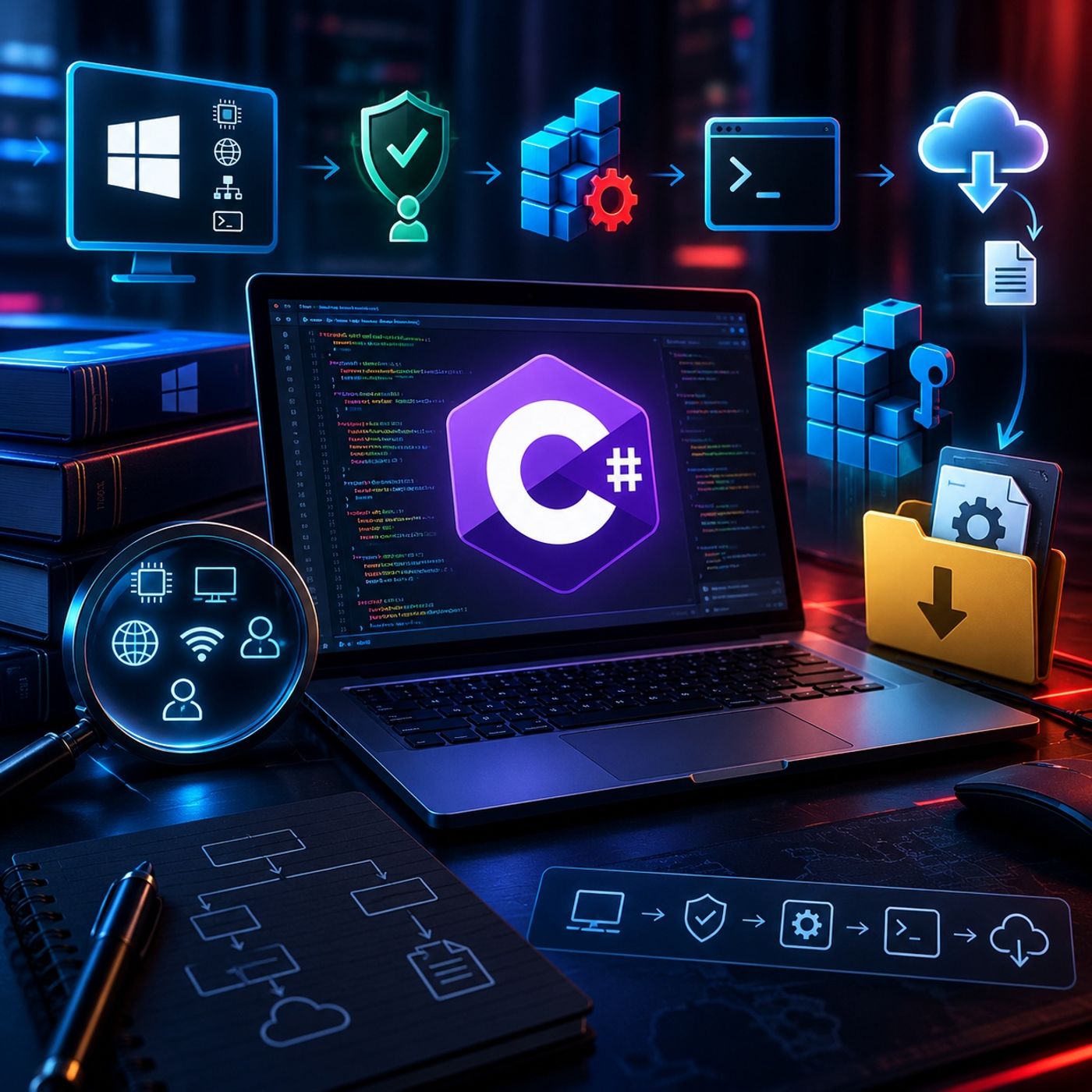
This episode introduces the core concepts behind offensive C# development for authorized penetration testing and red-team environments. The walkthrough follows a simplified offensive-tool lifecycle, beginning with host reconnaissance and progressing through persistence mechanisms and dynamic retrieval of additional components.The focus is on understanding how C# can interact directly with the Windows operating system and its APIs.1. Host Reconnaissance and System InformationThe episode begins with local reconnaissance using built-in C# functionality.The application demonstrates how to collect information such as:
You can listen and download our episodes for free on more than 10 different platforms:
https://linktr.ee/cybercode_academy
- Operating system details
- Computer and host name
- Current working directory
- Process identifier
- Network configuration
- IPv4 address
- Current user's security context
- WindowsIdentity
- WindowsPrincipal
- Opening registry locations with appropriate permissions
- Creating or modifying registry values
- Associating a value with an executable path
- Properly releasing registry resources
- Verifying startup entries through Windows administrative interfaces
- The requested operation
- The supplied resource or argument
- Receiving a resource location
- Parsing the supplied URL
- Determining the remote file name
- Constructing a local destination
- Saving the retrieved file in the user's temporary directory
- Unexpected system reconnaissance
- Suspicious privilege checks
- Unusual registry modifications
- Unknown startup entries
- Unexpected outbound network connections
- Files created in temporary directories
- Applications retrieving executable content from external locations
- How C# can interact with Windows system information
- How applications can assess their current security context
- The fundamentals of Windows registry-based persistence
- How command parsing can provide application control logic
- How applications can retrieve external resources dynamically
- Why temporary directories and startup locations are important forensic artifacts
- How offensive-development techniques can translate into defensive detection strategies
You can listen and download our episodes for free on more than 10 different platforms:
https://linktr.ee/cybercode_academy
links1