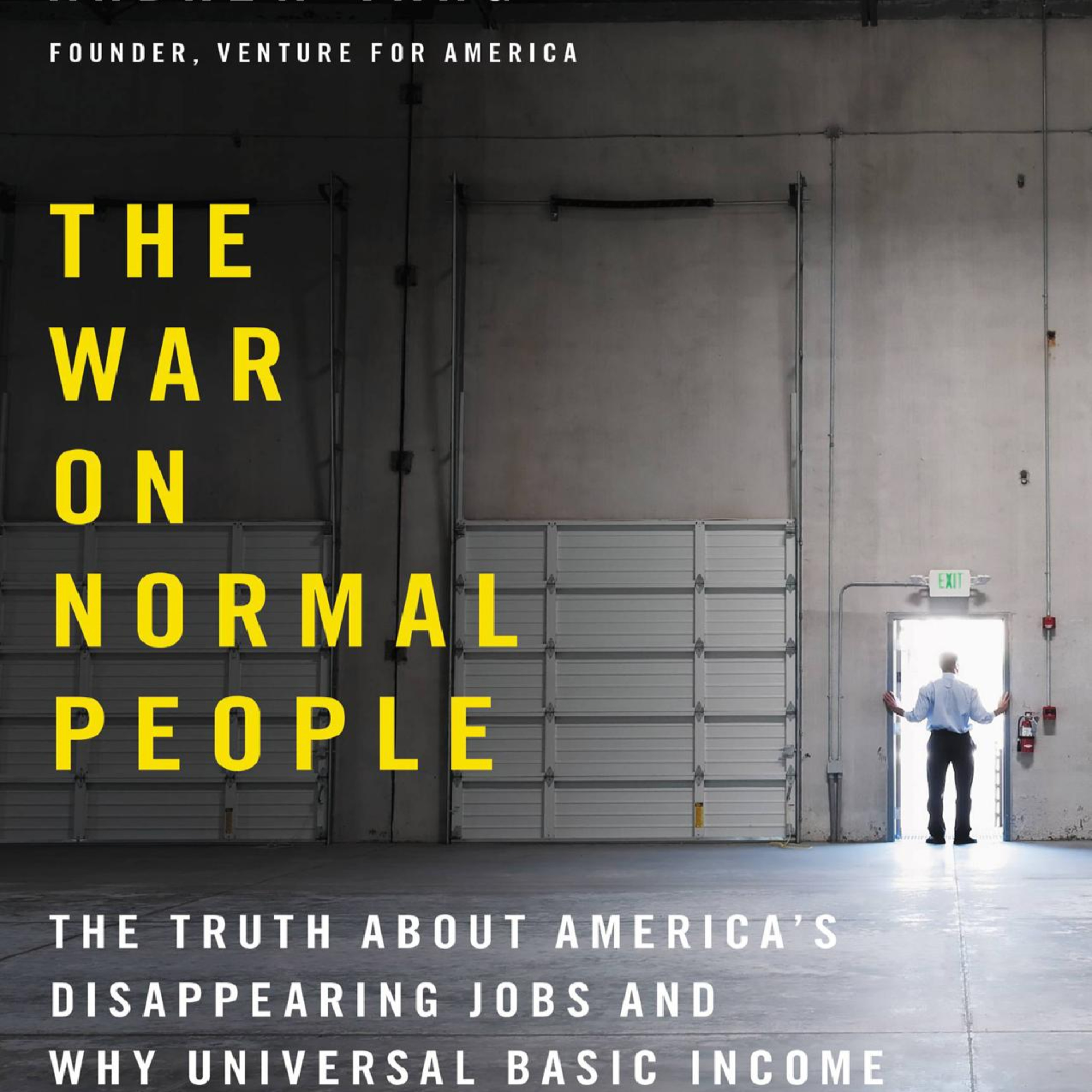
The War on Normal People — When Automation Outpaces Economic Security
transcript
show notes
What happens when technological progress makes human labor less necessary, but economic survival still depends on having a job?
This episode presents AI-narrated educational analysis based on published sources. The voices are synthetic and do not represent real conversations, interviews with the authors, or human experts.
AI-assisted tools support research synthesis, production, and narration. Source selection, editorial framing, and final editorial decisions are guided by human judgment as part of the Crisis in Perception project.
Welcome to Crisis in Perception, where we examine the systems shaping our world.
In The War on Normal People: The Truth About America's Disappearing Jobs and Why Universal Basic Income Is Our Future, Andrew Yang investigates the structural consequences of automation, artificial intelligence, and economic inequality.
Drawing on the employment patterns and economic conditions of the 2010s, Yang argues that technological progress is transforming how wealth is produced without ensuring that its benefits reach the workers and communities most exposed to disruption.
This Deep Dive examines how disappearing employment opportunities can trigger broader cycles of financial insecurity, declining local commerce, geographic inequality, and weakened social institutions. It also explores the limits of retraining and the tension between the economic value assigned to labor and the human value of meaningful work.
At the center of Yang's proposed response is the Freedom Dividend: a universal basic income intended to provide greater financial stability during technological change. We examine the proposal alongside questions about taxation, existing welfare programs, and its capacity to address the deeper social consequences of displacement.
The investigation ultimately turns toward Yang's vision of Human Capitalism—an economic system evaluated not solely by growth and profitability, but by its contribution to human well-being, community vitality, and opportunity.
The larger question remains: If technology allows society to produce more with fewer workers, how should the rewards of that progress be distributed?
📺 Watch on YouTube:
https://youtu.be/A4LfE3bvnn0
❤️ Support / Episode Post on Patreon:
https://www.patreon.com/CrisisinPerception/posts/war-on-normal-175773932?utm_medium=clipboard_copy&utm_source=copyLink&utm_campaign=postshare_creator&utm_content=join_link
If these ideas resonate, consider reading the work yourself or borrowing it from your local library. Supporting authors and libraries helps keep critical inquiry accessible.
If you value systems-level analysis like this, please follow, rate, and share the project.