Skip to content
Artwork for CoROM cast. Wilderness, Austere, Remote and Resource-limited Medicine.
CoROM cast. Wilderness, Austere, Remote and Resource-limited Medicine. · June 12 · 59 min

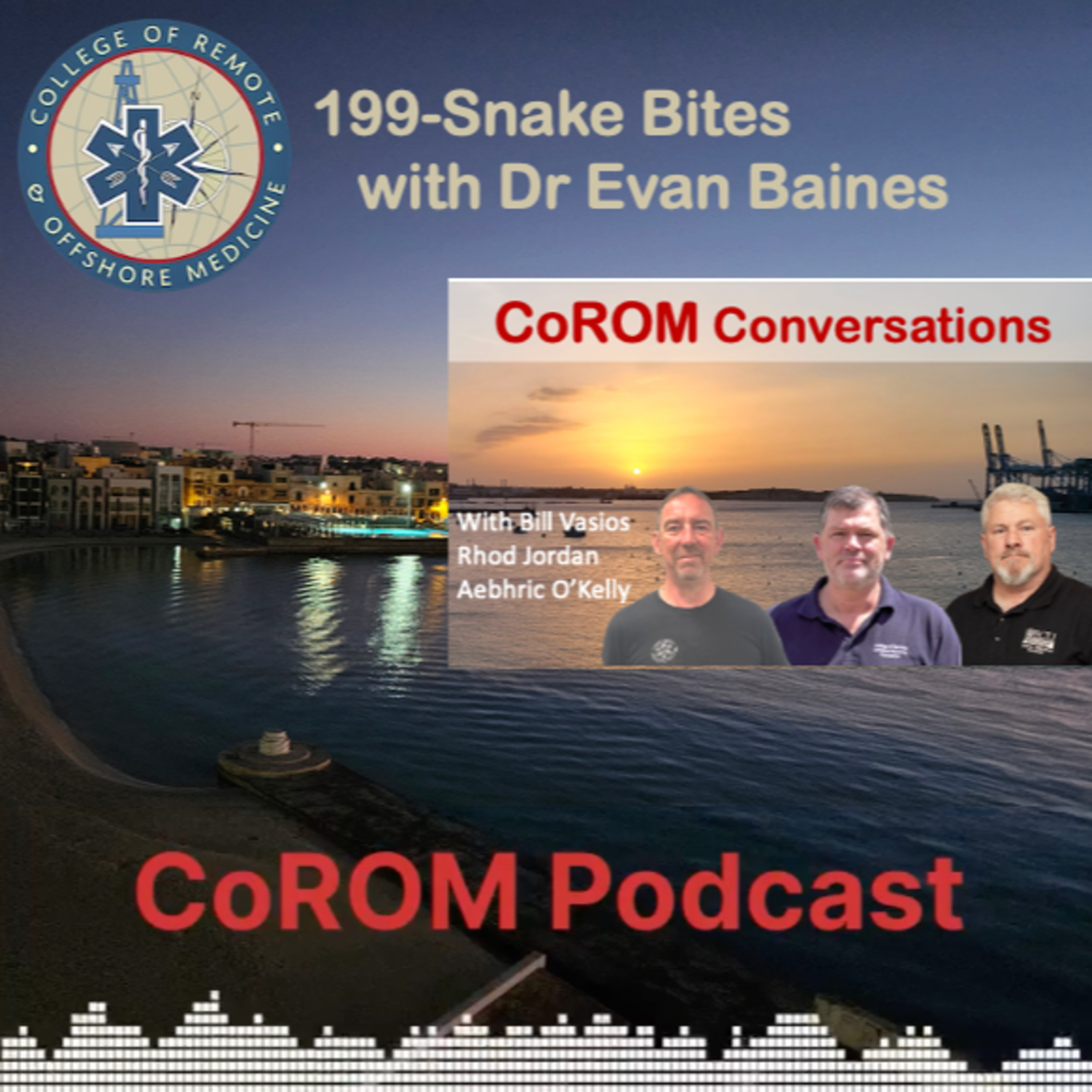
199-Snake Bites with Dr Evan Baines

This month, CoROM Conversations is joined by Dr Evan Baines, Emergency Medicine Physician, EMS Fellow, former 18D, and contributor to the JTS Snake Envenomation Clinical Practice Guideline (CPG). Snake envenomation remains a major global health problem, with millions of bites occurring annually and a disproportionate burden falling on remote and resource-limited regions. In this episode, Dr Evan Baines discusses the development of the JTS Snake Envenomation CPG, practical field management, antivenom selection, operational planning, and common misconceptions surrounding snakebite treatment. Chapters 00:00 – Introduction to Snake Envenomation 01:45 – Why Snake Bites Matter in Austere Medicine 04:00 – Snakebite Myths and Immediate First Aid 05:00 – The Four Envenomation Syndromes 08:00 – Operational Planning and Antivenom Selection 11:20 – Understanding the JTS Treatment Algorithms 16:00 – Case Study: Pit Viper Envenomation 22:00 – Determining When Antivenom Has Worked 24:00 – Antivenom Dosing Principles 26:00 – Field Diagnostics and Coagulopathy Assessment 28:00 – Neurotoxic Snake Bites and Respiratory Failure 33:00 – Why Identifying the Snake Often Doesn't Matter 34:00 – Dry Bites and Return-to-Duty Decisions 36:00 – Antivenom Reactions and Anaphylaxis Management 39:00 – Tourniquets, Pressure Bandages, and Controversies 46:00 – Life Over Limb? Risk-Benefit Decision Making 51:00 – Airway Management in Neurotoxic Envenomation 55:00 – Regulatory Challenges and Deployment Considerations 57:45 – Key Take-Home Messages

0:00-59:06

transcript

No transcript — this publisher did not publish one.

show notes

This month, CoROM Conversations is joined by Dr Evan Baines, Emergency Medicine Physician, EMS Fellow, former 18D, and contributor to the JTS Snake Envenomation Clinical Practice Guideline (CPG).

Snake envenomation remains a major global health problem, with millions of bites occurring annually and a disproportionate burden falling on remote and resource-limited regions. In this episode, Dr Evan Baines discusses the development of the JTS Snake Envenomation CPG, practical field management, antivenom selection, operational planning, and common misconceptions surrounding snakebite treatment.


Chapters

00:00 – Introduction to Snake Envenomation

01:45 – Why Snake Bites Matter in Austere Medicine

04:00 – Snakebite Myths and Immediate First Aid

05:00 – The Four Envenomation Syndromes

08:00 – Operational Planning and Antivenom Selection

11:20 – Understanding the JTS Treatment Algorithms

16:00 – Case Study: Pit Viper Envenomation

22:00 – Determining When Antivenom Has Worked

24:00 – Antivenom Dosing Principles

26:00 – Field Diagnostics and Coagulopathy Assessment

28:00 – Neurotoxic Snake Bites and Respiratory Failure

33:00 – Why Identifying the Snake Often Doesn't Matter

34:00 – Dry Bites and Return-to-Duty Decisions

36:00 – Antivenom Reactions and Anaphylaxis Management

39:00 – Tourniquets, Pressure Bandages, and Controversies

46:00 – Life Over Limb? Risk-Benefit Decision Making

51:00 – Airway Management in Neurotoxic Envenomation

55:00 – Regulatory Challenges and Deployment Considerations

57:45 – Key Take-Home Messages