Skip to content
Artwork for Coping
Coping · August 10 · 34 min

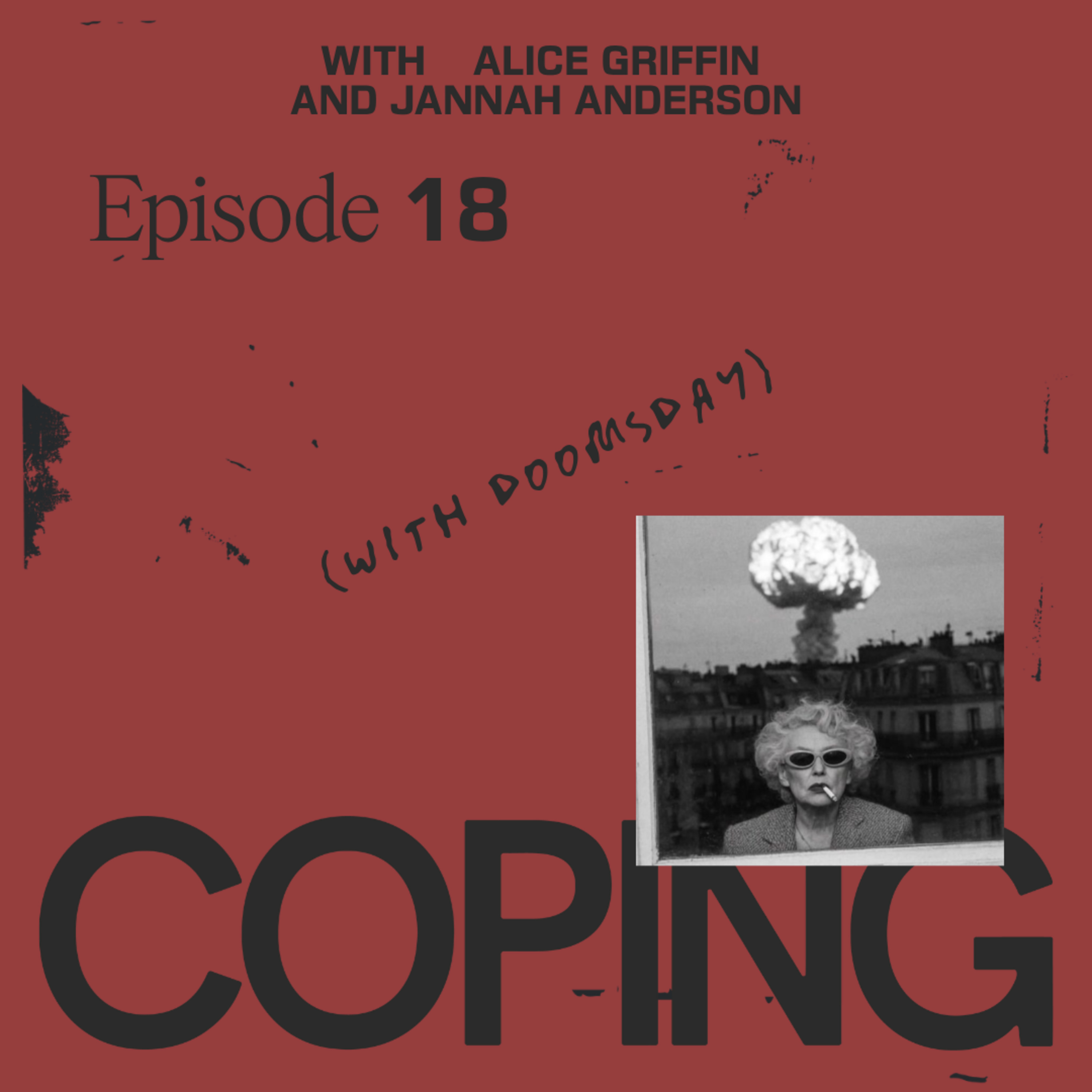
Coping With Doomsday

Doomsday prepping has gone mainstream. What was once a fringe fixation tucked away on conspiracy forums has morphed into a booming industry, with everyday people stockpiling, strategising, and spending (a lot) in the name of “being prepared.” This week, Alice Griffin and Jannah Anderson sit with the existential threats uniquely shaping our generation, the preppers taking that fear to its furthest extreme, the brands that saw an opportunity to sell safety, and ultimately ask whether a state of hypervigilance actually soothes our anxiety or just feeds it. After all, what’s worse: the apocalypse (and the world’s least satisfying “I told you so”), or realising you spent your life waiting for it? Prepper Used To Be A Dirty Word. But These 'Ordinary' People Think It's Just Sensible Now by Alexandra Koster, SBS Australia What Doomsday Preppers And Survivalists Can Teach The Rest Of Us, by Anna Levy and Rebecca Cushway, ABC The ‘Panic Industry’ Boom by Coralie Kraft, The New York Times The cognitive avoidance theory of worry, Sibrava, N. and Borkovec, T in APA PsycInfo Blast From The Past Pandemic Practice: Horror Fans And Morbidly Curious Individuals Are More Psychologically Resilient During The COVID-19 Pandemic, by Scrivner, Johnson, Kjeldgaard-Christiansen and Clasen, ScienceDaily ‘All Of His Guns Will Do Nothing For Him’: Lefty Preppers Are Taking A Different Approach To Doomsday by Aaron Gell, The Guardian OpenAI Model Hacks Startup After Going Rogue During Testing, ABC No Worries? Australian Attitudes To National Security, Risk And Resilience, Prof Rory Medcalf AM FAIIA and Tim Wilford, Australian National University Kennedy, Rockefeller, and Civil Defense by Naomi Kroll Hassebroek, NPS ☆ Are you a creative looking for support? Visit the Support Act Creative Industries Hub or call the Support Act Wellbeing Helpline on 1800 959 500 for a free and confidential chat (and remember, you don't have to be in crisis to call). Sometimes you just need to talk to someone who actually gets it and can hear you out. ☆ Want to support our show? We'd be so grateful if you hit 'follow' or left us a 5-star review so we can bring you more Coping content. Plus, you can follow along with us on⁠ ⁠⁠Instagram⁠⁠⁠⁠⁠⁠⁠⁠⁠⁠⁠⁠⁠⁠⁠,⁠ ⁠TikTok⁠⁠⁠⁠⁠⁠⁠⁠⁠⁠⁠⁠⁠⁠⁠, and⁠ ⁠Pinterest⁠⁠⁠⁠⁠⁠⁠⁠⁠⁠⁠⁠⁠⁠⁠. Find out more about what we're up to (and how you can get involved) at ⁠⁠⁠⁠⁠⁠⁠⁠⁠⁠⁠⁠⁠⁠⁠copinginc.com⁠⁠⁠⁠⁠⁠⁠⁠⁠⁠⁠⁠.

0:00-34:25

transcript

No transcript — this publisher did not publish one.

show notes

Doomsday prepping has gone mainstream. What was once a fringe fixation tucked away on conspiracy forums has morphed into a booming industry, with everyday people stockpiling, strategising, and spending (a lot) in the name of “being prepared.”

This week, Alice Griffin and Jannah Anderson sit with the existential threats uniquely shaping our generation, the preppers taking that fear to its furthest extreme, the brands that saw an opportunity to sell safety, and ultimately ask whether a state of hypervigilance actually soothes our anxiety or just feeds it. After all, what’s worse: the apocalypse (and the world’s least satisfying “I told you so”), or realising you spent your life waiting for it?

Prepper Used To Be A Dirty Word. But These 'Ordinary' People Think It's Just Sensible Now by Alexandra Koster, SBS Australia

What Doomsday Preppers And Survivalists Can Teach The Rest Of Us, by Anna Levy and Rebecca Cushway, ABC 

The ‘Panic Industry’ Boom by Coralie Kraft, The New York Times

The cognitive avoidance theory of worry, Sibrava, N. and Borkovec, T in APA PsycInfo

Blast From The Past

Pandemic Practice: Horror Fans And Morbidly Curious Individuals Are More Psychologically Resilient During The COVID-19 Pandemic, by Scrivner, Johnson, Kjeldgaard-Christiansen and Clasen, ScienceDaily

‘All Of His Guns Will Do Nothing For Him’: Lefty Preppers Are Taking A Different Approach To Doomsday by Aaron Gell, The Guardian
OpenAI Model Hacks Startup After Going Rogue During Testing, ABC
No Worries? Australian Attitudes To National Security, Risk And Resilience, Prof Rory Medcalf AM FAIIA and Tim Wilford, Australian National University
Kennedy, Rockefeller, and Civil Defense by Naomi Kroll Hassebroek, NPS

☆ Are you a creative looking for support? Visit the Support Act Creative Industries Hub or call the Support Act Wellbeing Helpline on 1800 959 500 for a free and confidential chat (and remember, you don't have to be in crisis to call). Sometimes you just need to talk to someone who actually gets it and can hear you out. ☆

Want to support our show? We'd be so grateful if you hit 'follow' or left us a 5-star review so we can bring you more Coping content.

Plus, you can follow along with us on⁠ ⁠⁠Instagram⁠⁠⁠⁠⁠⁠⁠⁠⁠⁠⁠⁠⁠⁠⁠,⁠ ⁠TikTok⁠⁠⁠⁠⁠⁠⁠⁠⁠⁠⁠⁠⁠⁠⁠, and⁠ ⁠Pinterest⁠⁠⁠⁠⁠⁠⁠⁠⁠⁠⁠⁠⁠⁠⁠. Find out more about what we're up to (and how you can get involved) at ⁠⁠⁠⁠⁠⁠⁠⁠⁠⁠⁠⁠⁠⁠⁠copinginc.com⁠⁠⁠⁠⁠⁠⁠⁠⁠⁠⁠⁠.

links15

more episodes

All episodes