Skip to content
Artwork for Circularity.fm
Circularity.fm · September 15 · 30 min

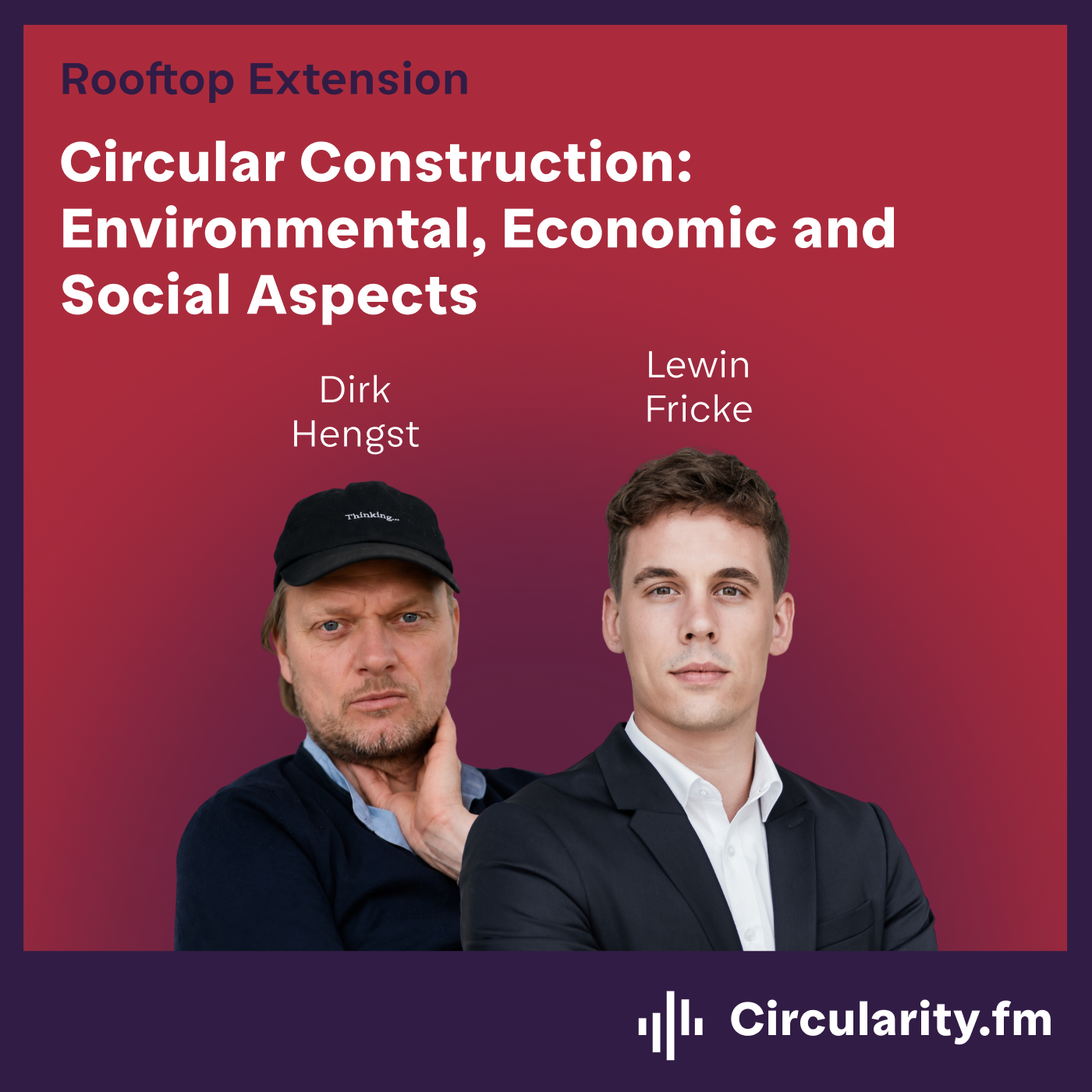
Circular Construction: Environmental, Economic and Social Aspects

Rooftop Extension How can rooftop extensions create housing that is ecologically regenerative, socially valuable, and profitable? In this episode of circularity.fm, Dirk Hengst, founder of Denk.mal.Bau., and Lewin Fricke from TRIQBRIQ talk about their rooftop extension project in Dresden. The conversation covers: • The project's economic, social, and environmental dimensions. • Material choices designed for a healthy, low-carbon home. • How construction can support rooftop extensions, renovation, adaptive reuse, and dismantling for reuse. You’ll gain insight into the additional benefits of this approach to construction, as well as the challenges involved. This is the second episode of our Rooftop Extension series. People Dirk Hengst, Inhaber at Denk.mal.Bau https://www.linkedin.com/in/dirk-hengst-1ab236114/ Lewin Fricke, Leiter Öffentlichkeitsarbeit at TRIQBRIQ https://www.linkedin.com/in/lewin-fricke-373b97137/ Patrick Hypscher, Circular Business Strategist, PaaS Expert https://www.linkedin.com/in/hypscher/ Chapters 00:00 Intro Quote 00:31 Intro 02:03 The Dresden Rooftop Extension 04:15 Why Build Up Instead of Moving? 05:25 The Economics of Rooftop Extensions 08:18 Sustainable Materials & Construction 09:30 TRIQBRIQ: Building with Small Timber Bricks 16:23 Designing for Circularity & Reuse 20:53 TRIQBRIQ for Rooftops, Housing & Retail 26:55 Making Circular Construction Happen at Scale 29:31 Outro About Denk.mal.Bau is a Dresden-based planning and construction office led by Dirk Hengst that specializes in the renovation, preservation, and revitalization of listed and existing buildings. Its work combines technical planning with respect for historical construction methods and cultural value, using natural and renewable building materials wherever possible. TRIQBRIQ is a German construction company that has developed a modular solid-wood building system made from industrial and damaged timber, including wood affected by pests or storms. Its interlocking wooden blocks are assembled without glue, can be dismantled by type, and reused, supporting lower material waste, regional production, and circular construction. Further Links TRIQBRIQ: https://triqbriq.de/ Investment Plattform: https://invest.triqbriq.de Instagram: https://www.instagram.com/triqbriq/ LinkedIn: https://www.linkedin.com/company/triqbriq-ag/ Denk.mal.Bau: https://www.denk-mal-bau.de/ LinkedIn: https://www.linkedin.com/in/dirk-hengst-1ab236114 Showcase video: https://www.youtube.com/watch?v=sQdxVWycy1w One-page Summary Sign-up for the Circularity.fm Newsletter and get a summary with the take-aways of this episode. Register here: https://circularity.fm/episode/circular-construction-environmental-economic-and-social-aspects/
0:00-30:03

transcript

No transcript — this publisher did not publish one.

show notes

Rooftop Extension

How can rooftop extensions create housing that is ecologically regenerative, socially valuable, and profitable?

In this episode of circularity.fm, Dirk Hengst, founder of Denk.mal.Bau., and Lewin Fricke from TRIQBRIQ talk about their rooftop extension project in Dresden.

The conversation covers: • The project's economic, social, and environmental dimensions. • Material choices designed for a healthy, low-carbon home. • How construction can support rooftop extensions, renovation, adaptive reuse, and dismantling for reuse.

You’ll gain insight into the additional benefits of this approach to construction, as well as the challenges involved.

This is the second episode of our Rooftop Extension series.

People Dirk Hengst, Inhaber at Denk.mal.Bau https://www.linkedin.com/in/dirk-hengst-1ab236114/

Lewin Fricke, Leiter Öffentlichkeitsarbeit at TRIQBRIQ https://www.linkedin.com/in/lewin-fricke-373b97137/

Patrick Hypscher, Circular Business Strategist, PaaS Expert https://www.linkedin.com/in/hypscher/

Chapters 00:00 Intro Quote 00:31 Intro 02:03 The Dresden Rooftop Extension 04:15 Why Build Up Instead of Moving? 05:25 The Economics of Rooftop Extensions 08:18 Sustainable Materials & Construction 09:30 TRIQBRIQ: Building with Small Timber Bricks 16:23 Designing for Circularity & Reuse 20:53 TRIQBRIQ for Rooftops, Housing & Retail 26:55 Making Circular Construction Happen at Scale 29:31 Outro

About Denk.mal.Bau is a Dresden-based planning and construction office led by Dirk Hengst that specializes in the renovation, preservation, and revitalization of listed and existing buildings. Its work combines technical planning with respect for historical construction methods and cultural value, using natural and renewable building materials wherever possible.

TRIQBRIQ is a German construction company that has developed a modular solid-wood building system made from industrial and damaged timber, including wood affected by pests or storms. Its interlocking wooden blocks are assembled without glue, can be dismantled by type, and reused, supporting lower material waste, regional production, and circular construction.

Further Links TRIQBRIQ: https://triqbriq.de/

Investment Plattform: https://invest.triqbriq.de Instagram: https://www.instagram.com/triqbriq/ LinkedIn: https://www.linkedin.com/company/triqbriq-ag/

Denk.mal.Bau: https://www.denk-mal-bau.de/

LinkedIn: https://www.linkedin.com/in/dirk-hengst-1ab236114

Showcase video: https://www.youtube.com/watch?v=sQdxVWycy1w

One-page Summary Sign-up for the Circularity.fm Newsletter and get a summary with the take-aways of this episode. Register here: https://circularity.fm/episode/circular-construction-environmental-economic-and-social-aspects/
links11