transcript
show notes
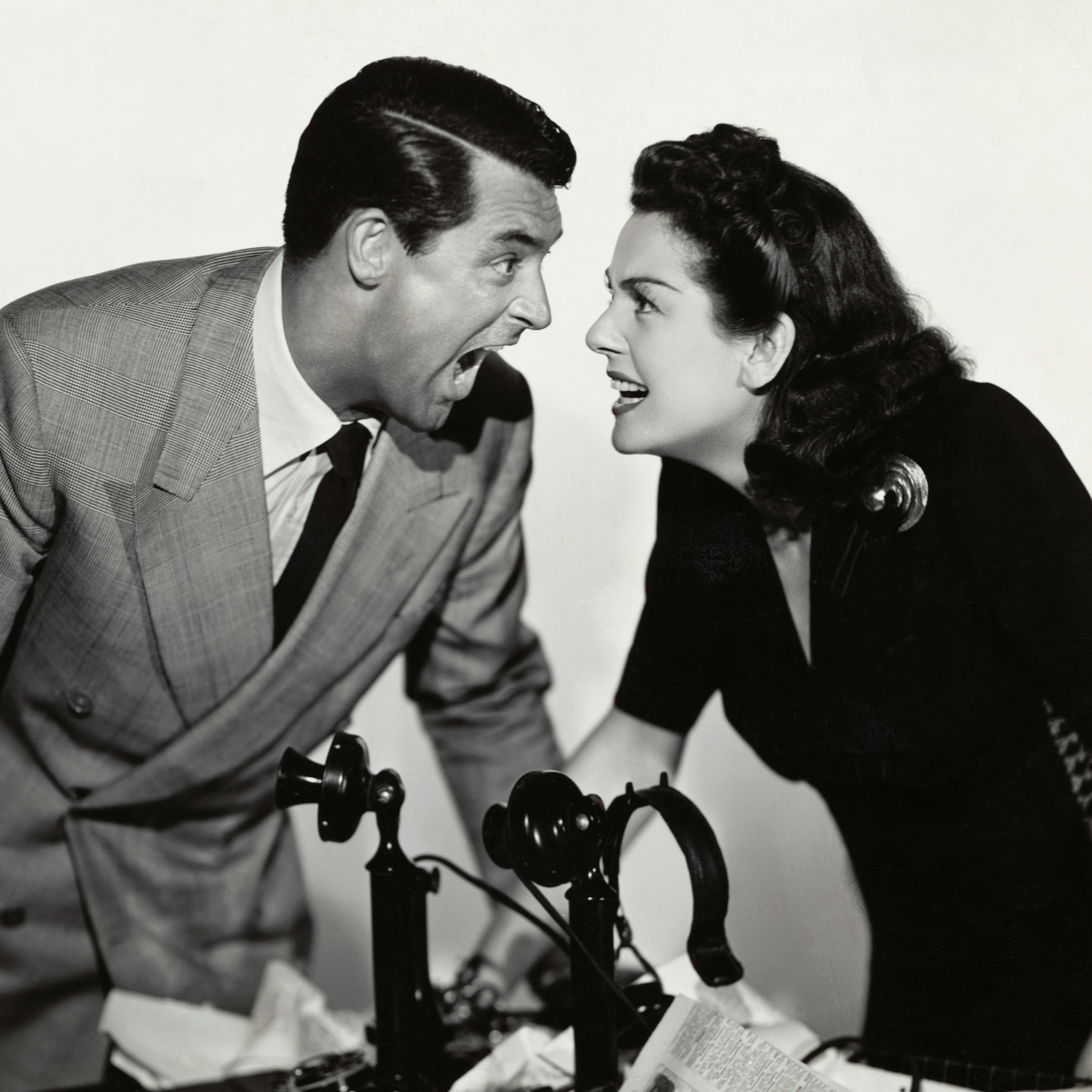
In this episode of Cinema Callback, Andy and Michael exchange voice notes reviewing Howard Hawks' celebrated screwball comedy His Girl Friday (1940), starring Cary Grant, Rosalind Russell, and Ralph Bellamy. As part of their project exploring a film from every month of 1940, the hosts examine why this Golden Age classic remains such an exhilarating, complex, and surprisingly cynical piece of filmmaking.
Adapted from The Front Page, the film follows Hildy Johnson, an accomplished newspaper reporter preparing to abandon journalism for a quieter domestic life with her new fiancé. However, her former husband and newspaper editor, Walter Burns, has other ideas, drawing her into one final assignment involving a death row inmate and a politically motivated execution.
Andy and Michael explore Howard Hawks' distinctive approach to dialogue, discussing how he encouraged his performers to interrupt and overlap each other's lines, creating a relentless, almost machine-gun rhythm of jokes, insults, and romantic banter. The hosts marvel at the extraordinary screen presence of Rosalind Russell and Cary Grant, whose chemistry and comedic timing remain remarkably entertaining more than eight decades later.
The conversation also highlights the film's surprisingly modern use of self-referential humour, including the amusing moment when Cary Grant's character compares Ralph Bellamy's character to the actor himself, demonstrating a playful awareness of Hollywood celebrity culture.
At the centre of the discussion is Hildy's dilemma between a comfortable domestic existence with a genuinely decent man and the intoxicating, morally corrupt world of newspaper journalism. Rather than presenting a straightforward choice between career and romance, His Girl Friday complicates both possibilities, questioning whether professional fulfilment can come at the expense of personal happiness and moral integrity.
Beneath the rapid-fire comedy lies an extraordinarily dark satire. Andy and Michael examine the film's treatment of capital punishment, a suicide attempt, corrupt local politicians, and the ruthless exploitation of vulnerable people by the press. Comparisons emerge with Ace in the Hole, The Godfather, and In the Company of Men, as the hosts consider how charismatic characters, institutional corruption, and morally questionable behaviour can make for compelling cinema.
The discussion also explores how His Girl Friday subverts traditional romantic comedy conventions. Rather than building towards an uncomplicated romantic resolution, the film concludes with an emotionally volatile reconciliation that raises further questions about the relationship between Hildy and Walter. Is this genuinely a happy ending, or are two people simply returning to the chaotic existence they cannot resist?
Attention also turns to the film's historical significance, particularly the decision to transform the originally male character of Hildy Johnson into a woman. The hosts explore how this change fundamentally reshapes the material, while reflecting on Howard Hawks' remarkably versatile filmography, including The Big Sleep, Rio Bravo, and the original Scarface.
Ultimately, His Girl Friday proves to be considerably more than a showcase for quick-witted dialogue and classical Hollywood star power. Its combination of romantic comedy, political satire, professional ambition, and moral ambiguity makes it a fascinating example of how sophisticated and daring mainstream American cinema could be in 1940.
Join Andy and Michael as they discuss Cary Grant, Rosalind Russell, Howard Hawks, overlapping dialogue, predatory journalism, gender-swapped adaptations, unconventional romantic endings, and the enduring brilliance of Hollywood's Golden Age.
Enjoying the conversation?
Support Cinema Callback on Patreon for bonus content, exclusive extras, and to help us continue making film discussions through our unique voice note format.
Patreon: https://www.patreon.com/c/CinemaCallback