Between the Briefs · July 24 · 49 min
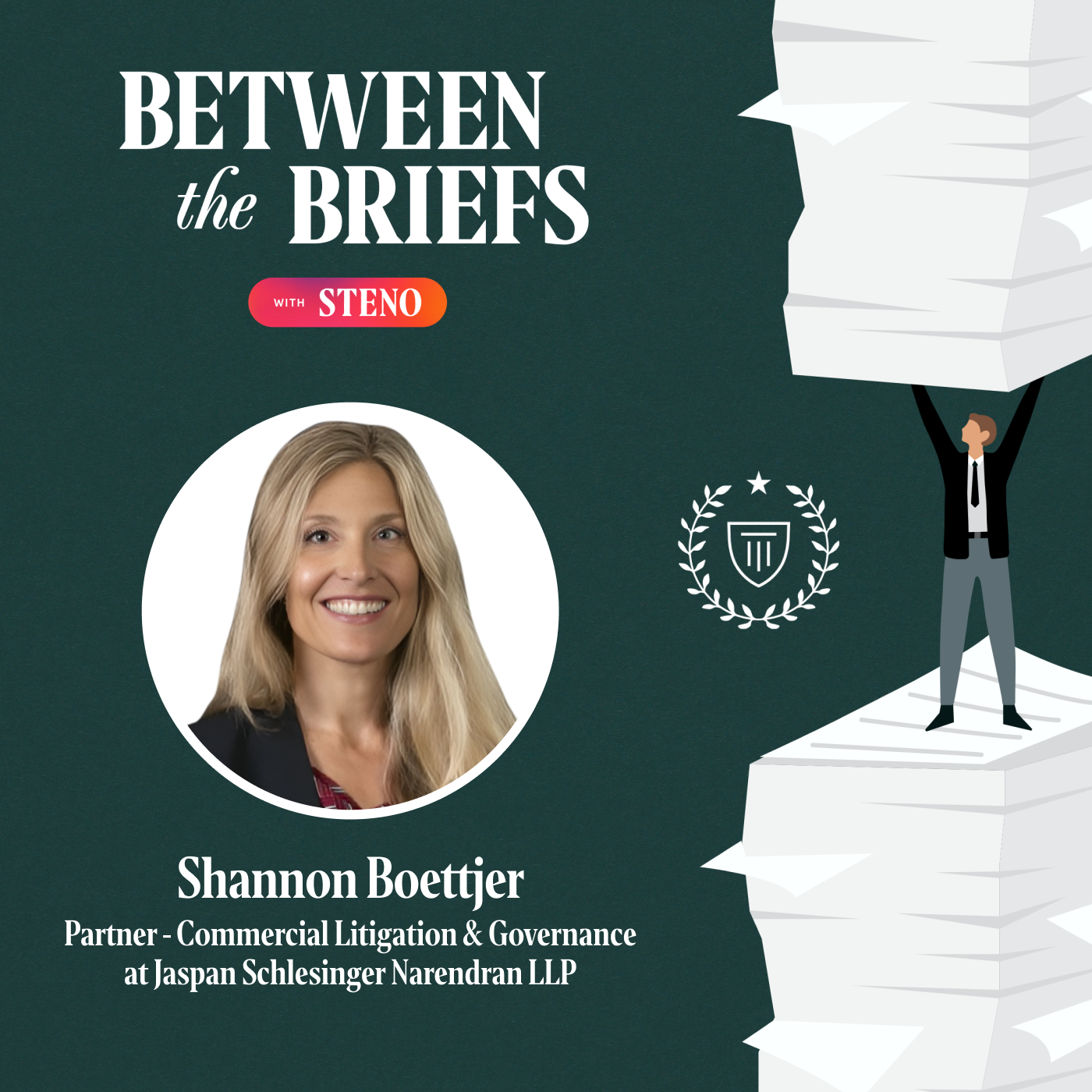
Is Not Using AI a Malpractice Risk? ft. Shannon Boettjer
0:00-49:46
transcript
show notes
A few months ago, people were asking whether not using AI could ever be malpractice. Now, that question feels a lot less theoretical.
In this episode of Between the Briefs by Steno, Adrian Cea and Joe Stephens sit down with Shannon Boettjer, partner at Jaspan Schlesinger Narendran LLP, for a sharp, practical conversation on AI governance, legal risk, and what it means to build defensible systems before technology decisions turn into lawsuits.
What You’ll Learn:
This episode is a clear-eyed look at legal AI adoption and the actual governance work required when lawyers start putting powerful tools into everyday practice.
Highlights:
00:00 Introduction
01:19 Is It Malpractice Not to Use AI?
02:56 AI as a Tool: The Knife vs. Kitchen Analogy
05:04 Why Basic AI Skills Are Becoming Expected
07:17 Today’s Design Decisions Become Tomorrow’s Liability Theories
07:36 The Pharmaceutical Lens for AI Governance
09:40 Why EDRM Is an Underused AI Governance Framework
10:18 Choosing the Right Tool for the Right Pain Point
13:10 Why Human Review Still Matters
14:50 AI Literacy vs. AI Fluency
16:21 Lessons From Legal Week
16:43 Common Side Effects and Rare but Serious Risks
18:36 The “Parallel From the Start” Framework
20:16 Why “Grab It and Go” AI Adoption Creates Risk
20:47 The First Question Every AI Strategy Should Ask
23:51 Why End Users Need to Be in the AI Conversation
26:02 Data Governance, Privacy and Cybersecurity in AI Use
29:48 How Firms Should Assess Their AI Maturity
33:17 Why Old Technology Problems Keep Reappearing
37:17 Applying Existing Legal Duties to AI
38:03 Trust Humans, Zero Trust Machines
41:05 Where Legal AI Is Heading Next
47:18 The Cognitive Cost of Working With Machines
49:31 Shannon’s Hot Take: Personal Knowledge Management
52:02 The Swiss Cheese Problem in AI Governance
54:03 Closing Thoughts
Quotes:
In this episode of Between the Briefs by Steno, Adrian Cea and Joe Stephens sit down with Shannon Boettjer, partner at Jaspan Schlesinger Narendran LLP, for a sharp, practical conversation on AI governance, legal risk, and what it means to build defensible systems before technology decisions turn into lawsuits.
What You’ll Learn:
- Why the AI conversation shifted from “should we use it?” to “how do we use it responsibly?”
- How the knife vs. kitchen analogy helps firms understand different levels of AI complexity
- Why AI governance should start with a risk-benefit analysis, not a checkbox list
- Why hallucinations are better understood as common side effects, not random surprises
- How “parallel from the start” can help firms avoid bad habits that compound at scale
- Why AI literacy is only the starting point, and AI fluency is the real goal
- Why lawyers need to understand the tools their teams, co-counsel, and vendors are using
- Why machines require a zero-trust approach, while humans require trust but verify
This episode is a clear-eyed look at legal AI adoption and the actual governance work required when lawyers start putting powerful tools into everyday practice.
Highlights:
00:00 Introduction
01:19 Is It Malpractice Not to Use AI?
02:56 AI as a Tool: The Knife vs. Kitchen Analogy
05:04 Why Basic AI Skills Are Becoming Expected
07:17 Today’s Design Decisions Become Tomorrow’s Liability Theories
07:36 The Pharmaceutical Lens for AI Governance
09:40 Why EDRM Is an Underused AI Governance Framework
10:18 Choosing the Right Tool for the Right Pain Point
13:10 Why Human Review Still Matters
14:50 AI Literacy vs. AI Fluency
16:21 Lessons From Legal Week
16:43 Common Side Effects and Rare but Serious Risks
18:36 The “Parallel From the Start” Framework
20:16 Why “Grab It and Go” AI Adoption Creates Risk
20:47 The First Question Every AI Strategy Should Ask
23:51 Why End Users Need to Be in the AI Conversation
26:02 Data Governance, Privacy and Cybersecurity in AI Use
29:48 How Firms Should Assess Their AI Maturity
33:17 Why Old Technology Problems Keep Reappearing
37:17 Applying Existing Legal Duties to AI
38:03 Trust Humans, Zero Trust Machines
41:05 Where Legal AI Is Heading Next
47:18 The Cognitive Cost of Working With Machines
49:31 Shannon’s Hot Take: Personal Knowledge Management
52:02 The Swiss Cheese Problem in AI Governance
54:03 Closing Thoughts
Quotes:
- “AI is a tool, and I think of it in terms of something like a knife.”
- “Every layer of AI potentially solves a problem and potentially creates risks.”
- “Start with literacy with the end goal of being fluent.”
- “Trust but verify your human colleagues. I would hold a different standard for working with machines: zero trust.”
links1