
Skip to content
Artwork for Best Practice
Best Practice · Today · 31 min

When AI Agents Negotiate With Each Other

Bernadette Bulacan is Chief Evangelist at Icertis and has spent more than 20 years working at the intersection of law and technology. Through her work with some of the world’s largest businesses such as HP and BAE Systems, she sees how legal teams are changing the way they negotiate, manage and learn from contracts. In our conversation, we get into: * Why AI represents a bigger shift for legal work than previous generations of technology * Where contracting actually slows down, and why legal isn’t always the bottleneck * What AI agents need before they can negotiate contracts autonomously * What human-centred contracting looks like, and where legal engineers fit in * Whether AI will give lawyers time back or leave them busier than ever * What junior lawyers should learn now, and how to use AI without surrendering their judgment Where to find Bernadette: • LinkedIn• Icertis: icertis.com Explore more from Best Practice: Legal AI news, interviews and commentary at bestpractice.media. My thoughts from my conversation with Bernadette My biggest takeaway is that agent-to-agent negotiation will depend on how well a business can explain its own position. An AI agent needs to know more than what a clause means: it needs to understand what the company has accepted before, where it can compromise and when to bring a lawyer in. That makes the work of organising precedents, updating playbooks and setting clear boundaries much more important. Otherwise, we risk making poor decisions faster. I also came away thinking about what this means for junior lawyers like me. If agents handle more of the drafting and negotiation, understanding why a business wants a particular outcome becomes even more valuable. Bernadette’s advice to challenge AI as you would a colleague really stuck with me. I think its becoming important to use these tools to explore decisions and develop my judgment, but also whilst making sure I can still explain and stand behind the advice I give. This post has bonus content for paid subscribers. Upgrade to get full access. Get full access to Best Practice at bestpracticeai.substack.com/subscribe

0:00-31:08

transcript

No transcript — this publisher did not publish one.

show notes

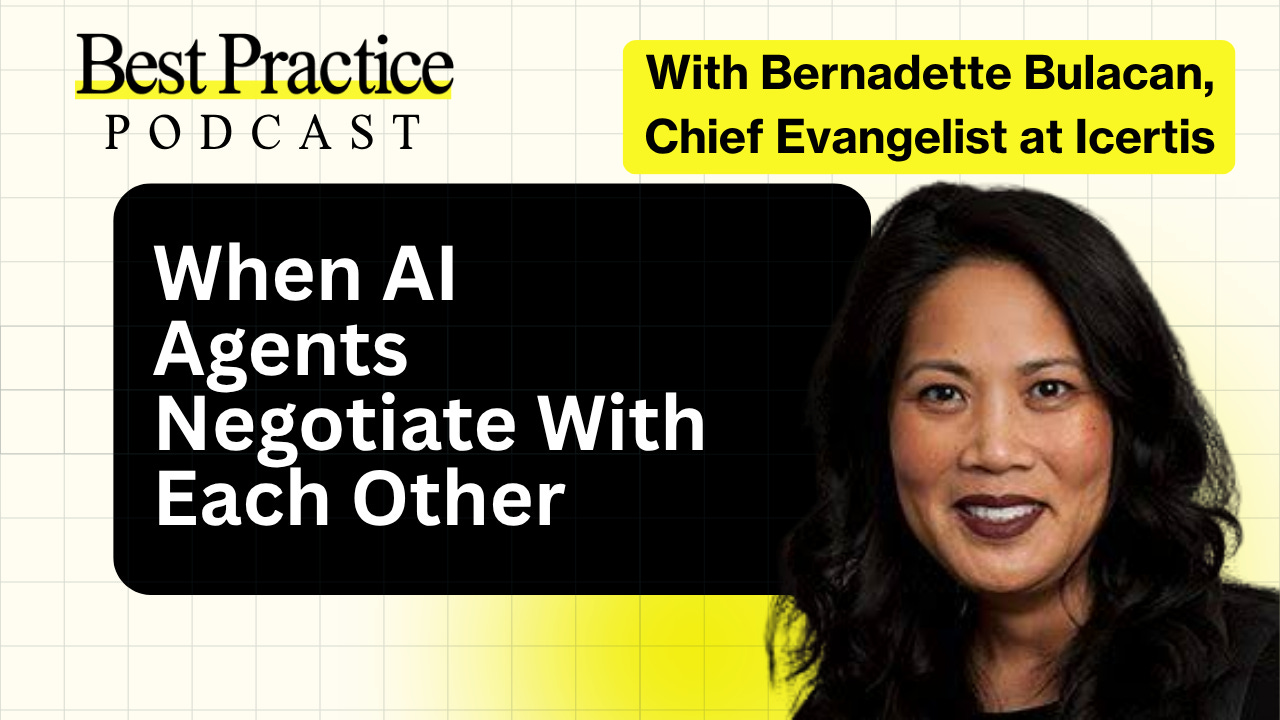
Bernadette Bulacan is Chief Evangelist at Icertis and has spent more than 20 years working at the intersection of law and technology. Through her work with some of the world’s largest businesses such as HP and BAE Systems, she sees how legal teams are changing the way they negotiate, manage and learn from contracts.

In our conversation, we get into:

* Why AI represents a bigger shift for legal work than previous generations of technology

* Where contracting actually slows down, and why legal isn’t always the bottleneck

* What AI agents need before they can negotiate contracts autonomously

* What human-centred contracting looks like, and where legal engineers fit in

* Whether AI will give lawyers time back or leave them busier than ever

* What junior lawyers should learn now, and how to use AI without surrendering their judgment

Where to find Bernadette:

• LinkedIn• Icertis: icertis.com

Explore more from Best Practice:

Legal AI news, interviews and commentary at bestpractice.media.

My thoughts from my conversation with Bernadette

My biggest takeaway is that agent-to-agent negotiation will depend on how well a business can explain its own position. An AI agent needs to know more than what a clause means: it needs to understand what the company has accepted before, where it can compromise and when to bring a lawyer in. That makes the work of organising precedents, updating playbooks and setting clear boundaries much more important. Otherwise, we risk making poor decisions faster.

I also came away thinking about what this means for junior lawyers like me. If agents handle more of the drafting and negotiation, understanding why a business wants a particular outcome becomes even more valuable. Bernadette’s advice to challenge AI as you would a colleague really stuck with me. I think its becoming important to use these tools to explore decisions and develop my judgment, but also whilst making sure I can still explain and stand behind the advice I give.

This post has bonus content for paid subscribers. Upgrade to get full access.


Get full access to Best Practice at bestpracticeai.substack.com/subscribe

links4