Skip to content
Artwork for BBS Radio TV Station Streams
BBS Radio TV Station Streams · Wednesday · 49 min

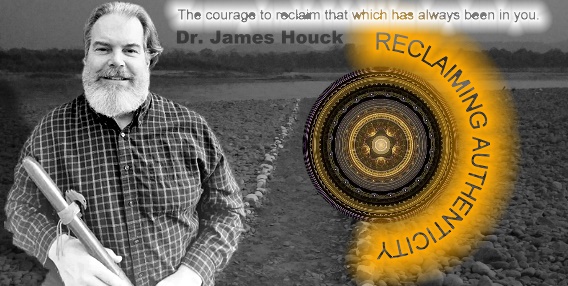
Reclaiming Authenticity, August 12, 2026

Beyond Blood Ties: Ancestral Wounds, Soul Oneness, and Unconditional Love Integrating Mental Health and Spirituality Dr. James Halk opens by describing his longstanding focus on integrating mental health and spirituality and relating both to the way people understand themselves, others, and the Divine. He presents meditation as a way to quiet distractions, observe what arises without judgment, and deepen self-understanding. He also discusses spiritual and religious beliefs as possible sources of comfort, purpose, hope, meaning, confidence, and self-control during illness, change, or loss. Throughout the discussion, he emphasizes his belief that people already possess gifts, strengths, talents, and qualities that are essential to their authentic lives. His larger goal is to help people remember who they have always been at the level of the soul. The Uniqueness of the Individual Soul The host explores the idea that every person has an irreducible uniqueness, using the philosophical concept of “thisness” and the analogy of a thumbprint. Although people may share similar gifts and character traits, he argues that no two individuals express them in exactly the same way. From this perspective, authenticity is not about searching outside oneself for a missing identity, but about recognizing and expressing what is already present. He connects this realization with divine love, which he describes as eternal and unconditional rather than dependent on human emotional conditions. He summarizes the spiritual orientation of the program through the idea of recognizing the light or soul in oneself and then recognizing it in others. Blood, Family Loyalty, and Ancestral Trauma The central question of the episode grows out of the saying “blood is thicker than water” and the expectation that family loyalty should take precedence over other relationships. The host asks what happens when someone violates unwritten family rules by marrying outside a religion, culture, race, or nationality, and whether that person may be rejected, shunned, or disinherited. He then expands the meaning of blood to include ancestry, genealogy, family history, and what he describes as intergenerational trauma. In his account, unresolved trauma may be transmitted through learned behavior, family systems, and, as he believes, biological processes across generations. He argues that family and societal secrets can continue to reveal themselves through unhealed wounds long after the original events have passed. Bloodstains, Violence, and the Wounds of History The episode uses blood both literally and symbolically to discuss guilt, violence, historical atrocities, and emotional wounds that cannot simply be washed away. The host references biblical and literary examples involving Pilate, Lady Macbeth, and Hamlet to illustrate the idea that physical cleansing cannot necessarily remove guilt or inner torment. He extends that metaphor to atrocities and injustices committed against people and the land, including genocide, slavery, lynchings, forced starvation, encampments, and other forms of violence. In his spiritual framework, such events leave traumatic effects not only in individuals and descendants but also in the collective memory of communities and places. The host’s point is that attempts to conceal violence or family secrets do not necessarily prevent their consequences from appearing in later generations. From Blood Connection to Soul Connection A personal story involving the host’s Native American teacher becomes the turning point in the discussion. After cutting his finger, the host was asked not merely what he saw in the blood, but whom he saw, eventually leading him to think of everyone who came before him and everyone who would come after him. He says the lesson helped him understand the Lakota idea that “we are all related” and moved him beyond a purely biological understanding of connection. He describes a vision of interconnectedness that crosses race, gender, nationality, religion, language, culture, generation, time, and physical form. From this viewpoint, blood relationships are only one expression of a much broader relationship among souls. Unconditional Love, Forgiveness, and Oneness In the second half of the episode, the host contrasts conditional family acceptance with what he understands as the unconditional nature of soul connection and divine love. He discusses social stigma, exclusion, illness, mental health, and historical practices that marked certain people as unacceptable or unworthy of full participation in society. He then connects healing with understanding woundedness, forgiveness, and releasing bitterness, shame, humiliation, and other burdens. Rather than defining people primarily through family bloodlines, social categories, or external differences, he encourages listeners to see themselves and others as souls. He closes with the message that recognizing this shared soul presence can weaken the power of racism, sexism, ageism, stigma, prejudice, and conditional acceptance, while helping people become a more authentic and soulful presence in the world. SEO Keywords / Key Phrases intergenerational trauma, ancestral healing, blood ties and family loyalty, unconditional love, soul connection, mental health and spirituality, family trauma patterns, spiritual healing, forgiveness and emotional wounds, interconnectedness and oneness

0:00-49:53

transcript

No transcript — this publisher did not publish one.

show notes

Beyond Blood Ties: Ancestral Wounds, Soul Oneness, and Unconditional Love

Integrating Mental Health and Spirituality

Dr. James Halk opens by describing his longstanding focus on integrating mental health and spirituality and relating both to the way people understand themselves, others, and the Divine. He presents meditation as a way to quiet distractions, observe what arises without judgment, and deepen self-understanding. He also discusses spiritual and religious beliefs as possible sources of comfort, purpose, hope, meaning, confidence, and self-control during illness, change, or loss. Throughout the discussion, he emphasizes his belief that people already possess gifts, strengths, talents, and qualities that are essential to their authentic lives. His larger goal is to help people remember who they have always been at the level of the soul.

The Uniqueness of the Individual Soul

The host explores the idea that every person has an irreducible uniqueness, using the philosophical concept of “thisness” and the analogy of a thumbprint. Although people may share similar gifts and character traits, he argues that no two individuals express them in exactly the same way. From this perspective, authenticity is not about searching outside oneself for a missing identity, but about recognizing and expressing what is already present. He connects this realization with divine love, which he describes as eternal and unconditional rather than dependent on human emotional conditions. He summarizes the spiritual orientation of the program through the idea of recognizing the light or soul in oneself and then recognizing it in others.

Blood, Family Loyalty, and Ancestral Trauma

The central question of the episode grows out of the saying “blood is thicker than water” and the expectation that family loyalty should take precedence over other relationships. The host asks what happens when someone violates unwritten family rules by marrying outside a religion, culture, race, or nationality, and whether that person may be rejected, shunned, or disinherited. He then expands the meaning of blood to include ancestry, genealogy, family history, and what he describes as intergenerational trauma. In his account, unresolved trauma may be transmitted through learned behavior, family systems, and, as he believes, biological processes across generations. He argues that family and societal secrets can continue to reveal themselves through unhealed wounds long after the original events have passed.

Bloodstains, Violence, and the Wounds of History

The episode uses blood both literally and symbolically to discuss guilt, violence, historical atrocities, and emotional wounds that cannot simply be washed away. The host references biblical and literary examples involving Pilate, Lady Macbeth, and Hamlet to illustrate the idea that physical cleansing cannot necessarily remove guilt or inner torment. He extends that metaphor to atrocities and injustices committed against people and the land, including genocide, slavery, lynchings, forced starvation, encampments, and other forms of violence. In his spiritual framework, such events leave traumatic effects not only in individuals and descendants but also in the collective memory of communities and places. The host’s point is that attempts to conceal violence or family secrets do not necessarily prevent their consequences from appearing in later generations.

From Blood Connection to Soul Connection

A personal story involving the host’s Native American teacher becomes the turning point in the discussion. After cutting his finger, the host was asked not merely what he saw in the blood, but whom he saw, eventually leading him to think of everyone who came before him and everyone who would come after him. He says the lesson helped him understand the Lakota idea that “we are all related” and moved him beyond a purely biological understanding of connection. He describes a vision of interconnectedness that crosses race, gender, nationality, religion, language, culture, generation, time, and physical form. From this viewpoint, blood relationships are only one expression of a much broader relationship among souls.

Unconditional Love, Forgiveness, and Oneness

In the second half of the episode, the host contrasts conditional family acceptance with what he understands as the unconditional nature of soul connection and divine love. He discusses social stigma, exclusion, illness, mental health, and historical practices that marked certain people as unacceptable or unworthy of full participation in society. He then connects healing with understanding woundedness, forgiveness, and releasing bitterness, shame, humiliation, and other burdens. Rather than defining people primarily through family bloodlines, social categories, or external differences, he encourages listeners to see themselves and others as souls. He closes with the message that recognizing this shared soul presence can weaken the power of racism, sexism, ageism, stigma, prejudice, and conditional acceptance, while helping people become a more authentic and soulful presence in the world.

SEO Keywords / Key Phrases

intergenerational trauma, ancestral healing, blood ties and family loyalty, unconditional love, soul connection, mental health and spirituality, family trauma patterns, spiritual healing, forgiveness and emotional wounds, interconnectedness and oneness