GM Is Exploring an Inline-Six That Changes How Pistons Move
transcript
show notes
GM Isn’t Done Developing New Engines
General Motors may have introduced several new engines for its upcoming trucks, including a new V8 and a massive diesel mill for heavy-duty models, but the American automaker appears to have more ideas in the works. A recently published patent points to another approach to improving the way internal-combustion engines operate.
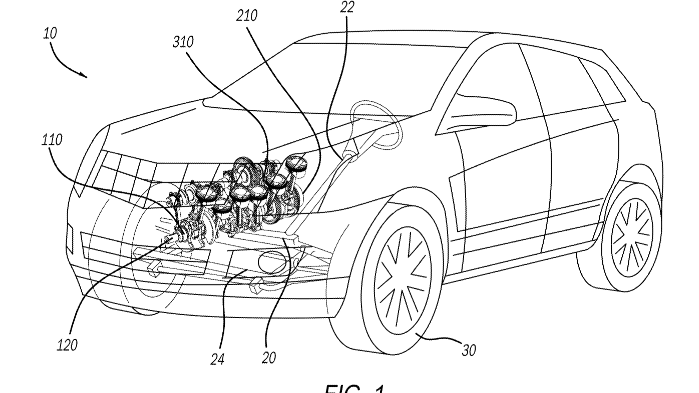
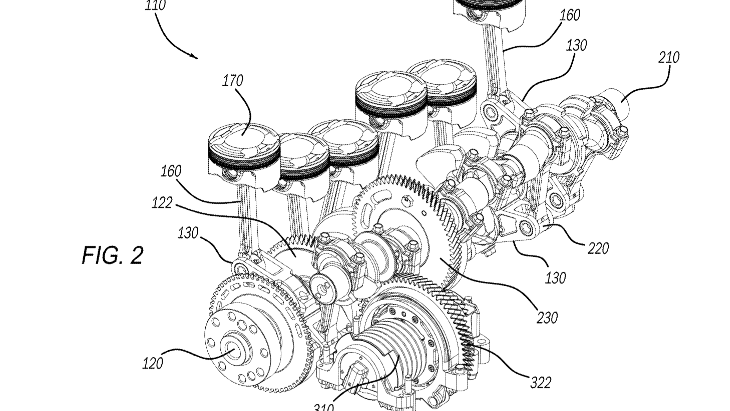
First spotted by CarMoses, the patent was filed last year and published last week. Titled “Extended Expansion Engine With Variable Compression Ratio for Longitudinal Mounting Applications,” it describes a mechanical arrangement designed to change piston movement and vary the engine’s compression ratio.
USPTO
How Does GM’s Engine Design Work?
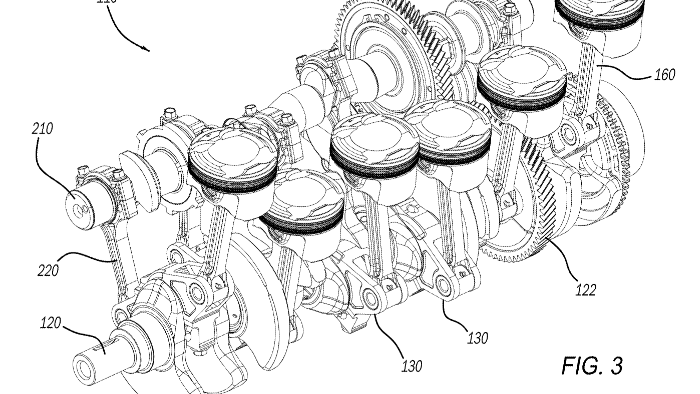
In a conventional engine, pistons move up and down inside cylinders, with connecting rods transferring that motion to the crankshaft. GM’s proposed design, which is an inline-six according to the sketches, adds a more elaborate arrangement of gears, links, and control components to change the relationship between these moving parts.
With this setup, the engine could play with how much it squeezes the air-fuel mix before lighting it up. Compression ratio is a big deal – it affects everything from efficiency to power, and even how the engine handles a heavy load.
Then there’s the extended-expansion trick. After the bang pushes the piston down, those hot gases still have some juice left. Letting them expand a bit more means you can squeeze out extra work before they head out the tailpipe.
On paper, this could mean better fuel economy – at least when the stars align. Of course, tossing in more moving parts means more complexity, higher costs, and extra friction. GM will have to prove the gains are worth the headaches.
USPTO
Could It Power Future GM Vehicles?
The patent specifically addresses longitudinal engine mounting, a layout commonly used in rear-wheel-drive vehicles and many trucks and SUVs. That makes the concept relevant to some of GM’s existing vehicle architectures, although the company has not identified a particular model for the technology.
If developed further, the design could offer another way to improve gasoline-engine efficiency without changing the basic fuel source. Still, GM has not provided production plans, performance figures, or fuel-economy estimates for the proposed arrangement.
Like most car patents, this is just a peek at what could be, not a guarantee you’ll see it at your local dealer. Most of these ideas never make it past the drawing board.
USPTO