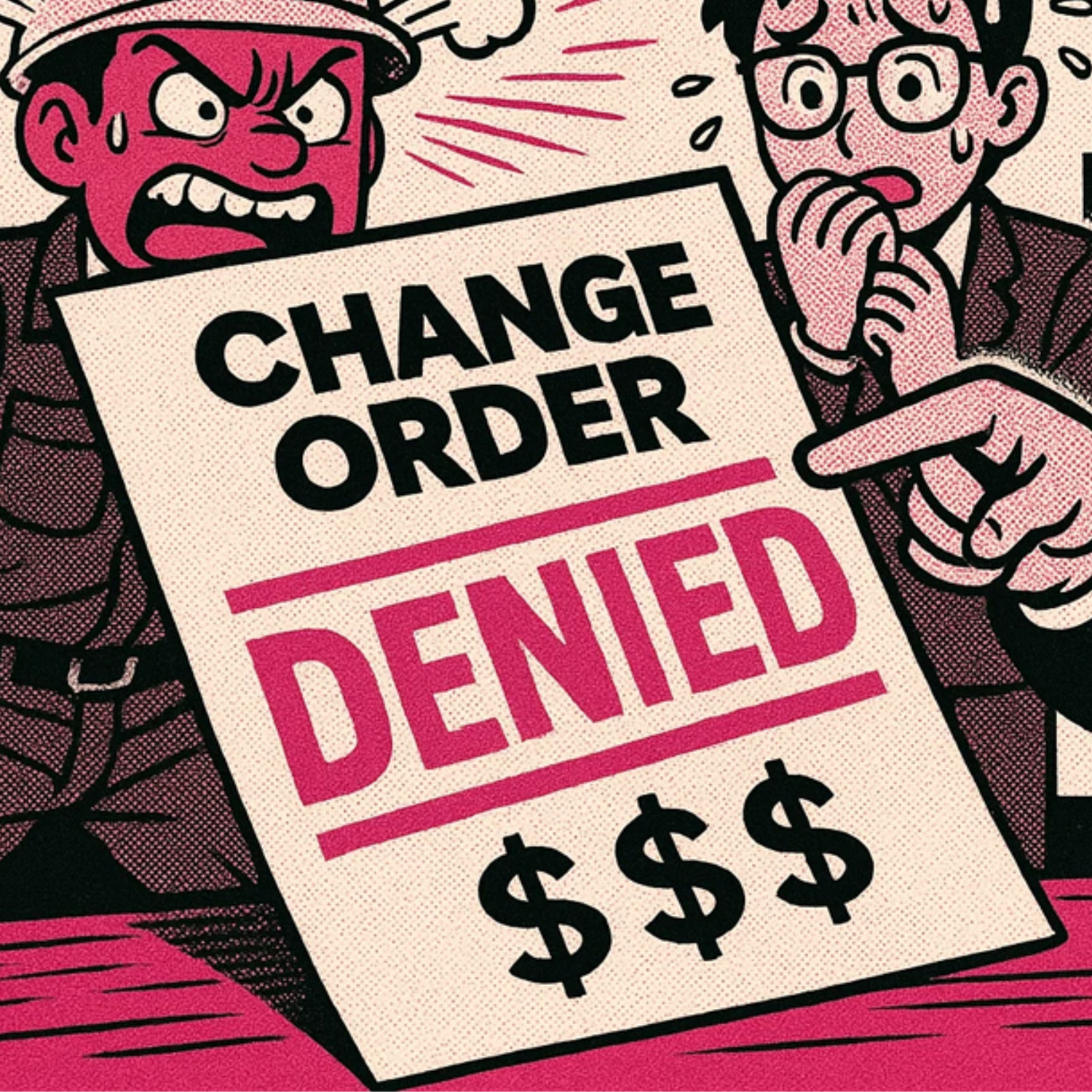
035 - Construction Disputes: How Claims Start and How They End
Streams straight from the publisher. PodNod never proxies or re-hosts episode audio.
Construction disputes and construction claims are an unavoidable part of working in the AEC industry. Whether you're managing an active project or preparing for the ARE exam, knowing how to prevent, navigate, and resolve these situations is one of the most valuable skills you can develop.
Emily breaks down everything you need to know — from the difference between a claim and a dispute, to the Spearin doctrine, to how mediation and arbitration actually work in practice. Two case studies show how real construction disputes play out and what documentation made the difference.
📝 Key topics covered:
-
What makes a construction claim valid (entitlement, causation, quantum, notice)
-
The 21-day notice rule under AIA A201 and why missing it kills your claim
-
Construction delay claims: excusable vs. compensable delay
-
The Spearin doctrine and what it means for design professionals
-
Mediation vs. arbitration: the key differences every ARE candidate needs to know
⏱️ Chapters:
(0:00) Introduction
(3:35) Claims vs. Disputes: Key Definitions
(7:44) Common Construction Claim Types
(13:22) The Real Cost of Construction Disputes
(19:48) Case Study: Design Error Claim
(22:42) How to Prevent Construction Claims
(29:14) Case Study: Construction Delay Claim
(32:40) Dispute Resolution: Negotiation to Litigation
(37:18) Spearin Doctrine and Project Delivery
(41:18) Key Takeaways
📝 Download the FREE Claims and Disputes study notes
🎯 Get access to all ARE study materials with the ARE 101 Membership
🎯 Join our 10-week ARE Boot Camp
📚 Individual ARE Exam Courses:
CE 101 (Construction and Evaluation)
CDT 101 (Construction Documents Technologist)
CCCA 101 (Construction Contract Administration)
📖 Read the full blog post
academy2.youngarchitect.com📝 Download the FREE Claims and Disputes study notes
youngarchitect.com🎯 Get access to all ARE study materials with the ARE 101 Membership
academy2.youngarchitect.com🎯 Join our 10-week ARE Boot Camp
youngarchitect.comCE 101 (Construction and Evaluation)
academy2.youngarchitect.comPjM 101 (Project Management)
academy2.youngarchitect.comPcM 101 (Practice Management)
academy2.youngarchitect.comAIA Contracts 101
academy2.youngarchitect.comCDT 101 (Construction Documents Technologist)
academy2.youngarchitect.comCCCA 101 (Construction Contract Administration)
academy2.youngarchitect.com