transcript
show notes
Why can ADHD feel harder to manage at certain times of the month, and why have periods and hormonal changes been so overlooked in ADHD research?
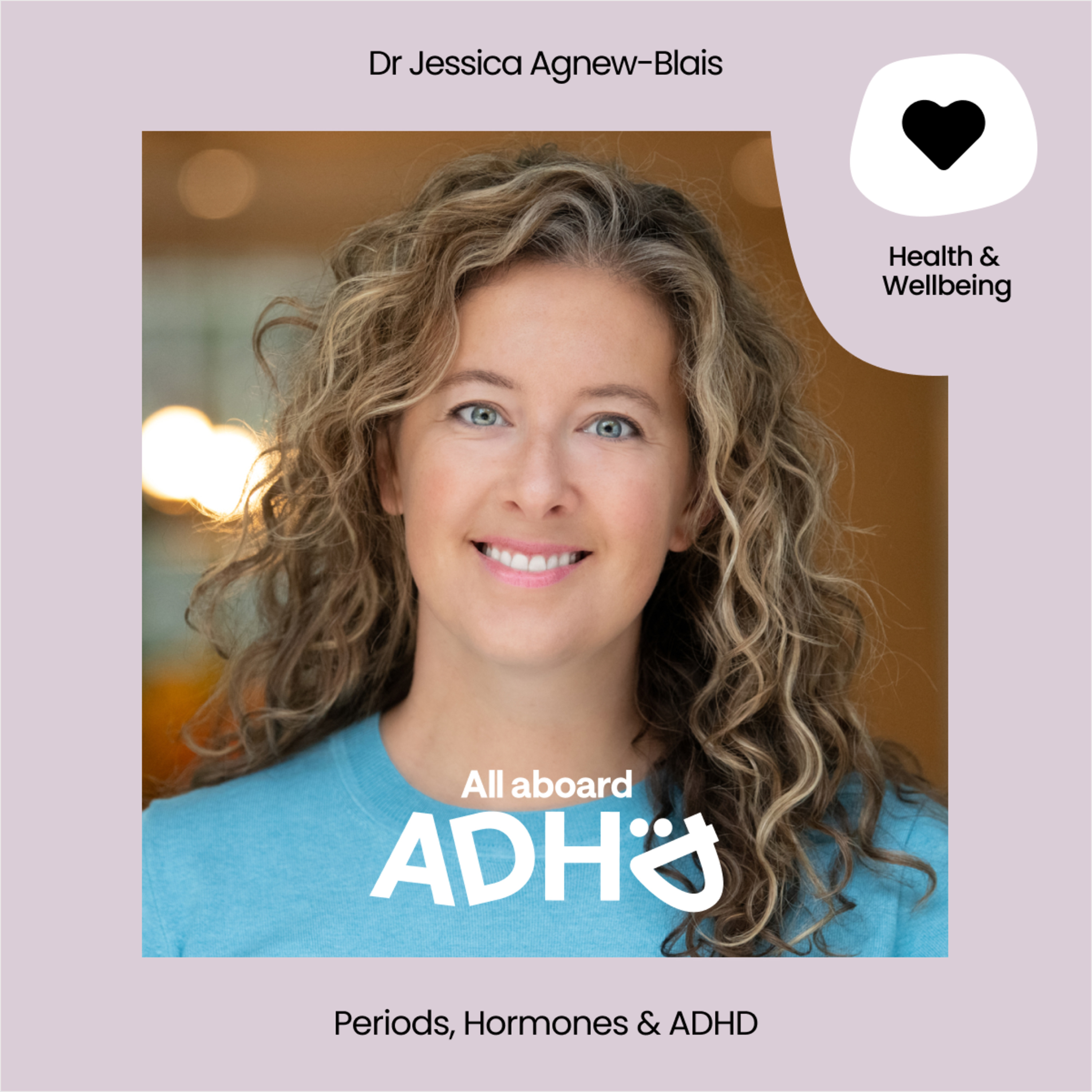
In this episode of All Aboard ADHD, Claire is joined by Senior Lecturer in Psychology Dr Jessica Agnew-Blais of Queen Mary University of London, who holds a PhD in psychiatric epidemiology from Harvard and leads the Measuring Adult ADHD and Menstruation (MAAM) study. Jessica shares what the research tells us so far, and how parents can support their daughters as they begin navigating their cycles.
Together they explore:
📚 "A childhood disorder and a disorder of males": why the role of hormones in ADHD has been so under-researched, particularly during periods, pregnancy and menopause.
💡How the MAAM study began: women with ADHD describing symptoms that felt harder premenstrually, and very little research to explain why.
📊 Inside the MAAM study: following 56 women with ADHD as they tracked their symptoms, mood, sleep and menstrual cycles daily for three months, using regular check-ins and wearable technology.
🌙 Understanding the menstrual cycle: from the follicular to the luteal phase, and why some women's brains may be more sensitive to hormonal fluctuations than others.
💊 When medication feels less effective: early evidence on hormonal sensitivity, PMDD and adjusting doses premenstrually.
🧠 More than mood: how motivation and focus may shift across the cycle, and why symptoms fluctuate with life's demands.
📝 "Make a little data project of yourself": how tracking can help you and your daughter notice patterns across the menstrual cycle, but why it isn't right for everyone.
💛 Self-compassion on the harder days: why a few less productive days are okay, and Jessica's hope for more personalised care rather than asking women to be "guinea pigs".
Hormonal changes can affect girls and women with ADHD in ways that haven't always been recognised or understood, with many of us only now making sense of our own experiences. This conversation offers an evidence-led look at what we know so far, and how we can better support our daughters, and ourselves, with understanding and compassion.
Further resources and links:
The MAAM study (Measuring Adult ADHD and Menstruation):
King's College London https://www.kcl.ac.uk/research/maam-study
Queen Mary University of London: https://www.adhdlifelab.com/maam-study
Dr Jessica Agnew-Blais, King's College London profile: https://www.kcl.ac.uk/people/jessica-agnew-blais
Follow Jessica's ADHD Life Course Lab on Instagram: @adhdlifecourselab
Queen Mary School of Biological and Behavioural Sciences on Instagram: @qmulsbbs
Blood: The Science, Medicine, and Mythology of Menstruation by Dr Jen Gunter: https://www.amazon.co.uk/s?k=blood+jen+gunter&adgrpid=187117248900
The Menopause Manifesto by Dr Jen Gunter: https://www.amazon.co.uk/stores/Dr.-Jen-Gunter/author/B003E0EFOK
The MTA study (Multimodal Treatment of ADHD), mentioned by Jessica: https://www.nimh.nih.gov/funding/clinical-research/practical/mta/the-multimodal-treatment-of-attention-deficit-hyperactivity-disorder-study-mtaquestions-and-answers
ADHD coaching and resources from Claire: https://allaboardadhd.com
Follow Claire on Instagram & TikTok: @allaboardADHD
The views shared in this episode are those of the guest, based on their professional expertise and personal experience. This content is for informational purposes only and is not a substitute for professional medical, educational, or psychological advice. Please consult a qualified professional for personalised support relevant to your individual circumstances.