transcript
show notes
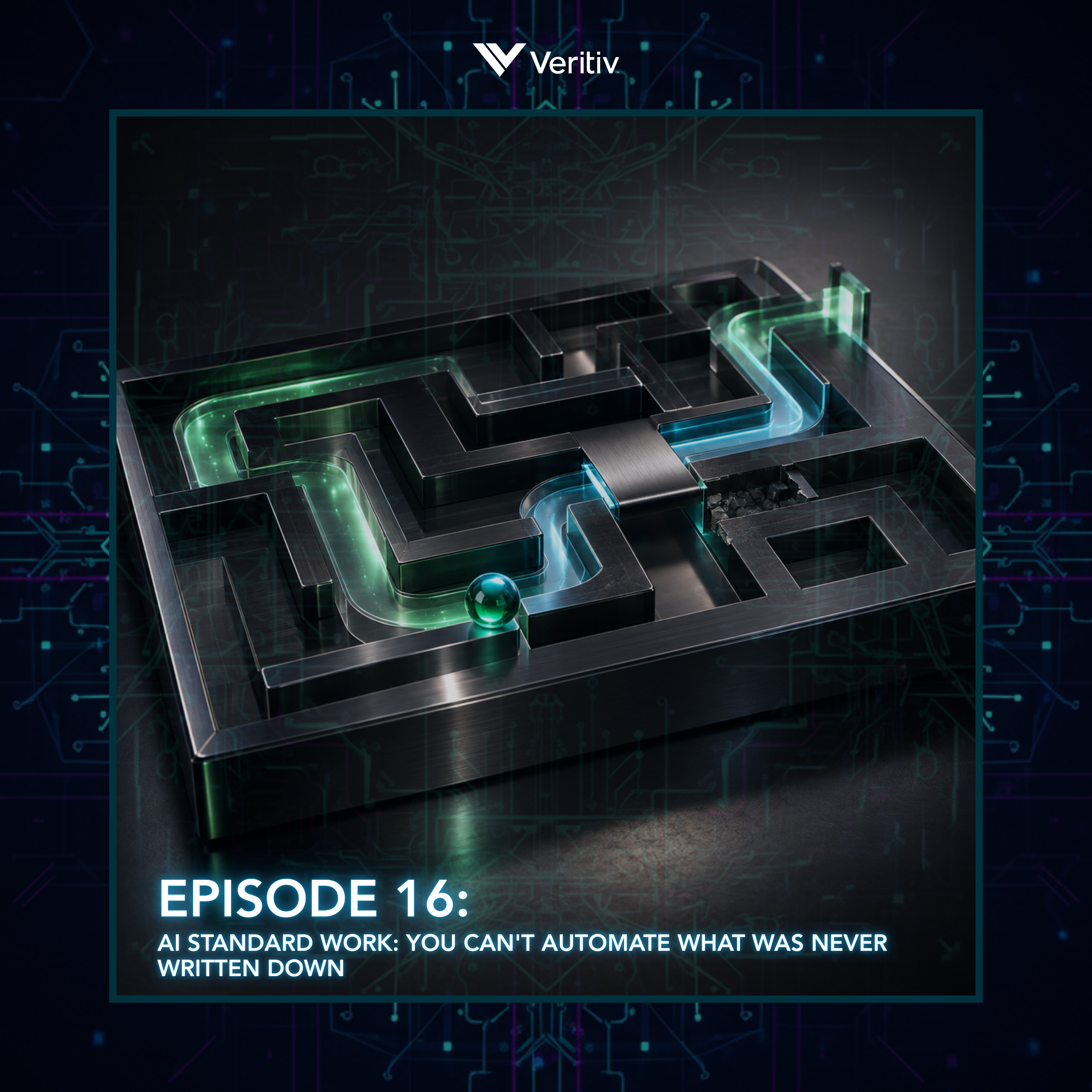
Taiichi Ohno posted standard work sheets at every workstation, in the open, written by the operators themselves. He wasn't interested in whether people followed them. He was interested in how often they changed — because a standard that sat untouched meant the improvement engine had stopped. Frederick Taylor had standardized to prevent change. Ohno standardized to make it possible.
Chris Bradley argues that distinction now decides whether an enterprise AI program compounds or stalls. Ohno's rule was that without a standard there can be no kaizen. The AI version is stricter: you cannot automate a process that was never standardized, because there is nothing for the agent to execute. Most failed pilots, he suggests, are operations problems that AI happened to expose.
He describes what Veritiv found when it had to define order entry precisely for the first time — experienced people each holding a different sound method, none of it written anywhere — and what happened on a separate credit-and-rebill project where an agent was built to follow an existing procedure faithfully. The problems that surfaced weren't deviations. They were everything the document didn't say: which cost belongs on a line when two versions of the procedure disagree in the same numbered step, what to do when two systems contradict each other about whether an original order exists, and a documented remedy that turned out to be a checkbox the system won't let you click.
From there: why SOPs are structurally incomplete rather than carelessly written, why building an agent skill is really the act of converting tacit human competence into explicit standard work, and the governance question almost nobody has answered — when the business changes, who updates the agent?
The episode closes on the finding he didn't expect. The documentation turned out to be worth more than the automation.
Chris Bradley argues that distinction now decides whether an enterprise AI program compounds or stalls. Ohno's rule was that without a standard there can be no kaizen. The AI version is stricter: you cannot automate a process that was never standardized, because there is nothing for the agent to execute. Most failed pilots, he suggests, are operations problems that AI happened to expose.
He describes what Veritiv found when it had to define order entry precisely for the first time — experienced people each holding a different sound method, none of it written anywhere — and what happened on a separate credit-and-rebill project where an agent was built to follow an existing procedure faithfully. The problems that surfaced weren't deviations. They were everything the document didn't say: which cost belongs on a line when two versions of the procedure disagree in the same numbered step, what to do when two systems contradict each other about whether an original order exists, and a documented remedy that turned out to be a checkbox the system won't let you click.
From there: why SOPs are structurally incomplete rather than carelessly written, why building an agent skill is really the act of converting tacit human competence into explicit standard work, and the governance question almost nobody has answered — when the business changes, who updates the agent?
The episode closes on the finding he didn't expect. The documentation turned out to be worth more than the automation.