
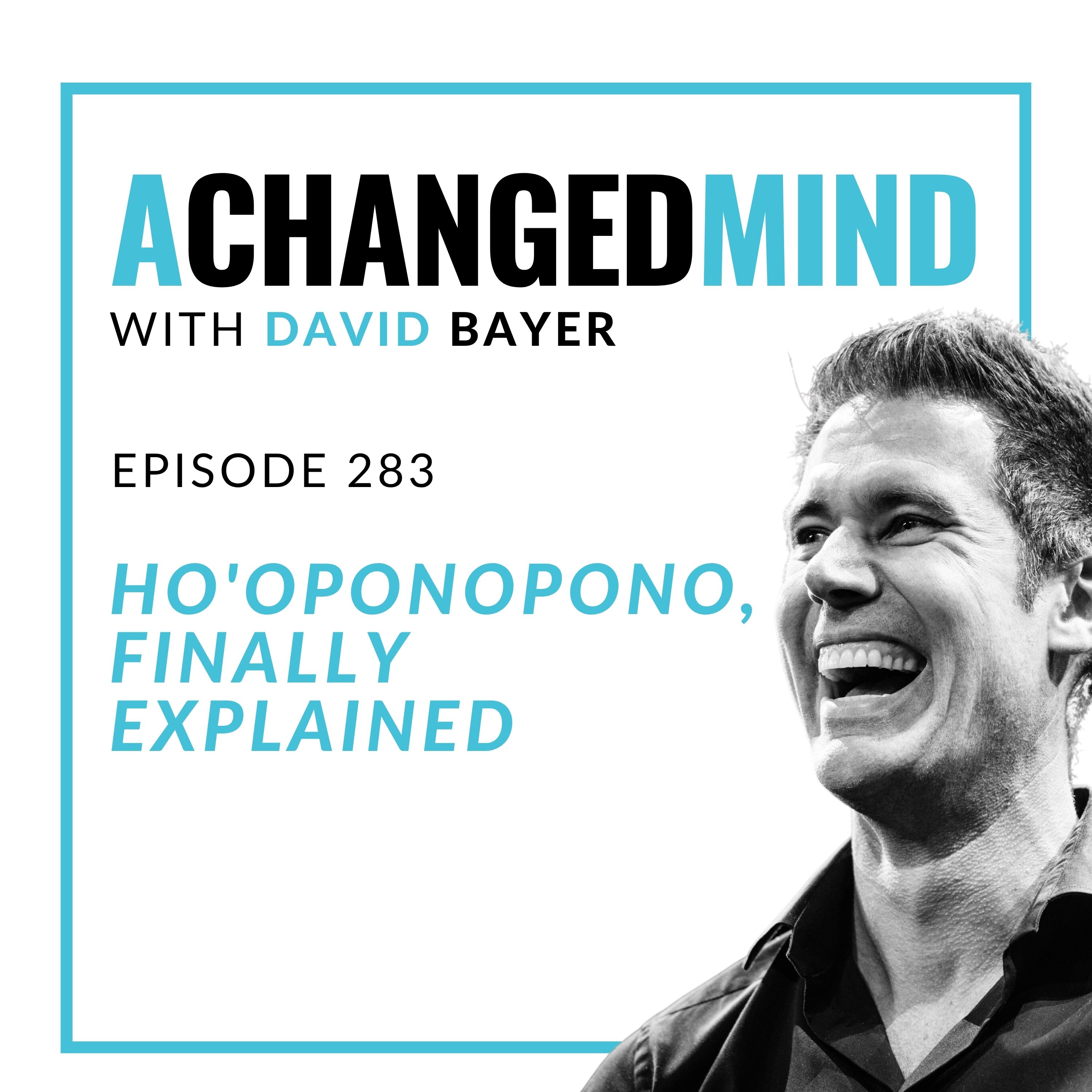
283 Ho'oponopono, Finally Explained
transcript
show notes
📺 Watch & Subscribe on YouTube
Take the free Limiting Beliefs Discovery Assessment – a 5-minute experience that reveals the exact beliefs holding back your income, health, relationships, and personal growth — and gives you the proven tool to transform them https://www.wholehuman.com/decision.
In this episode of A Changed Mind, David Bayer unpacks Ho'oponopono, the four phrase Hawaiian practice millions have encountered online, and answers the question that kept him skeptical of it for years: if someone else hurt you, why are you the one saying I'm sorry?
He starts by correcting the biggest misconception. Ho'oponopono did not begin as four phrases repeated alone in a bedroom. The word roughly means to correct or make right, and traditionally it was relational: families coming together, often with an elder facilitating, bringing a rupture into the open and restoring the relationship. David contrasts that with how most of us actually handle resentment. We replay the conversation in the car. The event happened five years ago and the other person has forgotten it, but inside us it is still happening.
He traces how the modern version emerged through Hawaiian teacher Morrnah Simeona, who removed the requirement that everyone involved participate. That change matters more than it sounds. What if the person will not speak to you, or died 20 years ago? Your healing cannot depend on their willingness. From there he explains Dr. Hugh Len's concept of 100 percent responsibility, with a line he is careful about: responsibility and culpability are not the same thing. Someone else can be entirely responsible for what they did, and you can still work with what it produced in you.
David is also explicit about where the historical teaching ends and his own interpretation begins. He retells the famous Hawaii State Hospital story and states plainly that he has not found documentation supporting it, so it should be treated as lore. Then he reads the four phrases through the belief work he has taught for 15 years, and closes with a practice you can run on your next trigger: ask what it is revealing, follow the emotion down to the belief underneath, run the phrases, then ask what you choose to believe now and who you would be if that were true. Forgiveness does not make you passive. You may still confront the person or set the boundary. It means you act from choice rather than from the wound.
=======
POWERFUL LIVING EXPERIENCE
https://powerfullivingexperience.com/acm
=======
What We Explored This Episode
00:06:00 - Exploring traditional ho' oponopono
00:12:00 - The modernization of ho' oponopono
00:18:00 - Decoding the four phrases
00:24:00 - Examining the lore
00:30:00 - A practical guide
Memorable Quotes
"The problems appearing in your external reality are actually revealing something that needs to be healed within your own consciousness."
"Forgiveness doesn't change what happened. Forgiveness changes whether or not you allow what happened to continue to exist in your current reality."
"You change the scenery without changing the pattern... Forgiveness isn't saying what happened was okay. It's saying what happened no longer gets to determine who I am."
Connect With David
Interested in going deeper with us? Check out the following resources:
👉 FREE MIND HACK BOOK
Join our newsletter and get David’s free Mind Hack ebook and training: https://mindhackprogram.com/acm
👉 POWERFUL LIVING EXPERIENCE
Check out our annual live event The Powerful Living Experience: https://powerfullivingexperience.com
👉 NEED MORE SUPPORT?
Interested in coaching programs and more support?
👉 DAVID’S NEW BOOK
Check out ‘A Changed Mind’ on Amazon:
https://www.amazon.com/dp/1642939862
Check us out on your favorite social platforms:
LinkedIn - http://www.linkedin.com/in/davidrbayer
Twitter - http://www.twitter.com/davidrbayer
Facebook - https://www.facebook.com/coachdavidbayer
Instagram - https://www.instagram.com/davidbayer33
YouTube - / @davidbayer33
🎙️🎙️🎙️
Podcast Production Support by FullCast
Mentioned in this episode:


