9Natree · Today
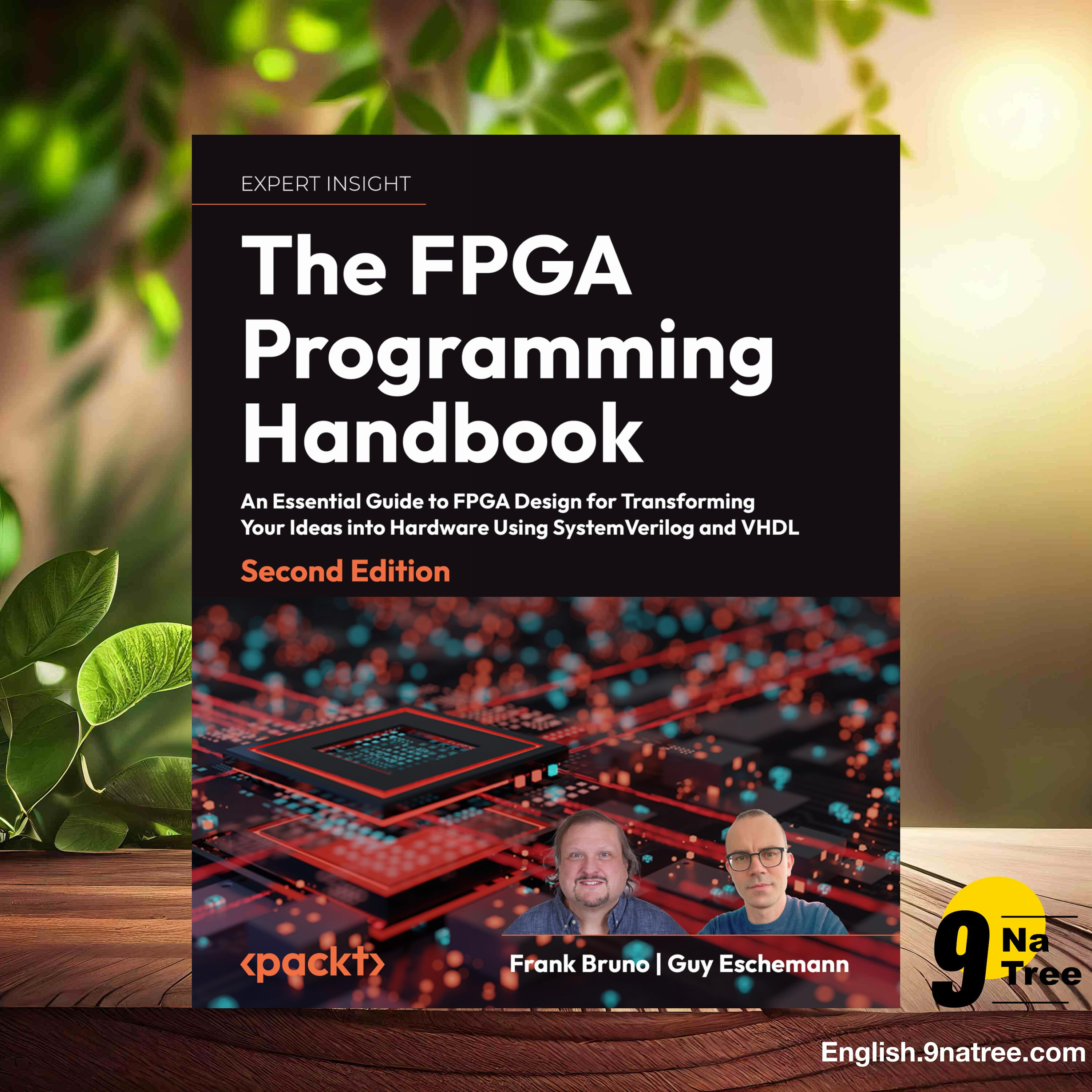
[Review] The FPGA Programming Handbook (Frank Bruno) Summarized.
0:00Duration unknown
transcript
show notes
The FPGA Programming Handbook (Frank Bruno)
- Buy on Amazon Books:
https://www.amazon.com/dp/1805125591?tag=9natree-20
- Sponsor and Support us:
https://9natree.com/page/sponsor-and-support.html
- Interesting Topics:
- Hardware Description Is Treated as Concurrent Circuit Construction
- Projects Create a Deliberate Path from LEDs to Integrated Digital Systems
- Parallelism, Arithmetic, and Pipelining Frame Performance as an Architectural Choice
- Interfaces Connect RTL Exercises to Memory, Video, and Peripheral Hardware
- The Xilinx Centered Workflow Includes Soft Processing and System Integration
- Read more: https://english.9natree.com/read/1805125591/
The FPGA Programming Handbook is a practical technical guide to designing programmable digital hardware with SystemVerilog and VHDL. Written by FPGA engineers Frank Bruno and Guy Eschemann, the second edition is aimed at readers moving from conventional software or embedded development toward register transfer level hardware design, as well as early career FPGA designers seeking structured project experience. Its central purpose is to connect foundational digital logic with an implementable Xilinx based workflow. Rather than treating hardware description languages as merely another form of programming, the book emphasizes the consequences of describing circuits that operate concurrently, are constrained by clocks, and consume finite device resources. The material progresses from Boolean logic, storage, and FPGA architecture into projects and interfaces that make those principles tangible. Coverage includes Xilinx Artix 7 resources and tools, arithmetic and pipelining, AXI, VGA, memory interfaces, PMOD communication, and MicroBlaze. The result is best understood as a broad, project led introduction to practical FPGA system construction rather than an exhaustive reference for every device family or advanced verification methodology.