9Natree · Today
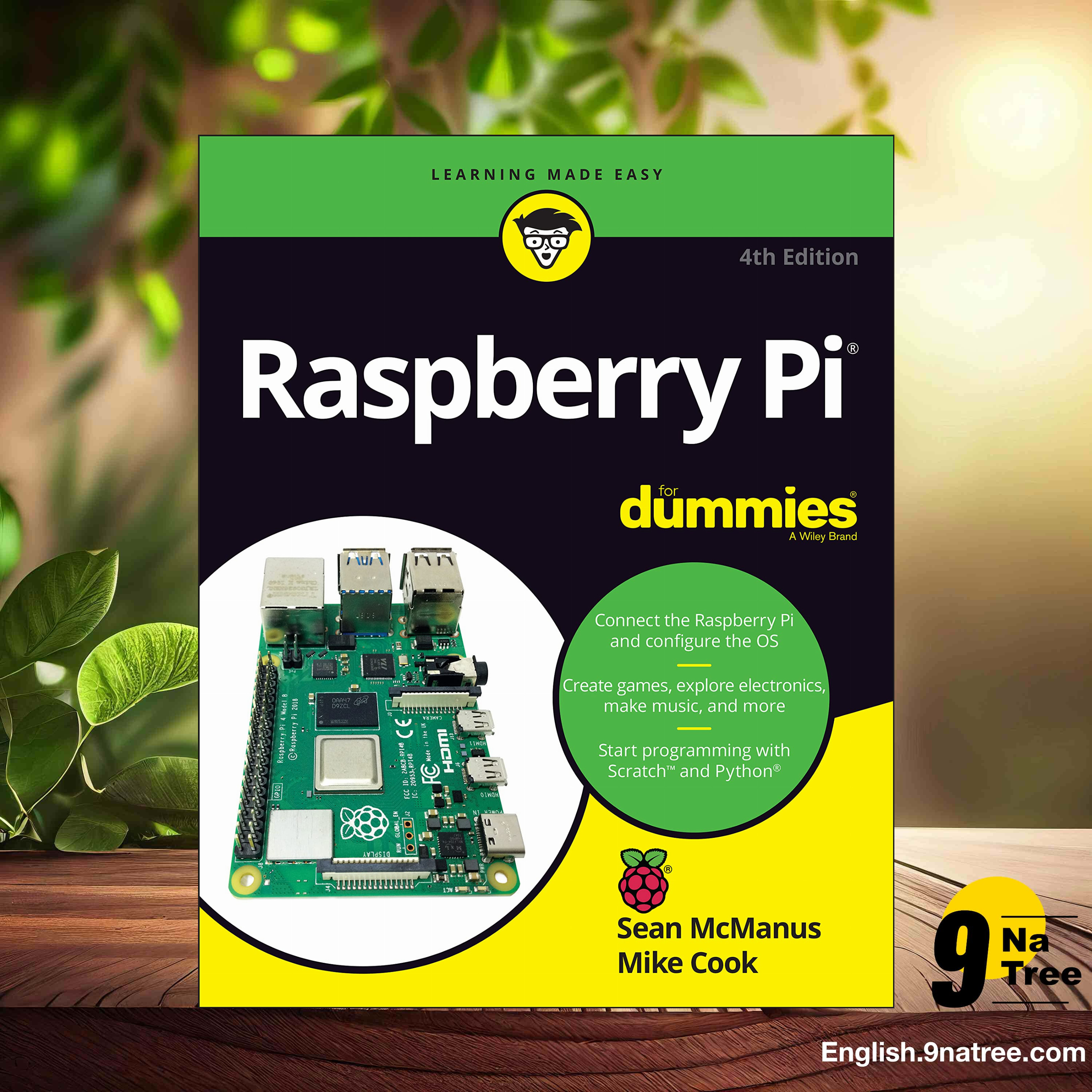
[Review] Raspberry Pi For Dummies ) (Sean McManus) Summarized.
0:00Duration unknown
transcript
show notes
Raspberry Pi For Dummies ) (Sean McManus)
- Buy on Amazon Books:
https://www.amazon.com/dp/1119796822?tag=9natree-20
- Buy on Apple Books:
https://books.apple.com/us/audiobook/electronics-all-in-one-for-dummies-3rd-edition/id1647617696?itsct=books_box_link&itscg=30200&ls=1&at=1001l3bAw&ct=9natree
- Sponsor and Support us:
https://9natree.com/page/sponsor-and-support.html
- Interesting Topics:
- A staged path from unpacking hardware to confident Raspberry Pi use
- Linux literacy connects everyday desktop work with system-level control
- Scratch, Python, and game projects provide a graduated programming curriculum
- Minecraft programming demonstrates how Python can generate virtual structures
- GPIO and circuit projects introduce the boundary between code and electronics
- Read more: https://english.9natree.com/read/1119796822/
Raspberry Pi For Dummies by Sean McManus and Mike Cook is an introductory technology guide to using the Raspberry Pi as both a general-purpose computer and a platform for learning programming and physical computing. This fourth edition addresses Raspberry Pi 4 and Raspberry Pi 400 hardware while also accommodating several earlier Pi models. Its scope is deliberately broad: readers begin by preparing a device, installing Raspberry Pi OS, connecting peripherals, and getting online, then progress through the Linux desktop and command shell. Later sections introduce practical desktop tasks, creative programming, games, music, and electronics. The book belongs to the accessible reference tradition of the For Dummies series, using stepwise instruction rather than assuming prior command-line, coding, or circuit-building knowledge. Its purpose is not to make readers specialists in one discipline. Instead, it presents the Pi as a compact environment in which operating-system literacy, Scratch, Python, Sonic Pi, Minecraft programming, and GPIO-based experimentation can be explored together. This breadth makes it a foundation guide for readers deciding which Raspberry Pi direction to pursue.