9Natree · Today
[Review] Programming the Raspberry Pi, Third Edition (MONK) Summarized.
0:00Duration unknown
transcript
show notes
Programming the Raspberry Pi, Third Edition (MONK)
- Buy on Amazon Books:
https://www.amazon.com/dp/126425735X?tag=9natree-20
- Buy on Apple Books:
https://books.apple.com/us/audiobook/beginner-python-programming-the-insider-guide-to/id1378749727?itsct=books_box_link&itscg=30200&ls=1&at=1001l3bAw&ct=9natree
- Sponsor and Support us:
https://9natree.com/page/sponsor-and-support.html
- Interesting Topics:
- A gradual path from Raspberry Pi setup to executable Python programs
- Python fundamentals are taught as tools for organizing real projects
- Games and graphical interfaces make program behavior immediately testable
- GPIO projects connect software logic to LEDs, sensors, and physical output
- Web features extend Raspberry Pi work beyond the local desktop
- Read more: https://english.9natree.com/read/126425735X/
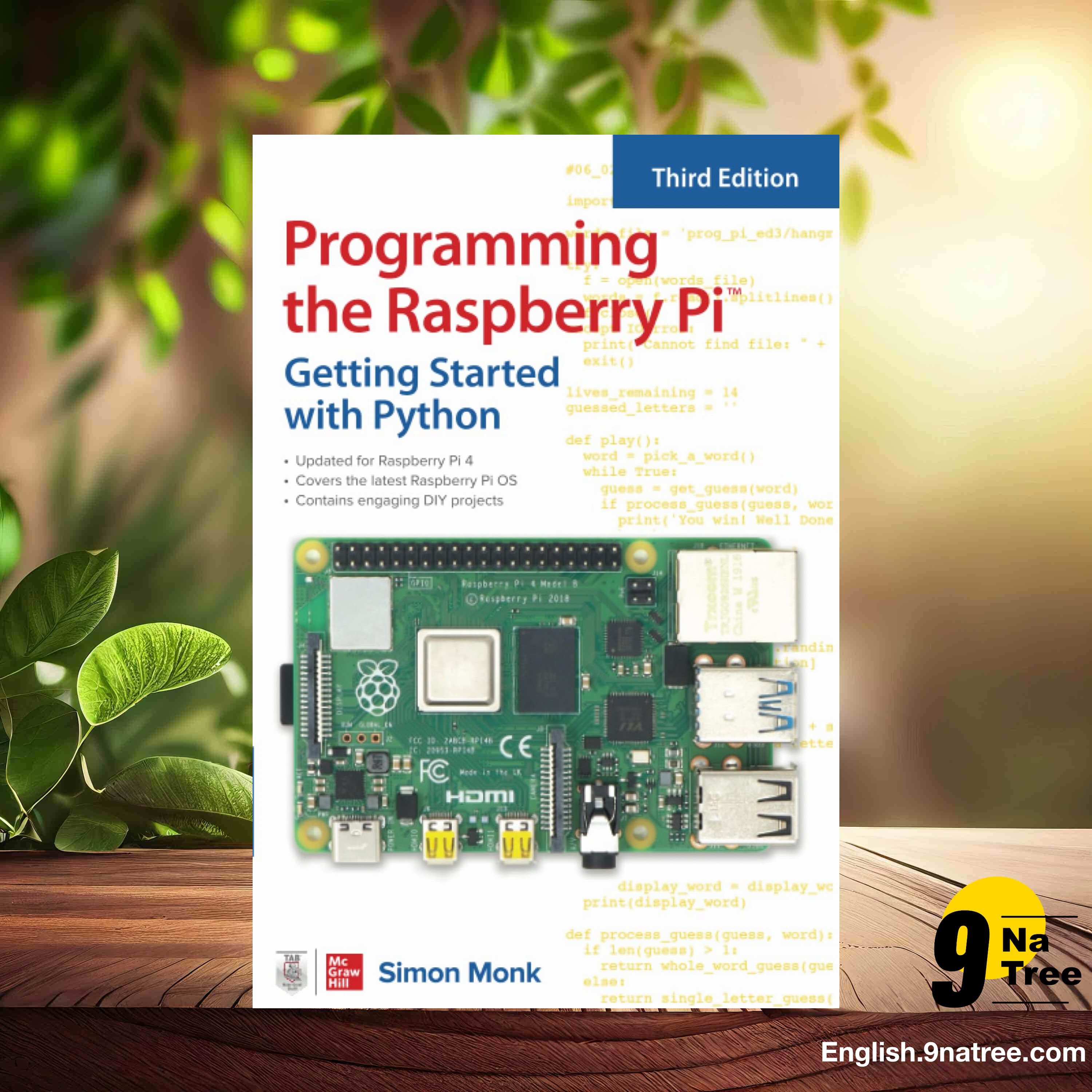
Programming the Raspberry Pi, Third Edition: Getting Started with Python is a beginner-oriented technical guide by Simon Monk that connects foundational Python programming with the Raspberry Pi as a physical computing platform. Updated for Raspberry Pi 4 and the setup and operating system changes current at its publication, the book is organized as a practical progression rather than a language reference. It begins with configuring the computer and working with its desktop, files, folders, and programming tools, then moves into Python constructs used to build increasingly capable programs. Its scope extends beyond screen-based code: readers also create games and graphical interfaces and connect code to electronic components through the Raspberry Pi GPIO header. Projects including a hangman game, RGB LED controller, digital clock, and a small robot provide concrete endpoints for the lessons. The book therefore serves two purposes at once: it introduces the habits and vocabulary of Python development, and it shows why a single-board computer can make programming visible through interfaces, lights, sensors, and motion.