9Natree · Today
[Review] Programming Arduino Next Steps (Simon Monk) Summarized.
0:00Duration unknown
transcript
show notes
Programming Arduino Next Steps (Simon Monk)
- Buy on Amazon Books:
https://www.amazon.com/dp/B07J1DNF5V?tag=9natree-20
- Buy on Apple Books:
https://books.apple.com/us/audiobook/arduino-programming-the-ultimate-intermediate-guide/id1781060840?itsct=books_box_link&itscg=30200&ls=1&at=1001l3bAw&ct=9natree
- Sponsor and Support us:
https://9natree.com/page/sponsor-and-support.html
- Interesting Topics:
- Looking beneath the Arduino sketch model
- Interrupts and timers for responsive event handling
- Memory and execution speed as embedded design constraints
- Serial buses and interfacing beyond simple input and output
- Cooperative multitasking, networks, and reusable libraries
- Read more: https://english.9natree.com/read/B07J1DNF5V/
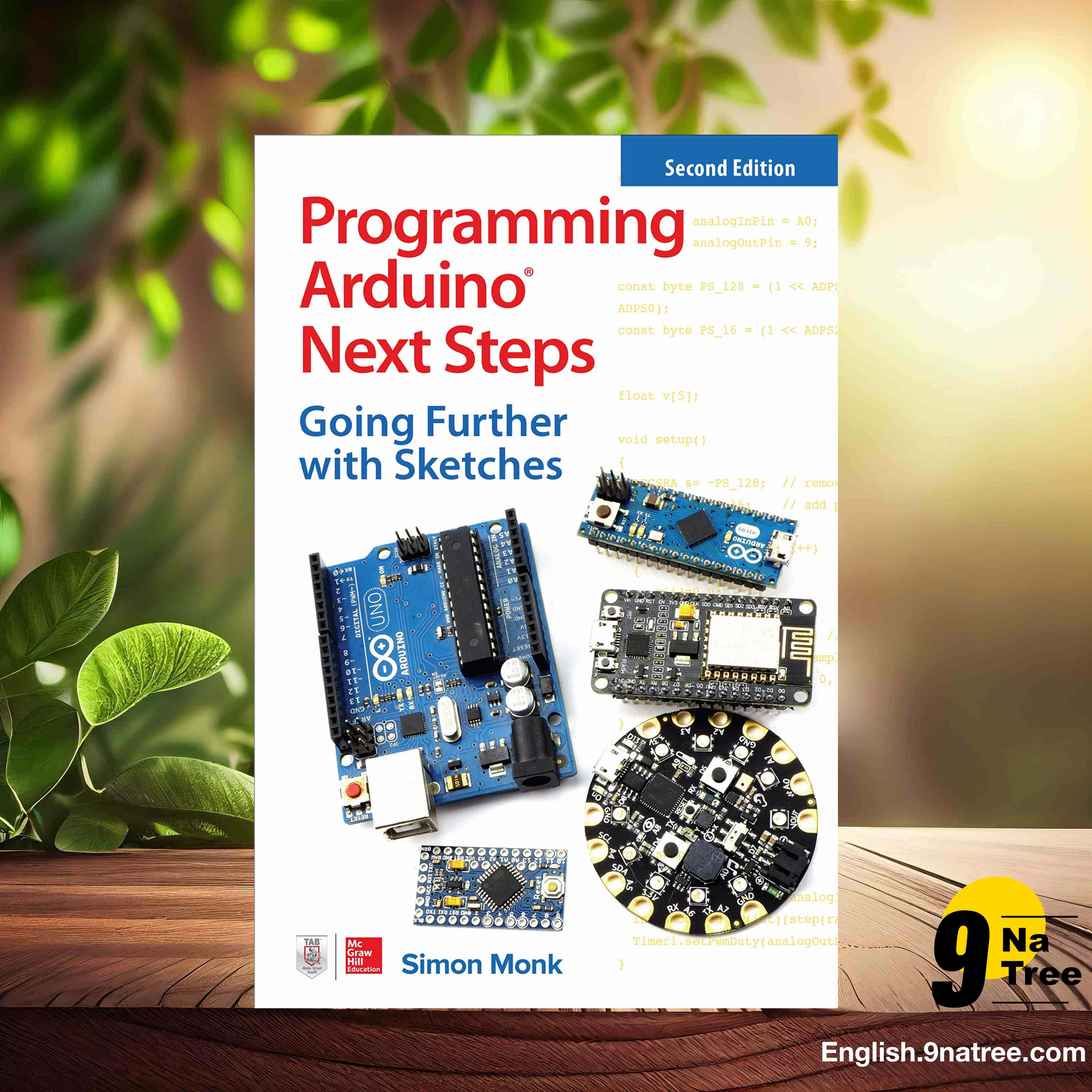
Programming Arduino Next Steps: Going Further with Sketches, Second Edition is a technical programming guide by Simon Monk for readers who already understand the basic Arduino workflow and want to work more deliberately with microcontroller hardware. Rather than concentrating on introductory circuits or isolated beginner sketches, it examines what happens beneath the familiar Arduino programming model and how that knowledge improves reliability, speed, and capability. The book belongs to the practical embedded programming and maker literature, with code-centered explanations of timing, communication, memory, and connected devices. Its scope includes conventional Arduino boards as well as the broader ecosystem of Arduino-compatible hardware addressed in the second edition. Monk combines explanations of the Arduino build environment with techniques for responding to events, coordinating several activities without conventional threads, and communicating with external modules or networks. The purpose is not to turn an Arduino into a general-purpose computer, but to show how to use a constrained microcontroller appropriately. It therefore emphasizes tradeoffs that become important after simple delay-based sketches no longer meet a project’s needs.