9Natree · Yesterday
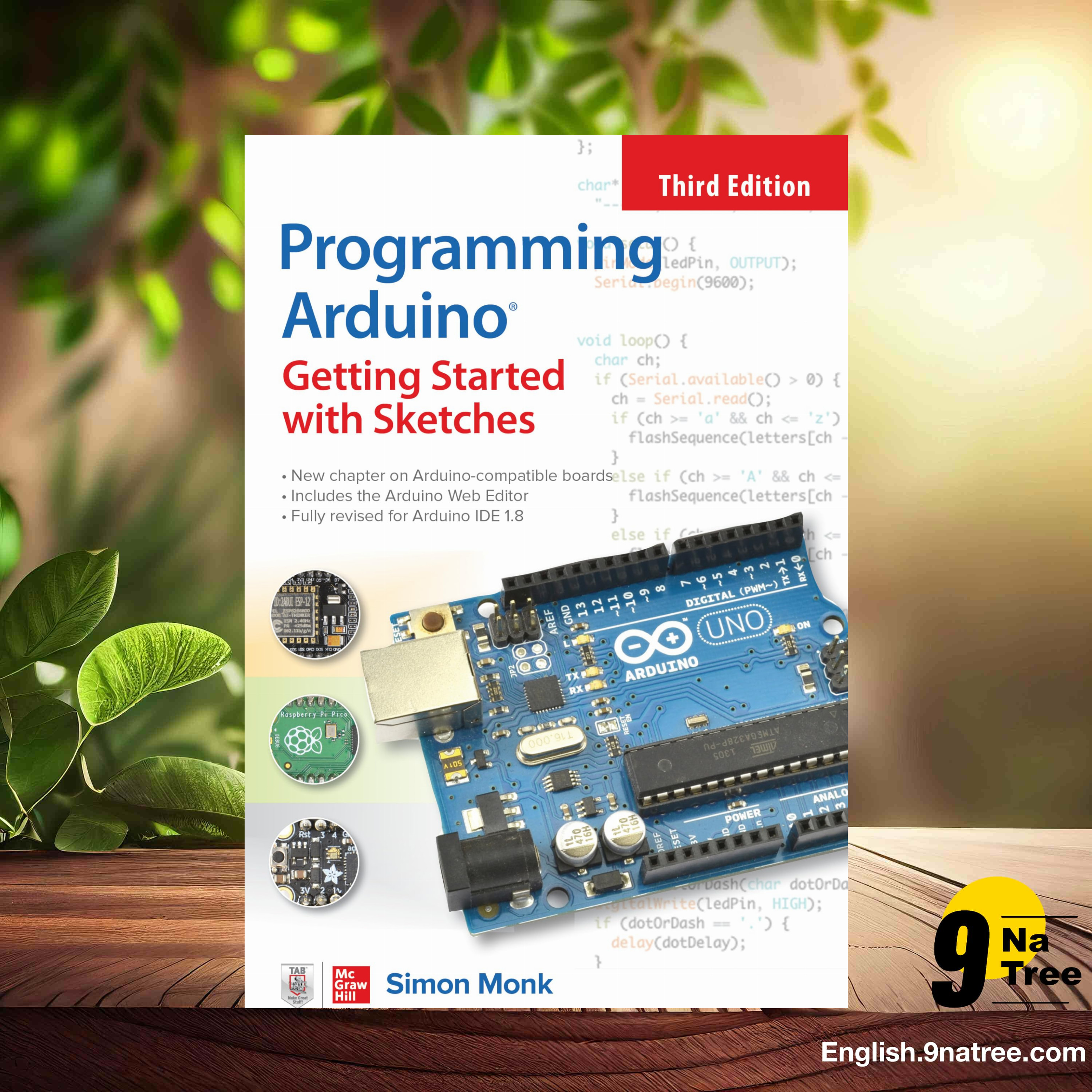
[Review] Programming Arduino: Getting Started with Sketches, Third Edition (MONK) Summarized.
0:00Duration unknown
transcript
show notes
Programming Arduino: Getting Started with Sketches, Third Edition (MONK)
- Buy on Amazon Books:
https://www.amazon.com/dp/1264676980?tag=9natree-20
- Buy on Apple Books:
https://books.apple.com/us/audiobook/arduino-programming-for-beginners-unabridged/id1509595387?itsct=books_box_link&itscg=30200&ls=1&at=1001l3bAw&ct=9natree
- Sponsor and Support us:
https://9natree.com/page/sponsor-and-support.html
- Interesting Topics:
- The setup and loop model makes embedded programming approachable
- C language fundamentals are taught in the context of working sketches
- Digital and analog input and output link code to physical hardware
- Libraries, nonvolatile memory, and displays extend a sketch beyond basic experiments
- Internet and Arduino-compatible board coverage place sketches in a wider ecosystem
- Read more: https://english.9natree.com/read/1264676980/
Programming Arduino: Getting Started with Sketches, Third Edition is a practical introductory guide to the software side of Arduino development by Simon Monk. Published by McGraw Hill TAB, it explains how to create sketches, the small programs that control Arduino-compatible microcontroller boards. The book is aimed primarily at newcomers who may have electronics experience but little or no programming background, while remaining useful as a structured refresher for makers. Its method is example-driven: readers configure the Arduino software, upload code, and progressively extend simple programs using the C and C++ conventions supported by the Arduino environment. Coverage moves from the basic sketch structure and core language features to input and output, memory, displays, libraries, and networked applications. The third edition also recognizes the broader Arduino-compatible ecosystem, including boards such as ESP32, Pico, and micro:bit. Rather than serving as an exhaustive electronics construction manual, the book concentrates on helping readers understand, modify, and write reliable embedded programs.