9Natree · Today
[Review] Practical Node-RED Programming (Hagino) Summarized.
0:00Duration unknown
transcript
show notes
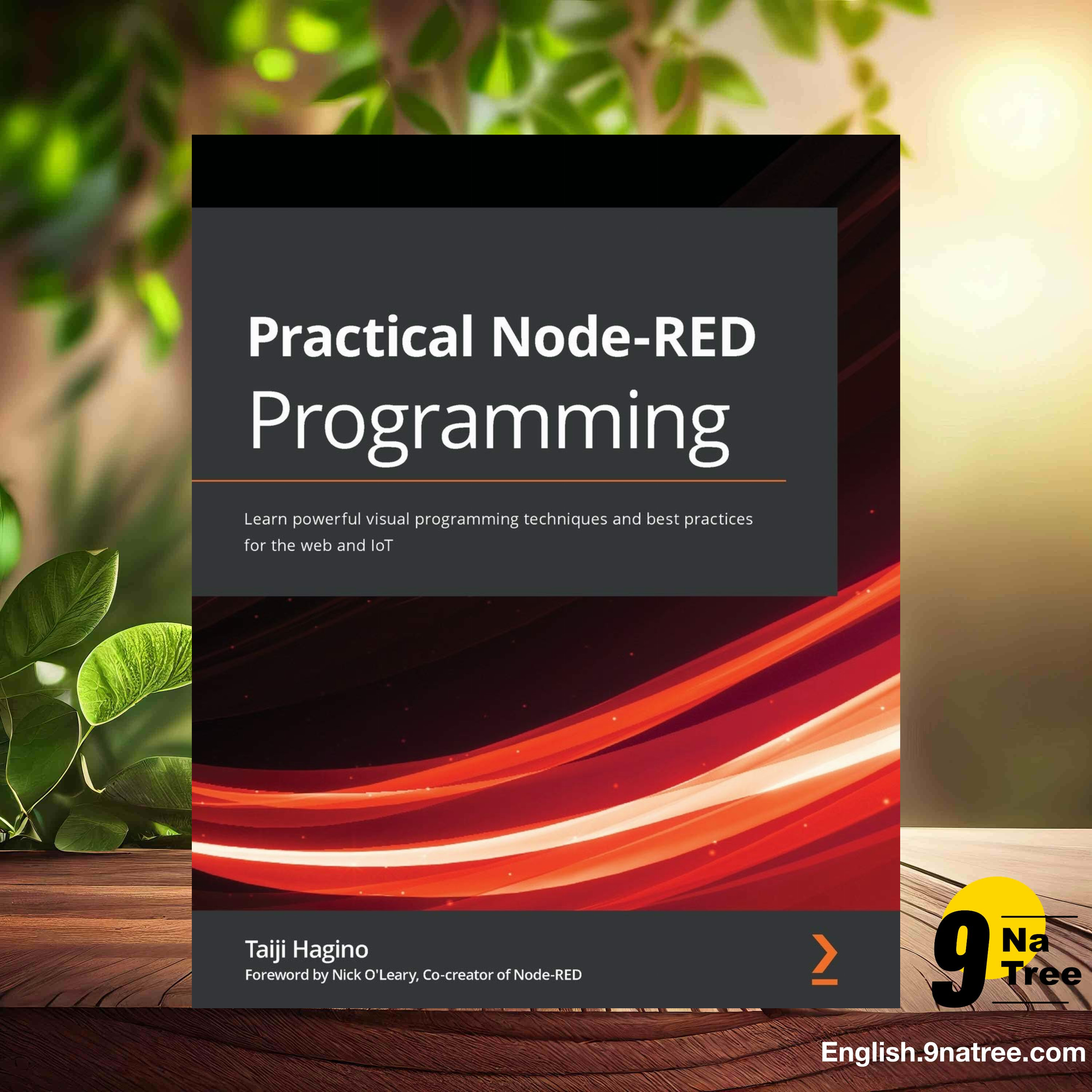
Practical Node-RED Programming (Hagino)
- Buy on Amazon Books:
https://www.amazon.com/dp/1800201591?tag=9natree-20
- Buy on Apple Books:
https://books.apple.com/us/audiobook/javascript-programming-a-beginners-guide-to/id973730015?itsct=books_box_link&itscg=30200&ls=1&at=1001l3bAw&ct=9natree
- Sponsor and Support us:
https://9natree.com/page/sponsor-and-support.html
- Interesting Topics:
- Flow-based programming makes event-driven integration visible
- Core nodes and message handling provide the technical foundation
- MQTT and Raspberry Pi connect digital flows to physical sensor data
- Local and cloud deployment reveal the operational side of Node-RED
- Web APIs, chatbot work, and custom nodes extend Node-RED beyond automation
- Read more: https://english.9natree.com/read/1800201591/
Practical Node-RED Programming by Taiji Hagino is a technical guide to building event-driven web and Internet of Things applications with Node-RED, the open-source, flow-based development environment. Published by Packt in 2021, the book combines an introduction to visual programming with a progression of practical exercises involving local development, cloud deployment, web APIs, version control, sensors, messaging, and reusable extensions. Its central premise is that Node-RED lets developers express integrations as connected flows rather than as large bodies of application code, while still retaining access to JavaScript and the Node.js ecosystem when needed. The book is therefore neither a general programming text nor a purely hardware-oriented IoT manual. It examines the operational path between devices, services, and user-facing applications. Hagino emphasizes the browser-based editor, the runtime that executes flows, and common integration patterns that make Node-RED useful at the boundary between physical inputs and cloud systems. The intended readers are web developers and IoT practitioners with some JavaScript and Node.js familiarity, especially those seeking a structured route from basic flows to deployable applications.